
Crocodile Rocks
After sailing all night we awoke to the views of the temple at Kom Ombo, perched dramatically on a curve of the Nile where ancient crocodiles once lounged on the banks.
The temple is shared between two gods — Sobek (crocodiles, chaos, teeth) and Horus the Elder (protection, clarity, order). Duality carved into stone.

This duality—sky and river, protection and danger—feels deeply Egyptian: every blessing has a shadow and every shadow has a lesson.


But the real treasures?
The medical reliefs.
On one wall, we found exquisitely carved scenes of ancient Egyptian women giving birth, another of a mother breastfeeding, and a full panel of surgical instruments: scalpels, forceps, hooks, treatments for everything ranging from childbirth to dental work. It’s humbling and strangely moving — a reminder that while dynasties rose and fell, human bodies and human stories stayed beautifully the same. Thousands of years ago, women laboured, doctors worked with steady hands, and families prayed over the same moments we do today.
It makes Kom Ombo feel less like a ruin and more like a heartbeat.


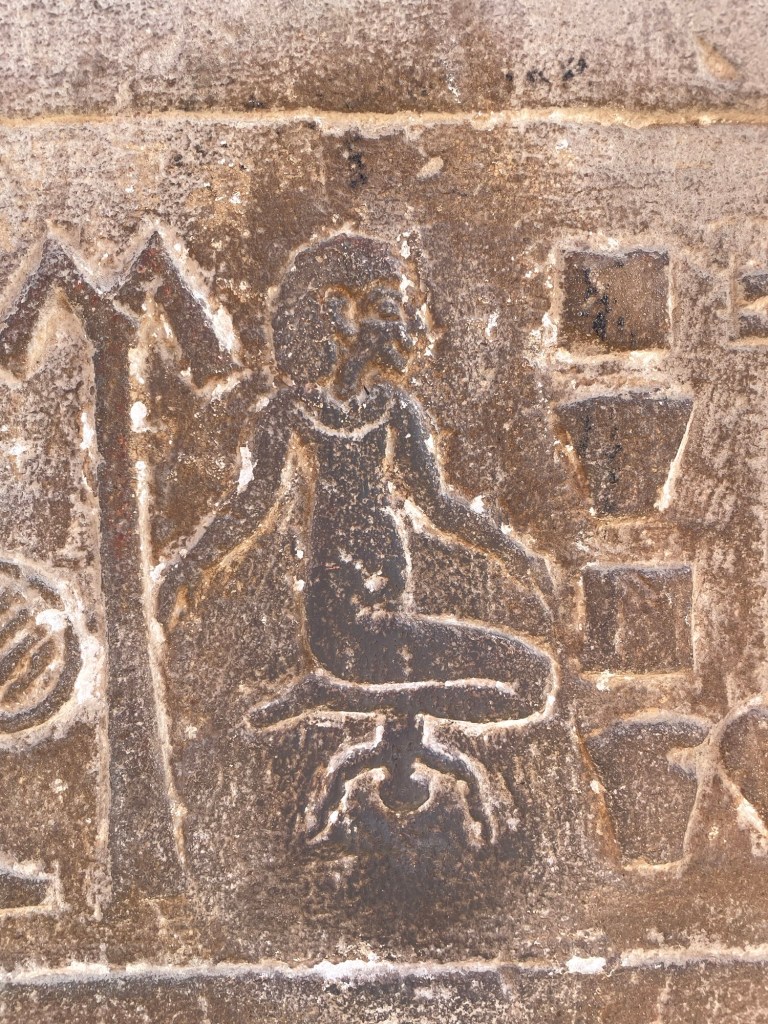
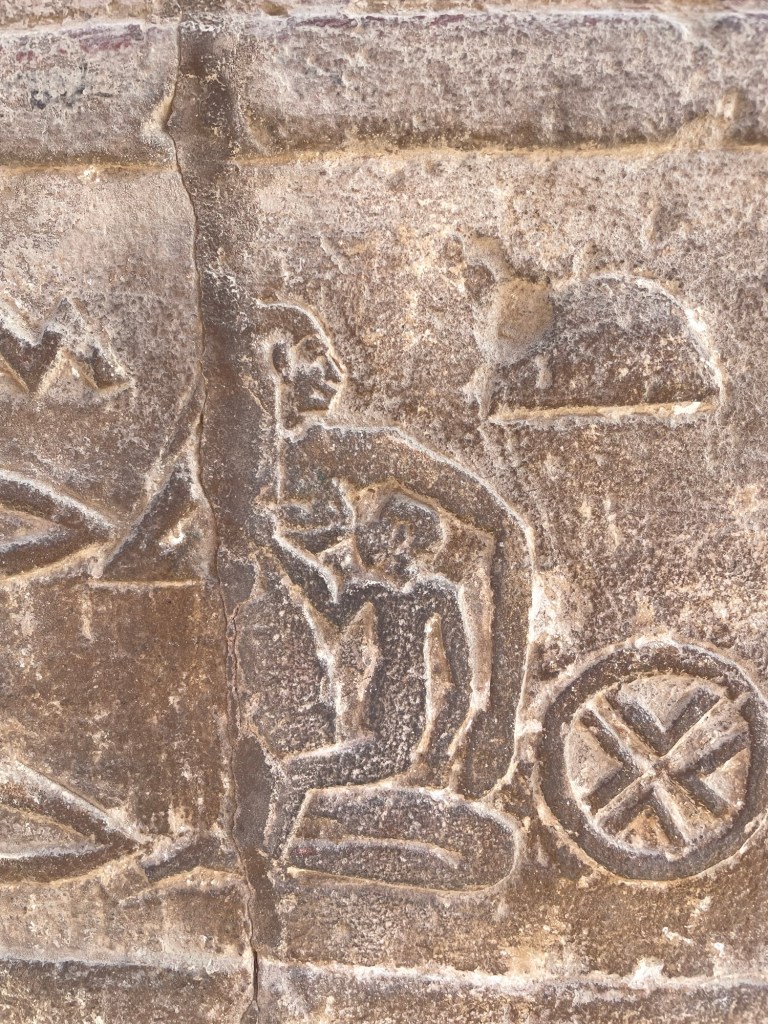
There are crocodile mummies here — displayed carefully, respectfully — reminders that the river was once full of them.
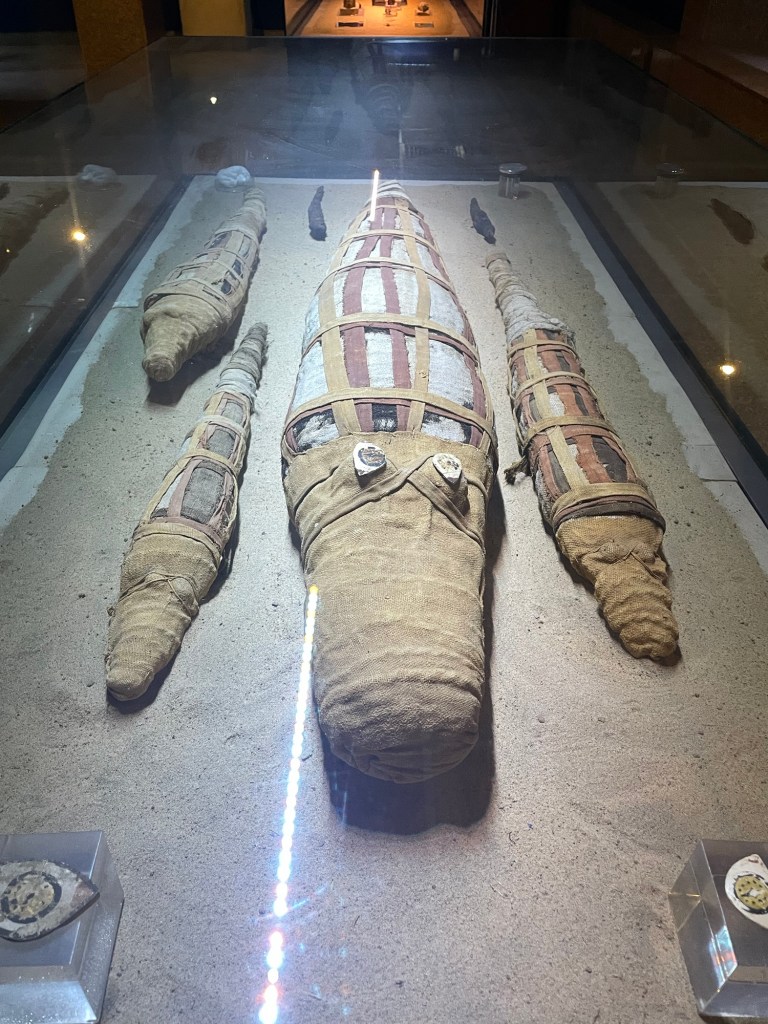
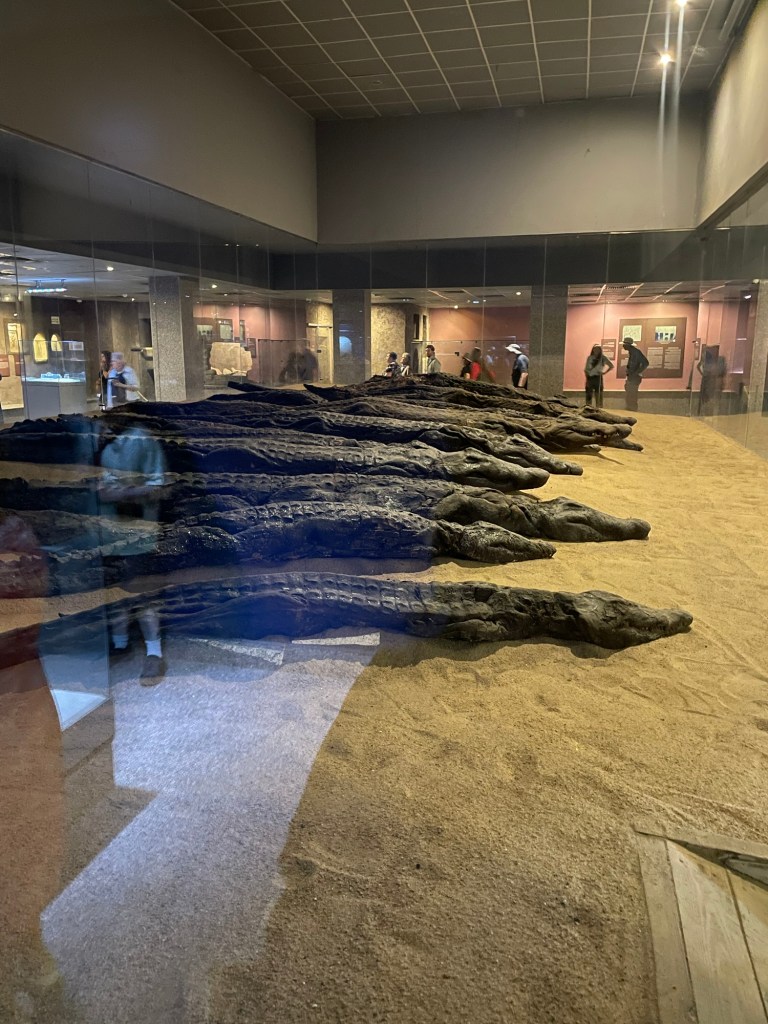
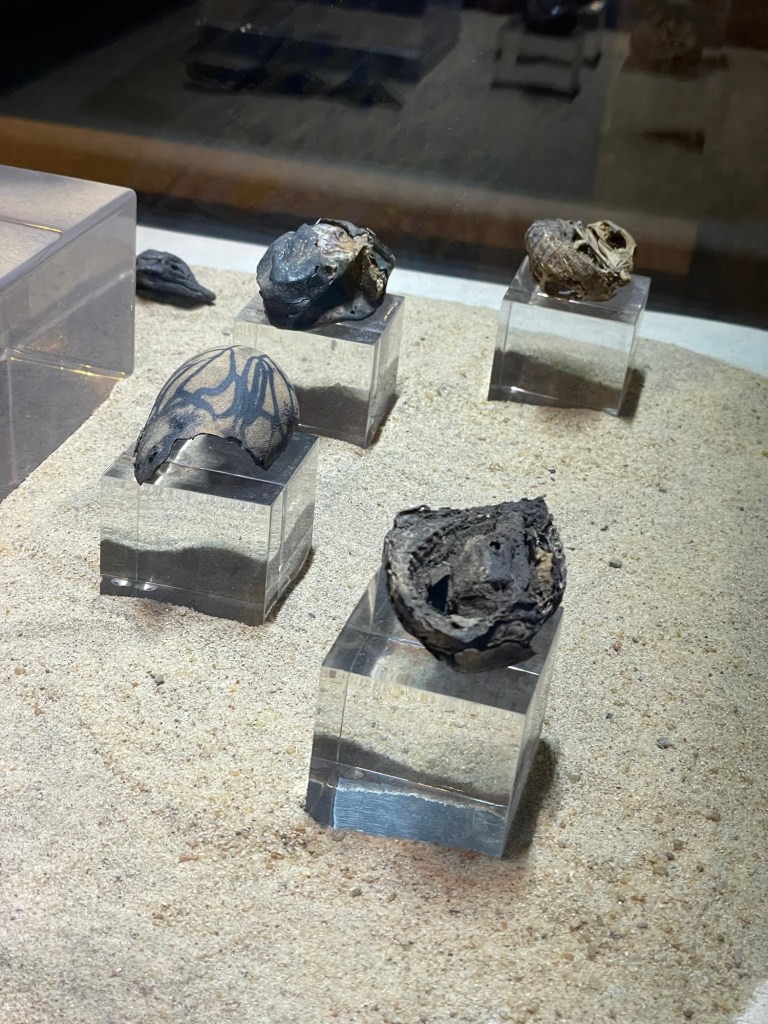

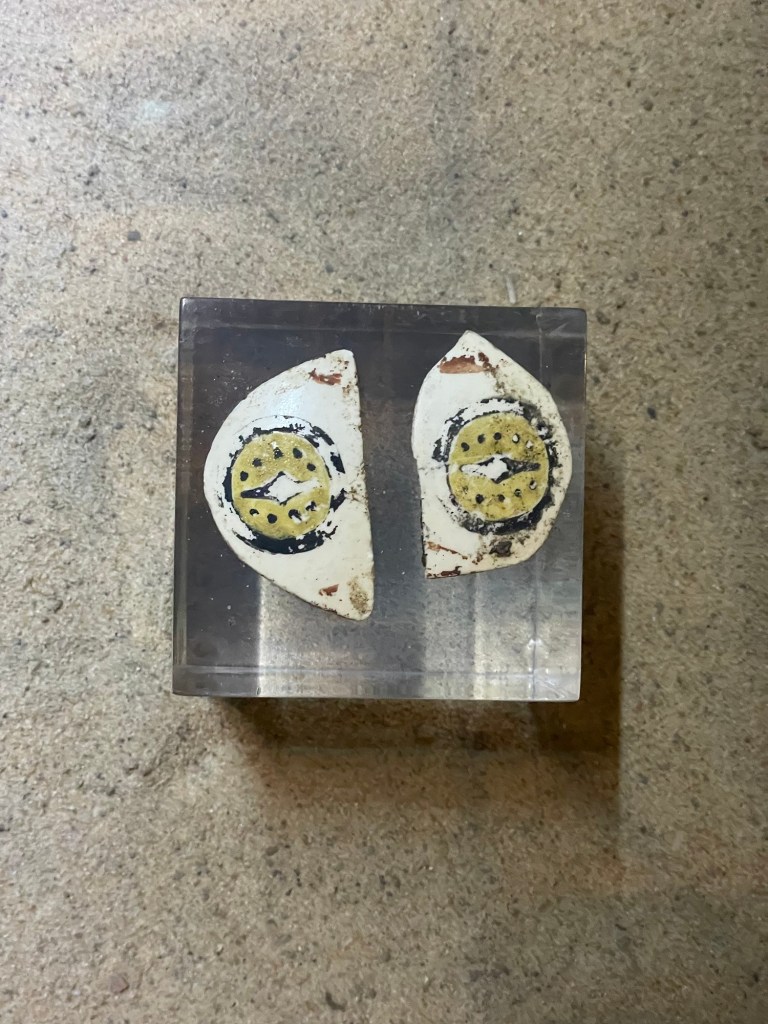
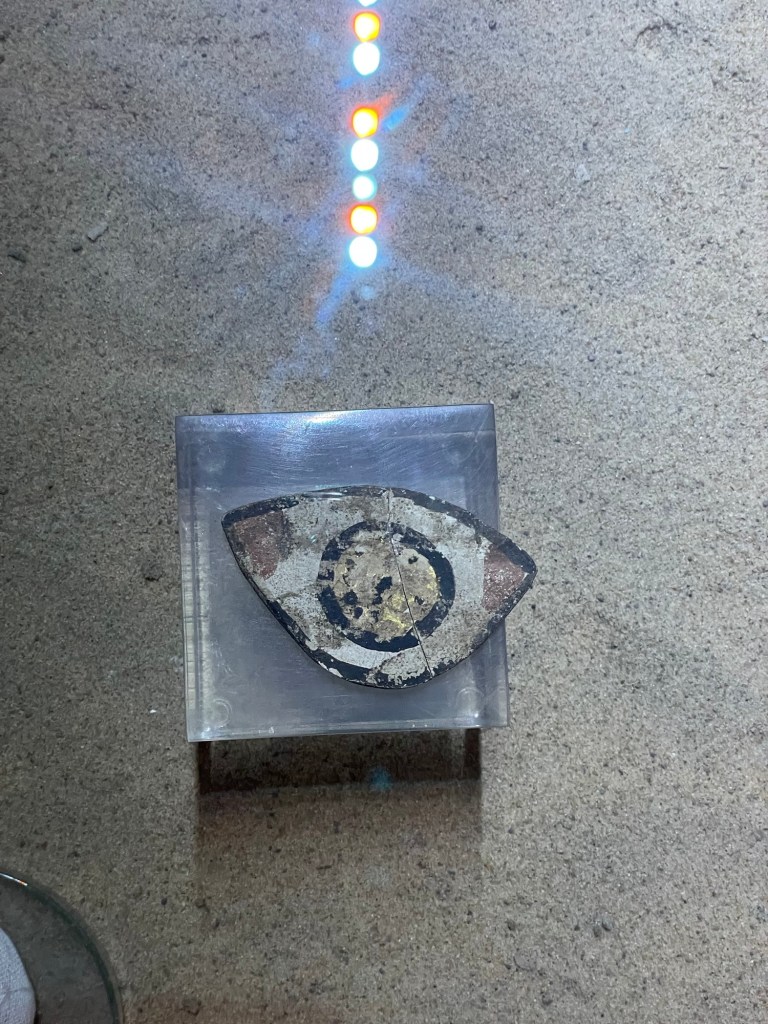

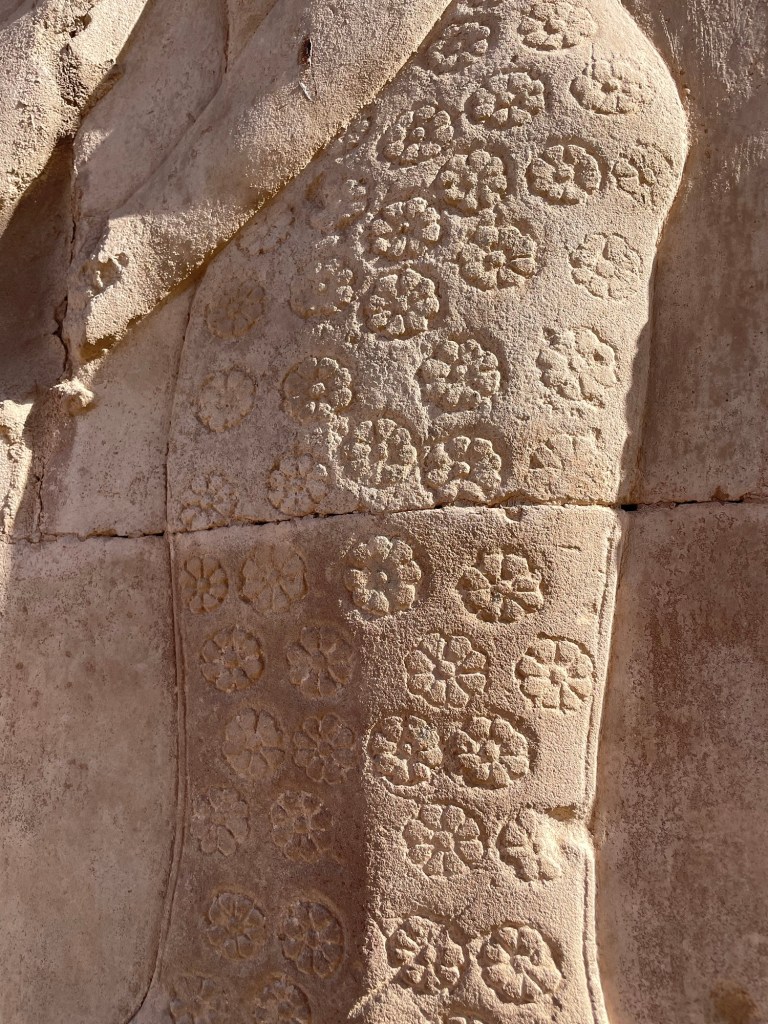
The temple feels both harsh and divine, sunlight catching on the carvings in a way that deepens every hieroglyph – they really do seem different.
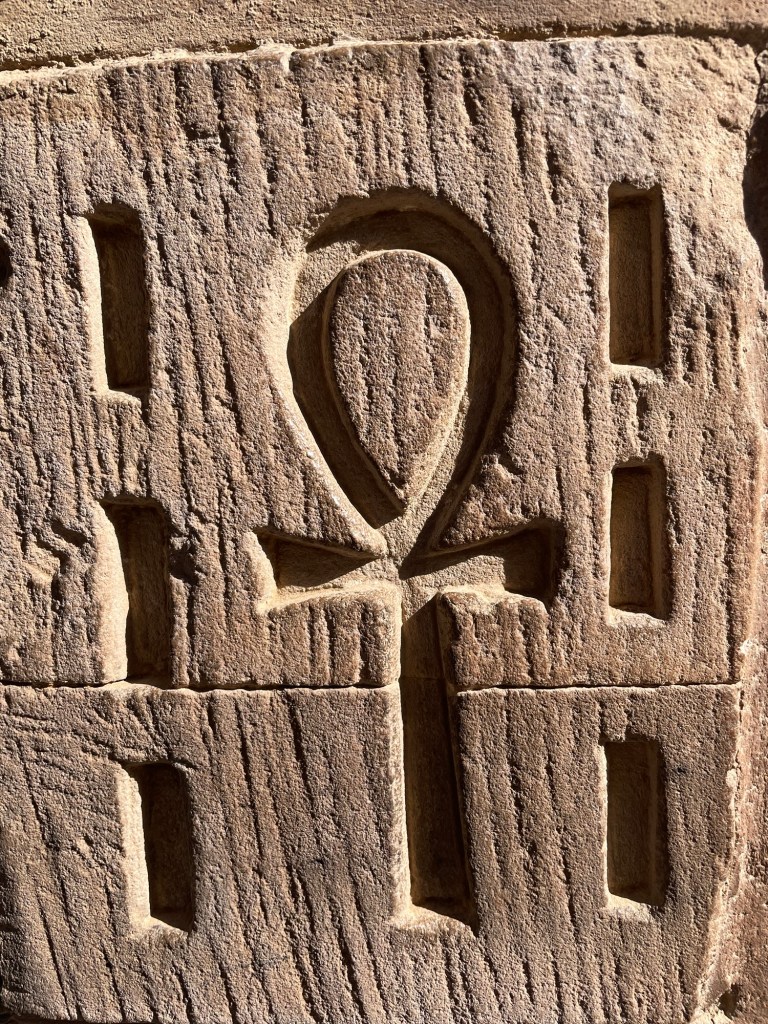
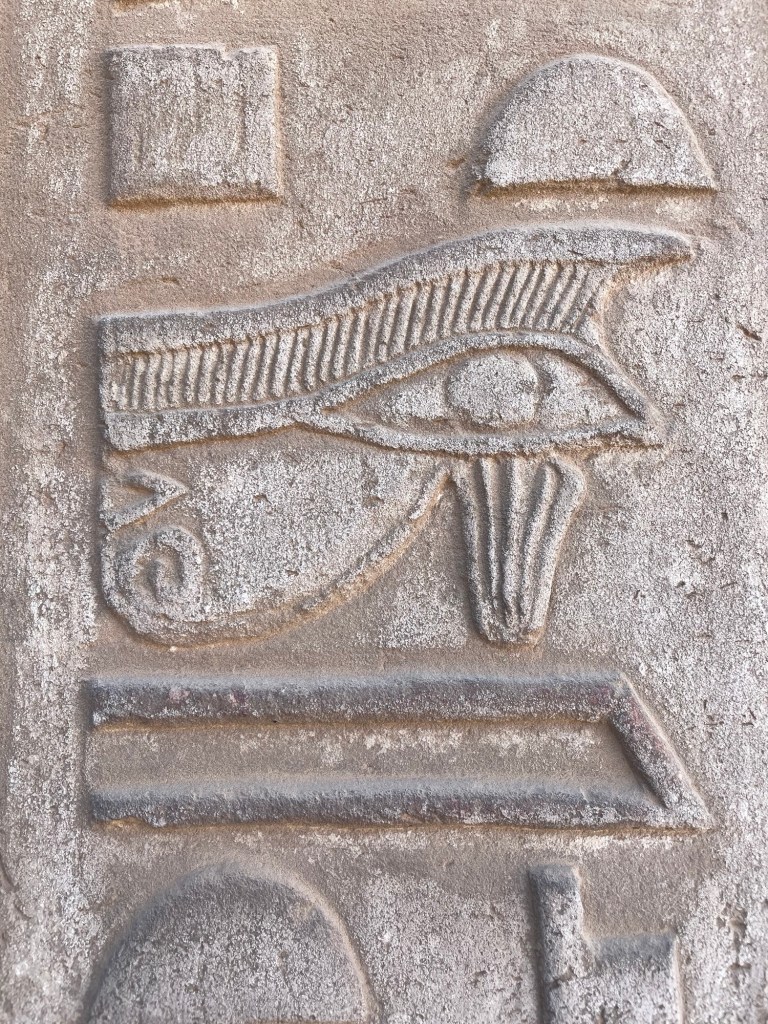


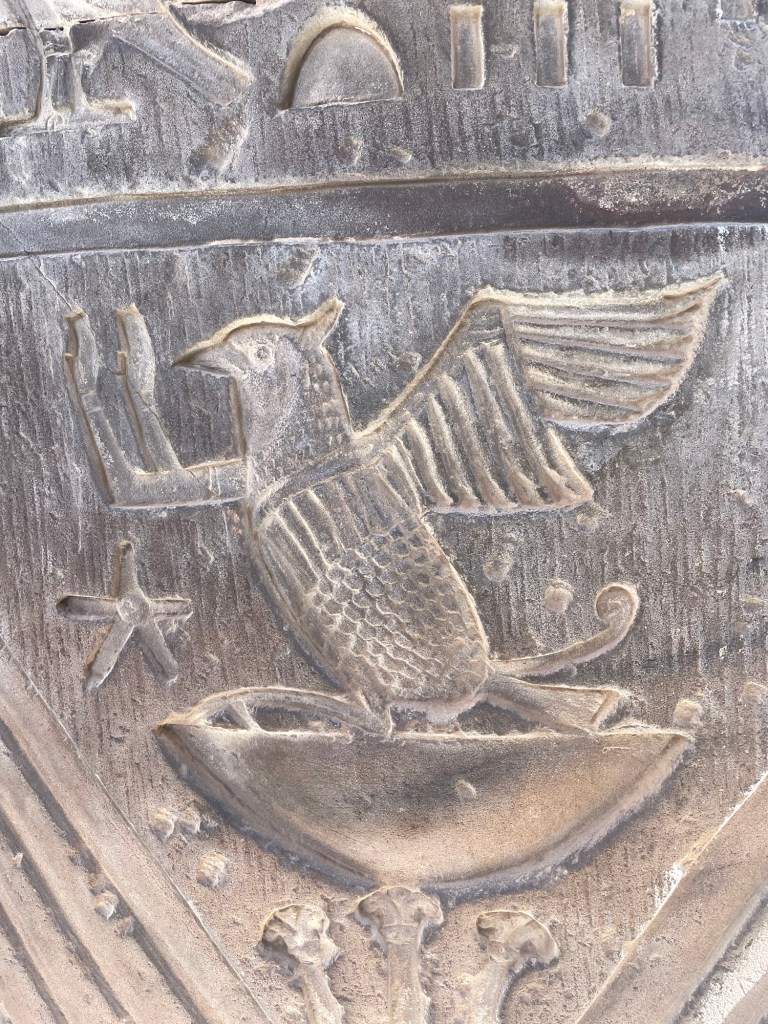
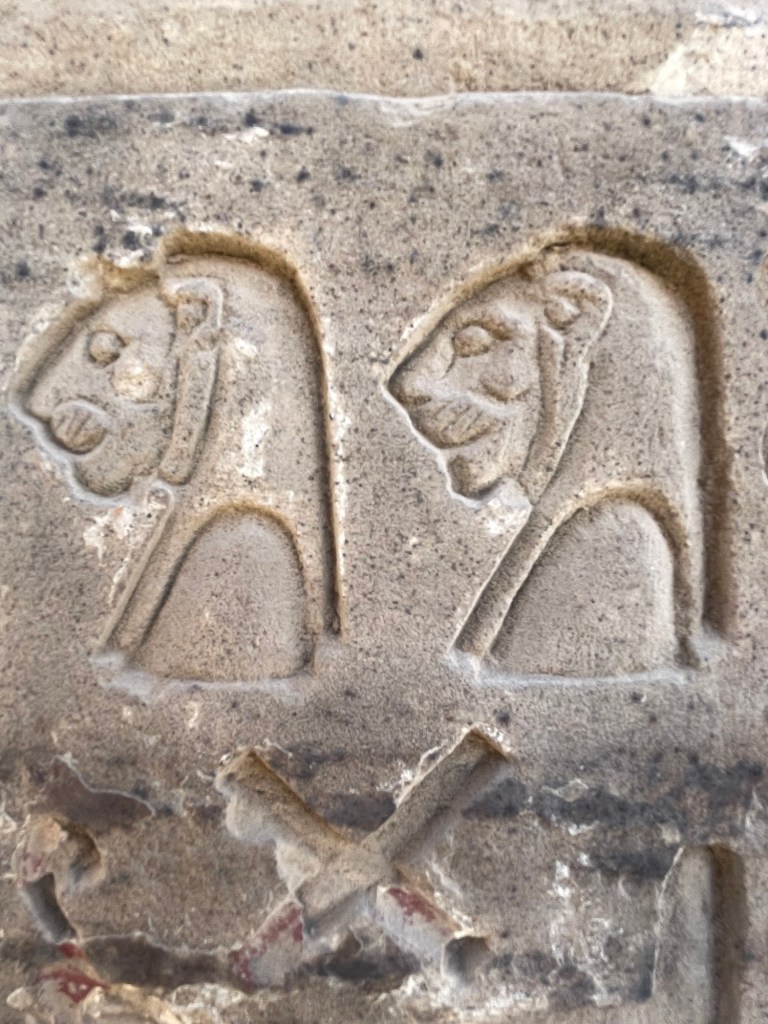


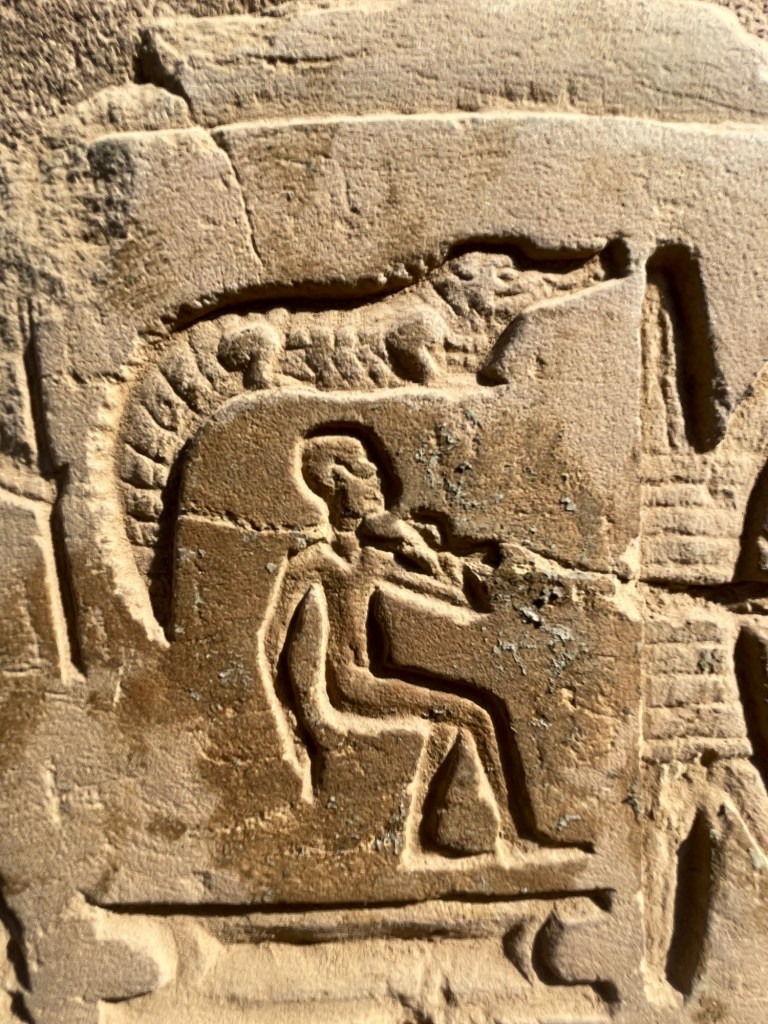
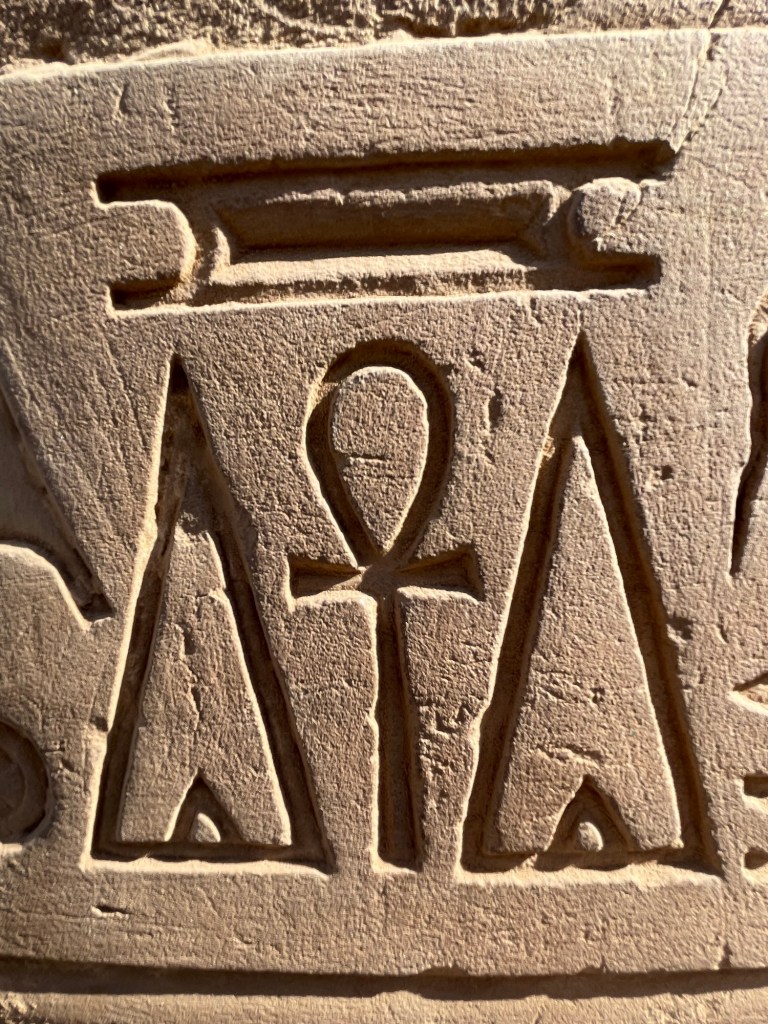
One of the moments that stayed with me at Kom Ombo wasn’t one of the famous reliefs at all, but a quieter one- the goddess Seshat, patron of writing, wisdom, and record-keeping. She’s carved lightly into the stone, poised with her palm-rib pen and her starry headdress, the ancient guardian of knowledge itself.

As teachers, Kathy and I stood there feeling a little special. There was something unexpectedly moving about being in Seshat’s company; this divine librarian of the ancient world, knowing that, in our own small way, we pass on language and stories too. When Kathy attempted to downplay our roles, I told her we were passing on sacred language just like Seshat. Goosebumps rippled up her arms. It felt like a blessing carved in stone. And a teacher, wearing leopard ? I don’t know anyone like that do I? 🤣


Leaving Kom Ombo meant running the gauntlet – and there’s really no other phrase for it. The moment we stepped outside the temple walls, the vendors descended with the speed and precision of the Egyptian army of Rameses II descending on the Hittites. Scarves were draped over our shoulders, carved crocodiles thrust toward our chests, “good price, very good price!” and “Hey Lady” echoing behind us like a chorus we hadn’t asked for. Some followed us all the way down the path to the ship, persistent, hopeful, and completely unbothered by the word “no.” It was chaotic and overwhelming. We finally made it back onboard, breathless and slightly dazzled, clutching our bags like survivors of a retail ambush.


We continued sailing to Aswan, where the Nile becomes something calmer. Wider. More reflective. The light here is different — softer, almost rose-tinted because of the constant backdrop of desert cliffs.

A Felucca Ride… and a Floating Marketplace
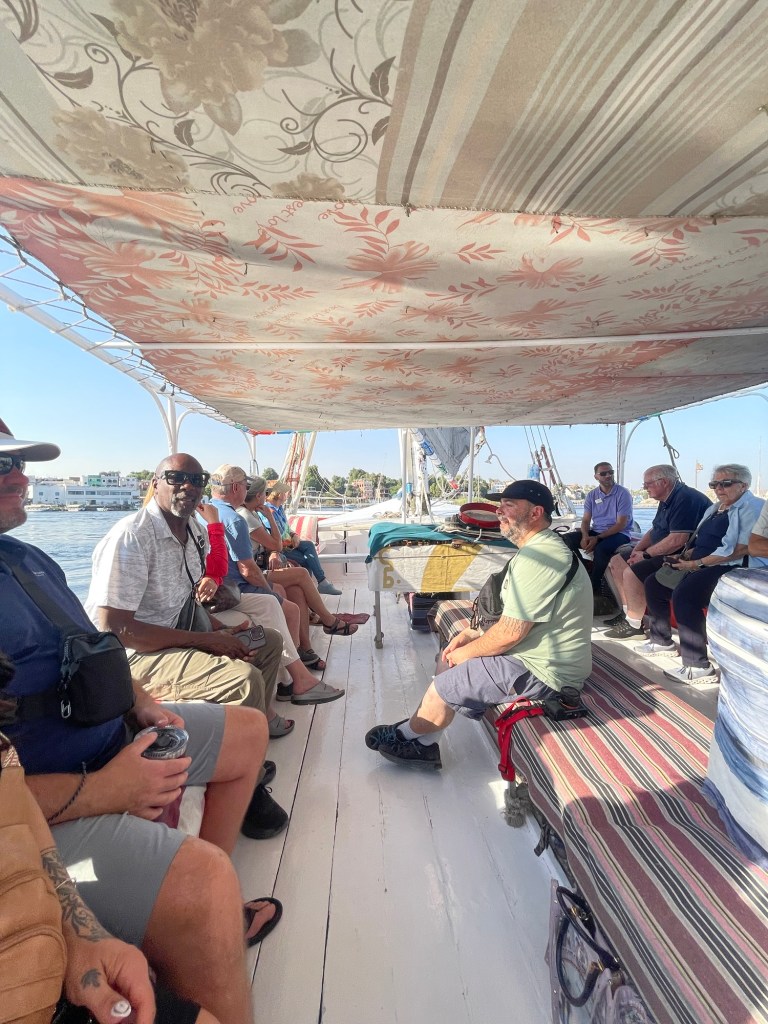
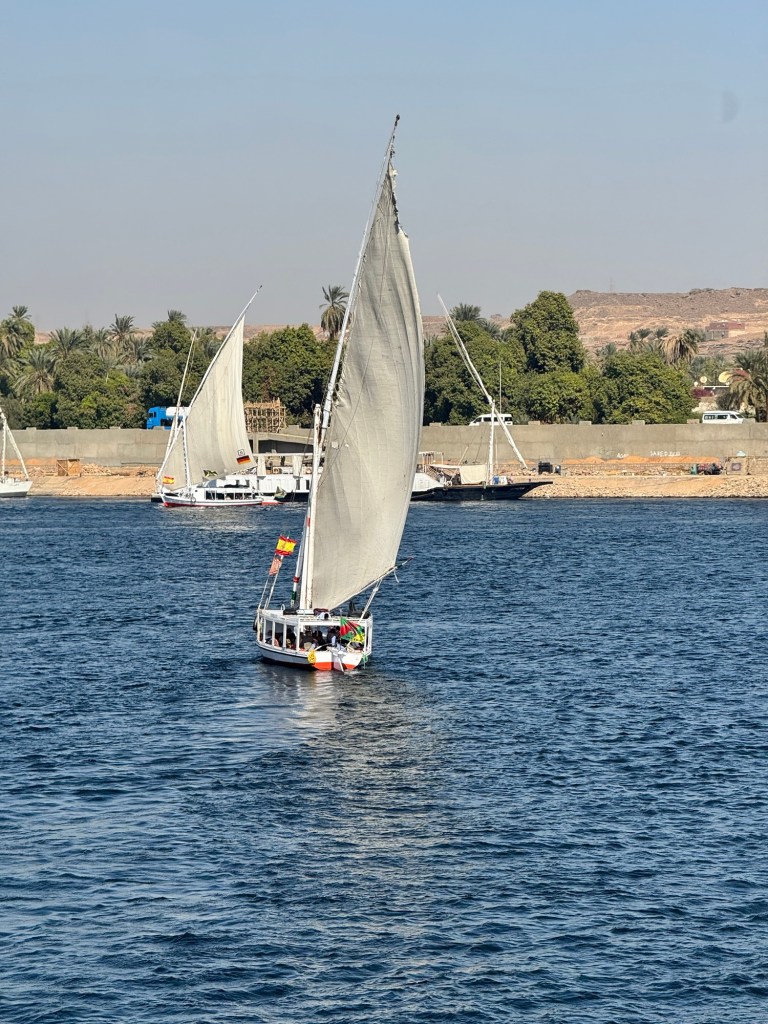
Later, in Aswan, we boarded a felucca, ready for that iconic slow-sail moment with the white triangle of the sail catching the wind like something out of a postcard.
Except… our boat had a very necessary shade cloth, which meant we could see absolutely none of the sail. Zero. So we floated along imagining how picturesque it must look to others!

Then the river entertainment arrived.
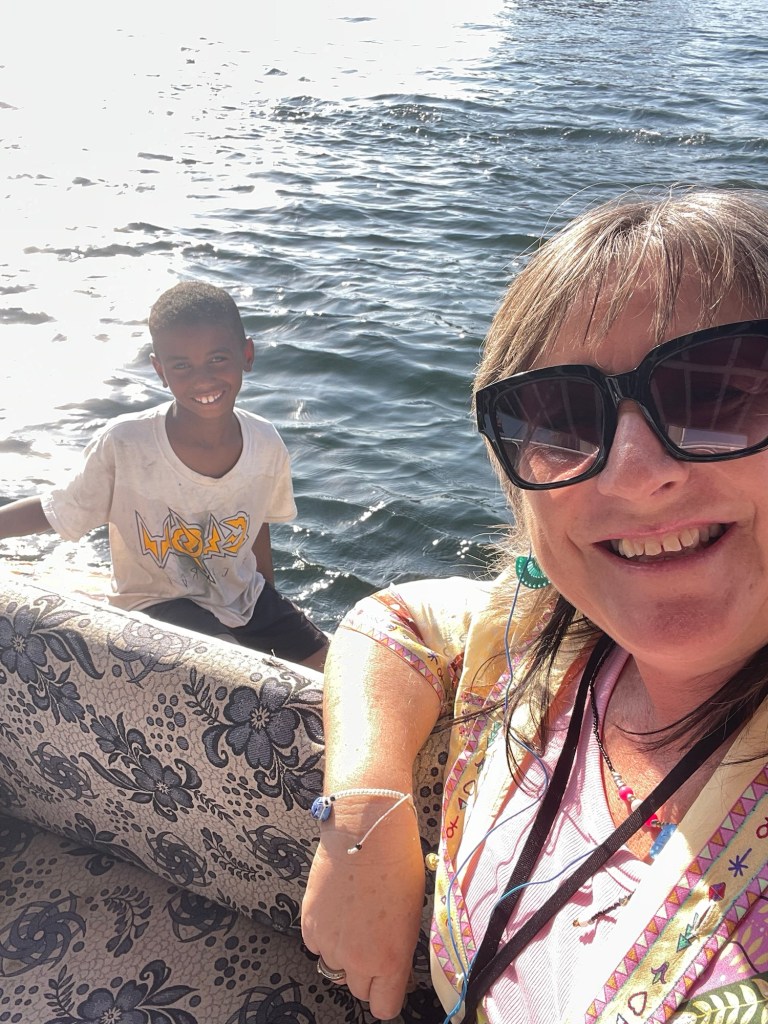
Kids paddled up beside us on surfboards, singing songs, part serenade, part hustle, asking for money with a mixture of charm, persistence, and full theatrical commitment.
Meanwhile, our felucca sailor pulled out a drum, and suddenly we were in an impromptu Nile concert, clapping and singing along while drifting past palm trees. I recognized one of the songs as the work song from Raiders of the Lost Ark – the part where Indy’s team is digging in Tunis for the Ark.
“Salle ala Nabi. Wa heyla. Heyla.
Salle ala Nabi. Ya m’ouwwé.
Salle ala Nabi. Heyla. Heyla.
Salle ala Nabi. Ya m’ouwwé”
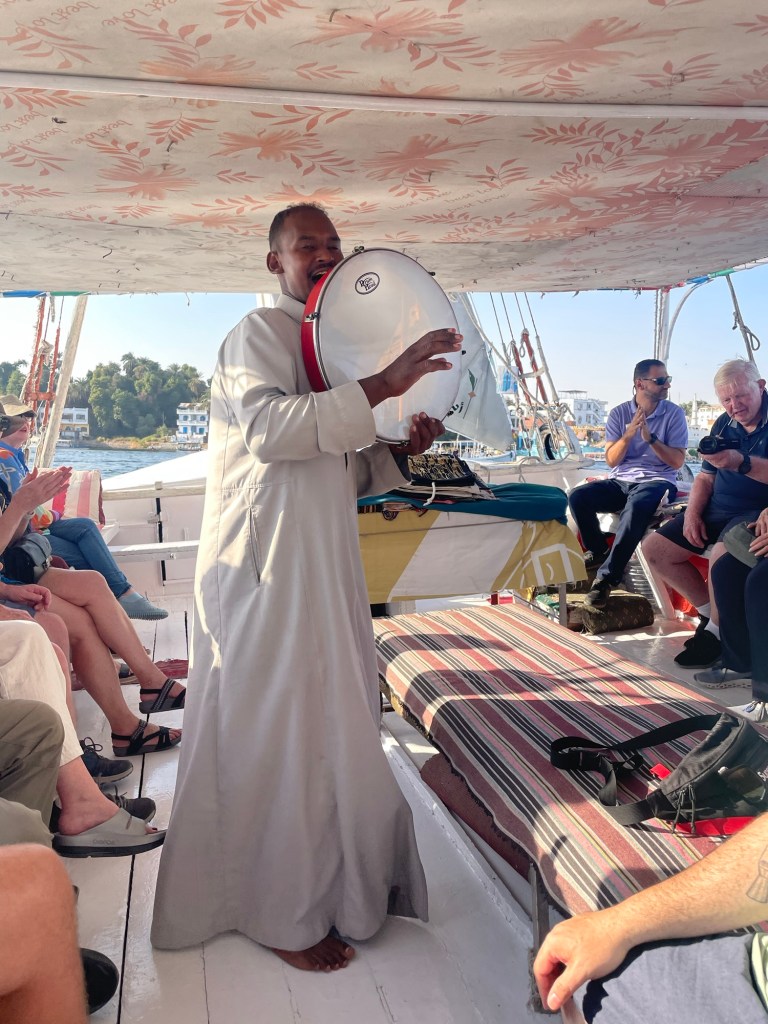
Just when we thought the show was over, the sailor whisked away the tablecloth with dramatic flair, revealing a full spread of goods for sale — scarves, carvings, jewellery, and possibly the entirety of Aswan’s souvenir industry.
A captive audience, literally floating.
Naturally, I am now the proud owner of two wooden crocodiles and one wooden camel, all of which I now need to smuggle past Australian customs with a straight face.

Sunset at the Old Cataract Hotel
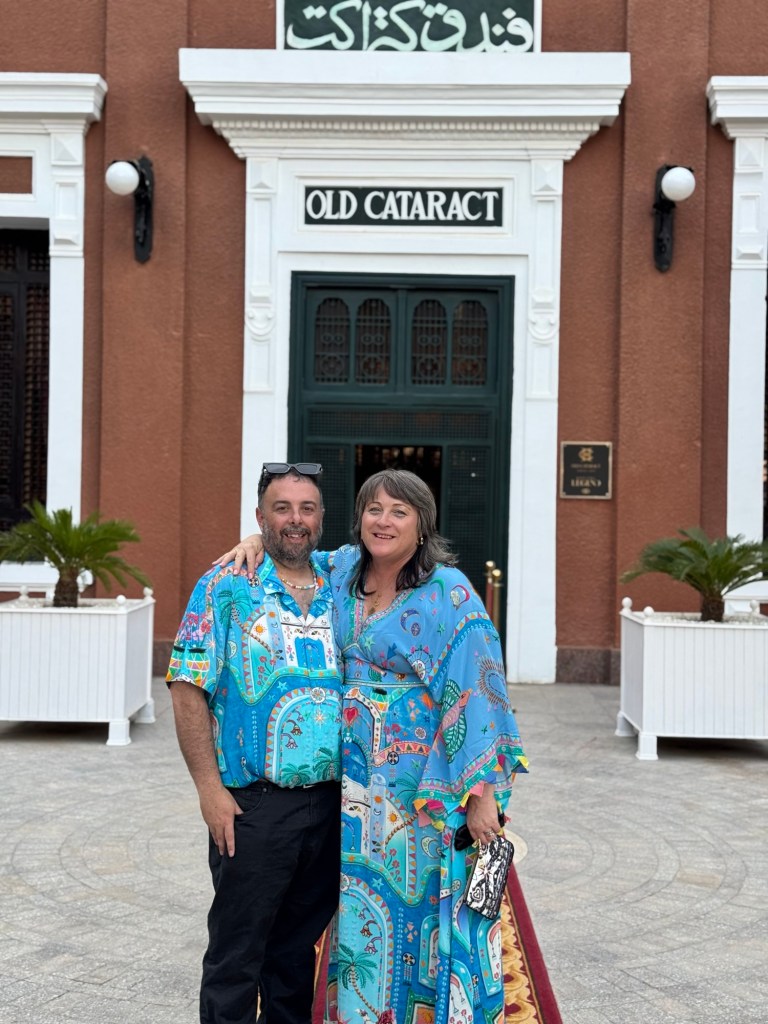
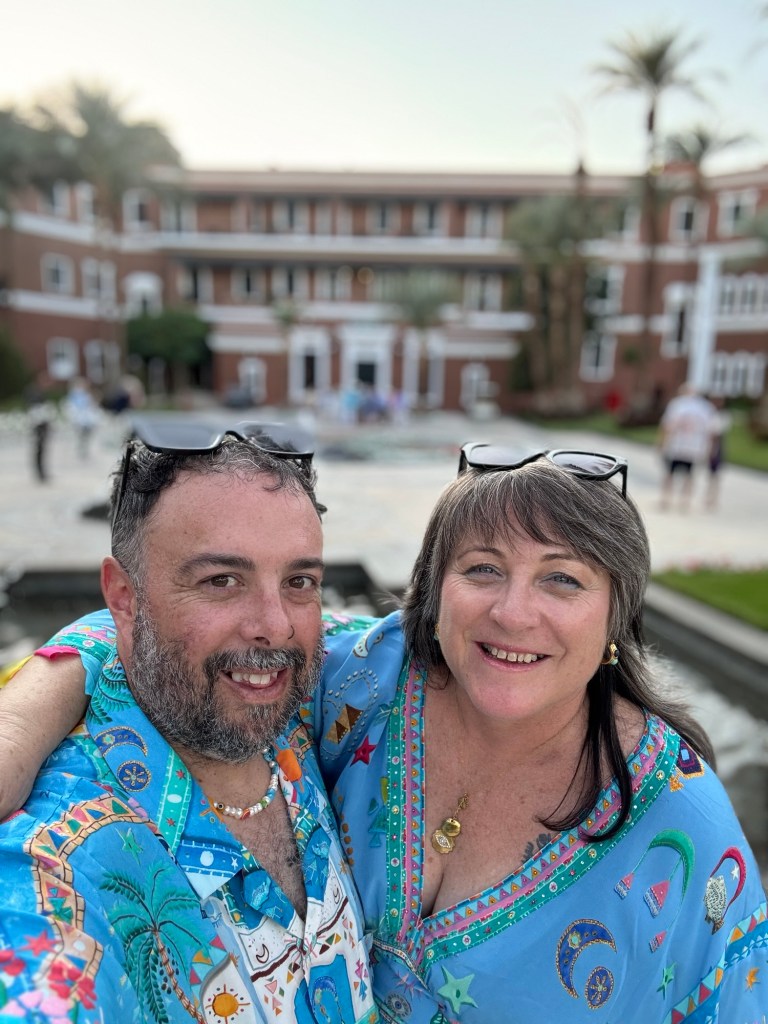
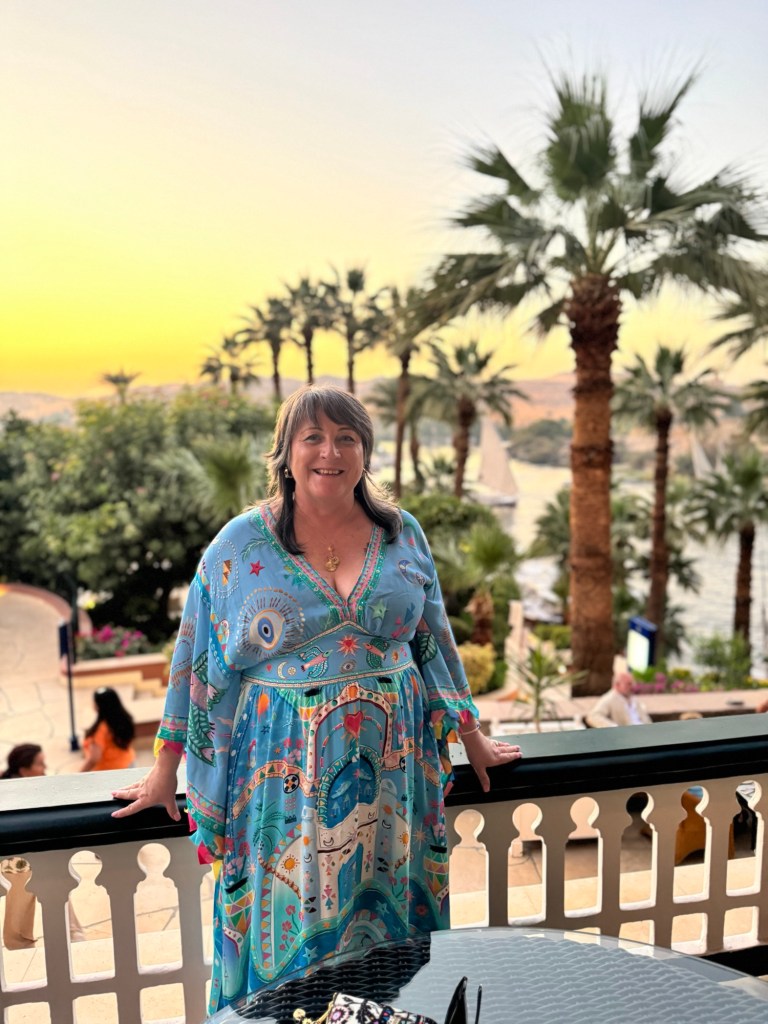
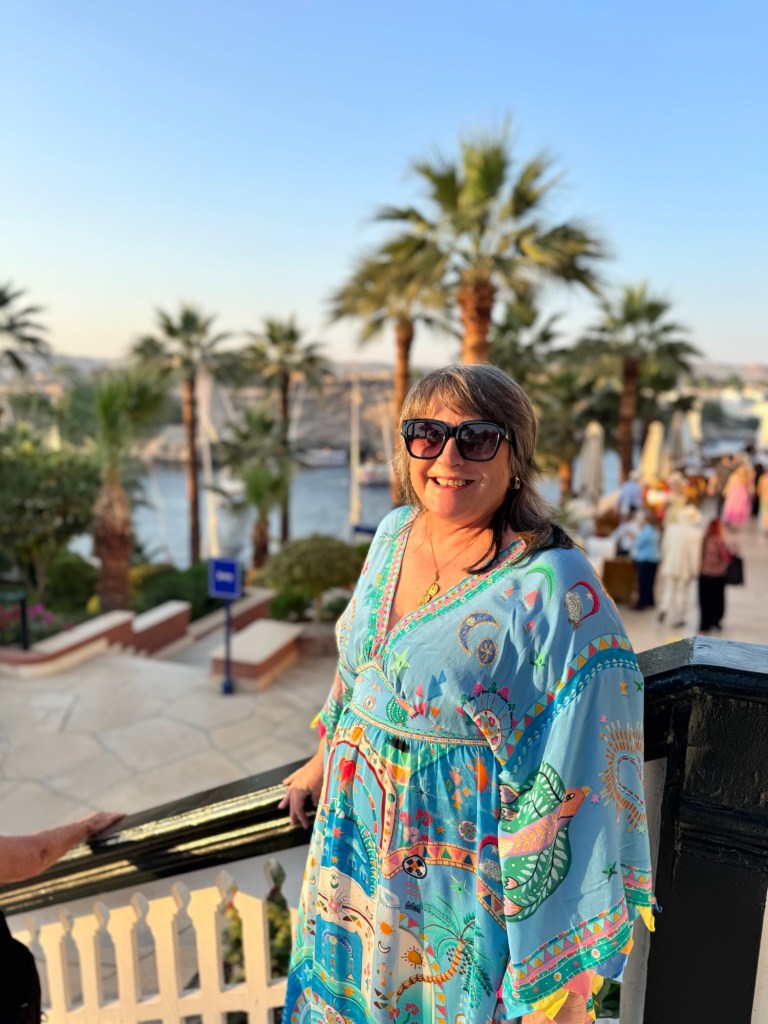
After the felucca theatrics, we dressed up for something truly special: afternoon tea at the Old Cataract Hotel, where Agatha Christie wrote Death on the Nile.
Think:
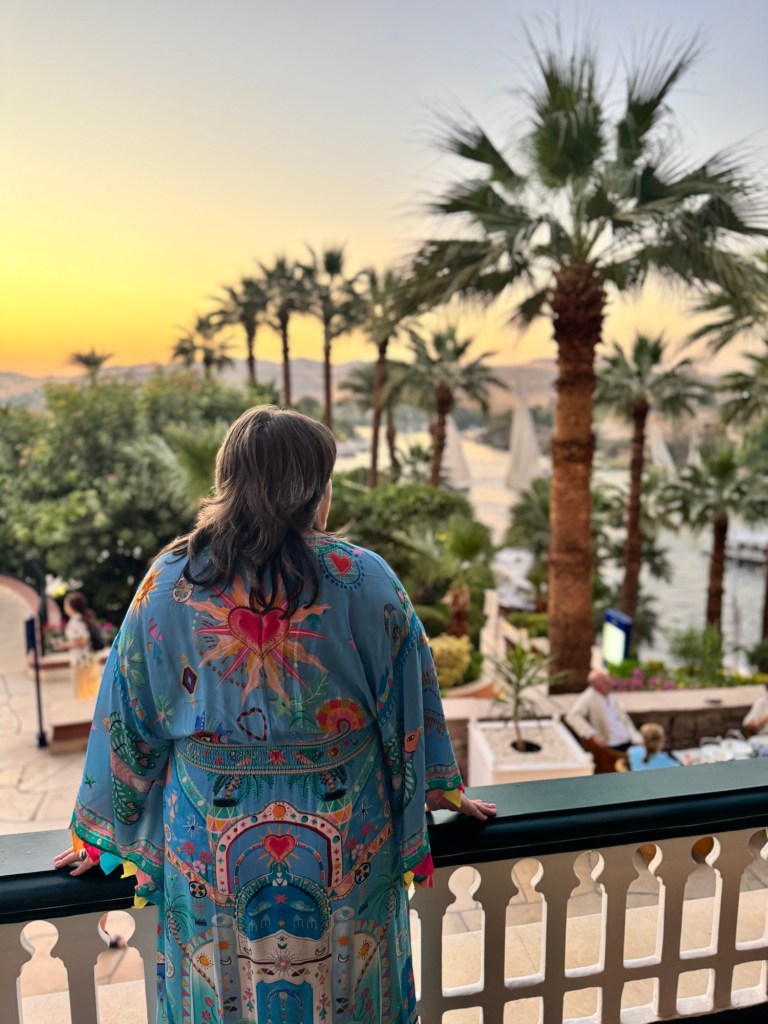
– sweeping views of the Nile
– feluccas slicing the sunset like silver knives
– palm trees silhouetted against peach-and-gold skies
It feels like stepping into a novel – the kind where someone glamorous is definitely hiding a letter opener in their handbag.

We lingered over tea and pastries as the sun sank behind Elephantine Island, the whole river glowing molten gold.
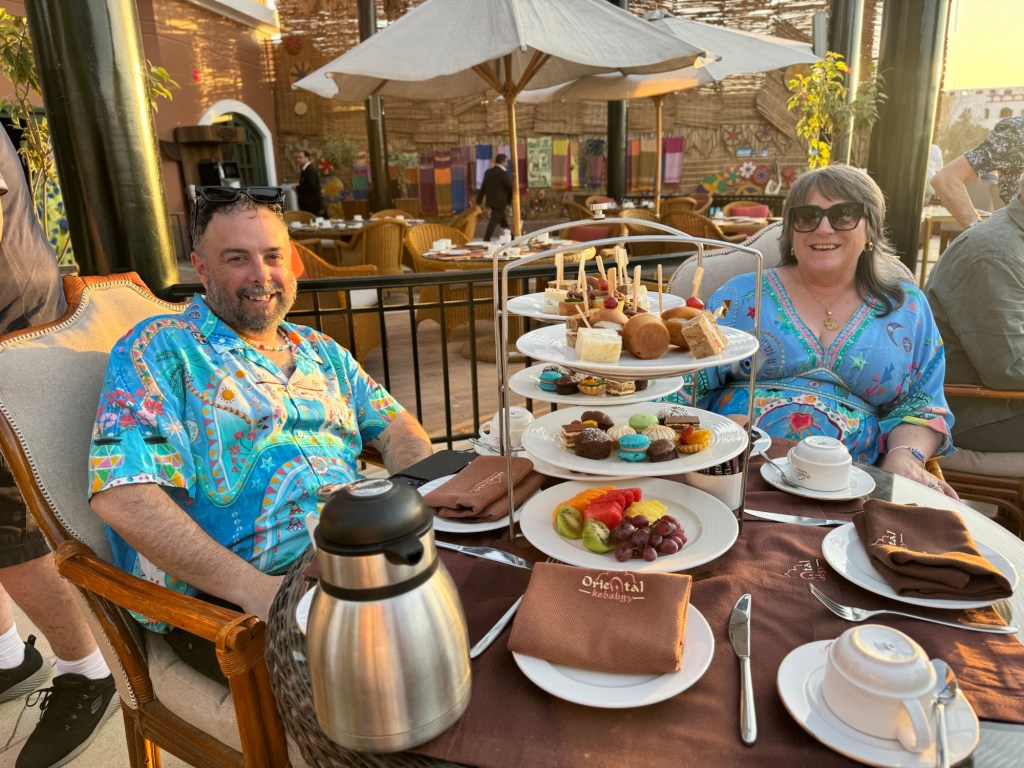
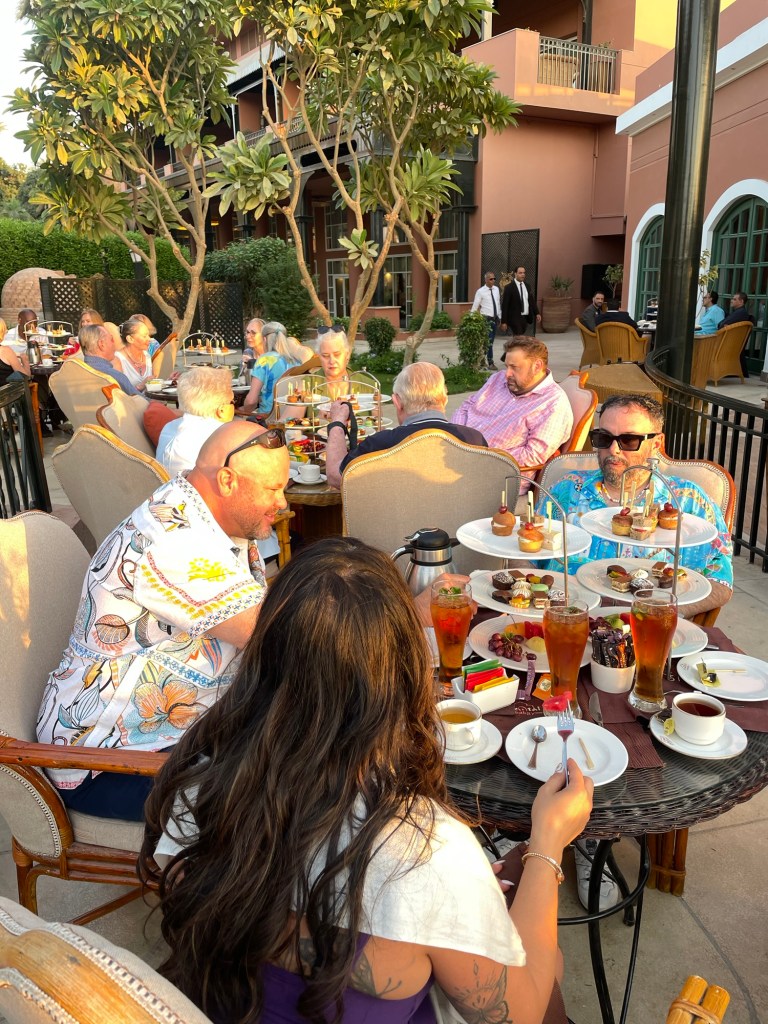

Afterwards, we wandered through the hotel’s historic corridors, the kind of opulence that whispers rather than shouts. It is the sort of place you don’t stay in: you visit, you dream, and then you gently remove yourself before someone mistakes you for a wealthy eccentric novelist.

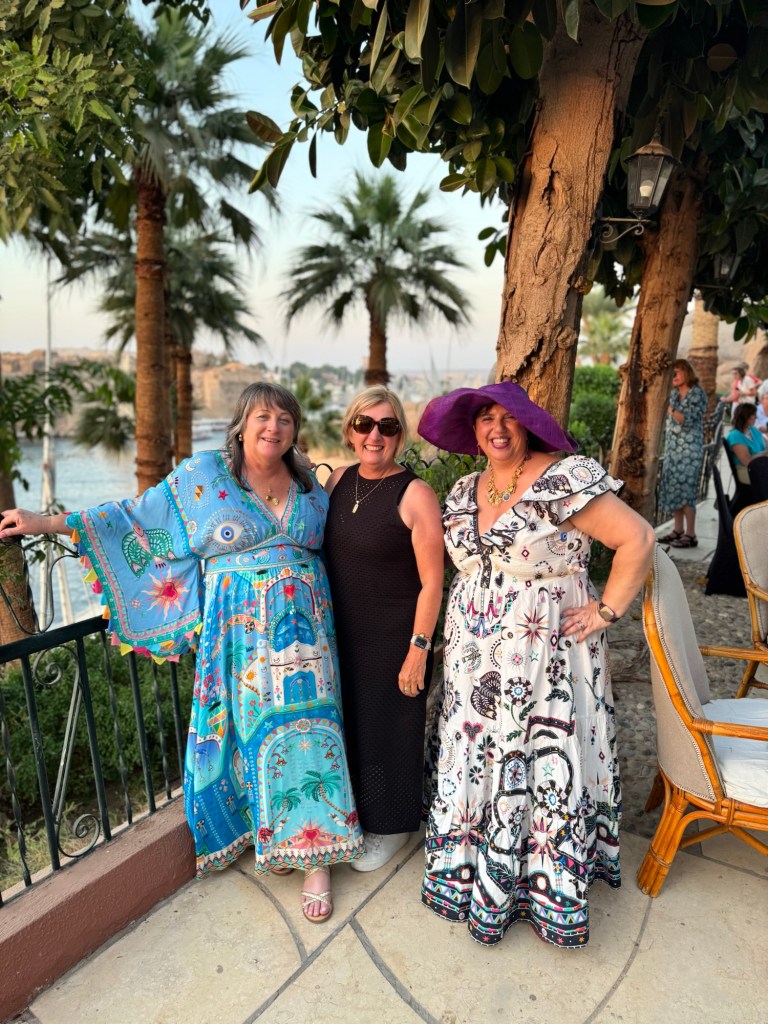


Nubian dance show
And just when we thought the day couldn’t hold one more surprise, Happy Hour came alive with a Nubian dance show before dinner. Drums thumped, colours flashed, and suddenly the whole lounge was alive with rhythm. Before I knew it, we were all swept into a joyful, laughing, Nubian-style conga line, snaking around the room with absolutely no dignity but maximum happiness. It was chaotic, warm, infectious – one of those moments where you stop caring how you look and just let the rhythm carry you.


It was the perfect end to a wildly varied day: ancient medical carvings, singing children on surfboards, surprise souvenir ambushes, and tea in a hotel fit for mystery novel royalty. Egypt does that: it folds the sacred, the chaotic, the humorous, and the breathtaking into a single day without ever feeling disjointed. You move from birth scenes carved in stone to crocodile gods to a drumbeat on the river to a sunset that feels almost scripted. And somehow it all fits, all threads of the same long story.
Early to bed for a 4am start to Abu Simbel.
And for the fashionistas…
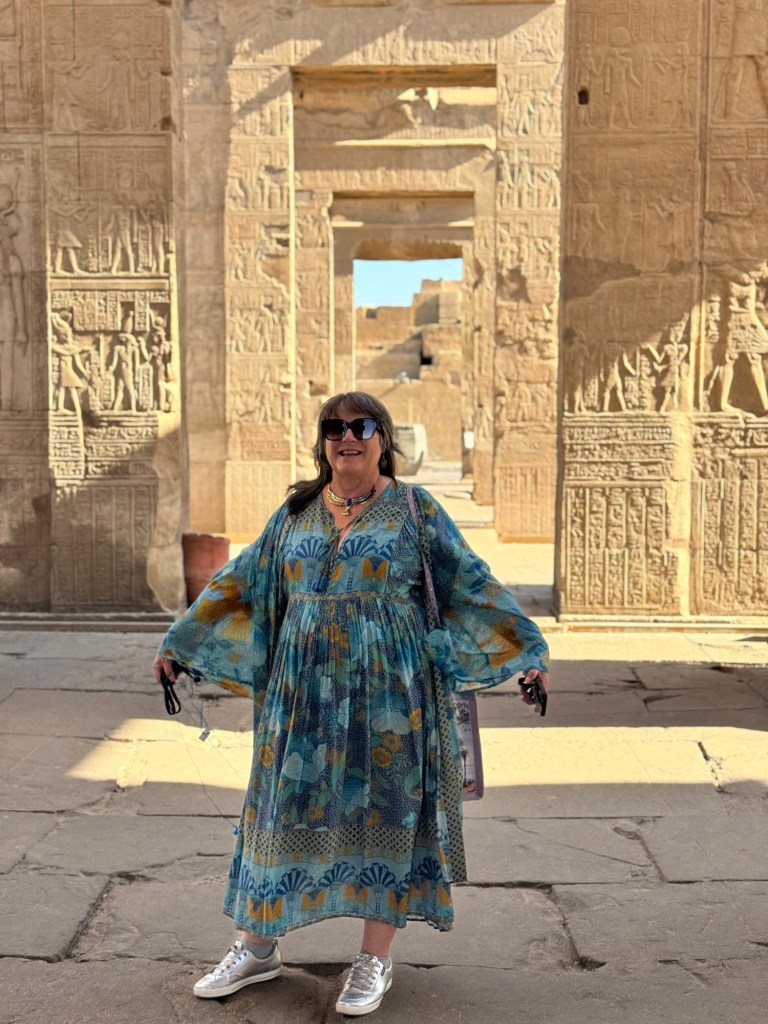
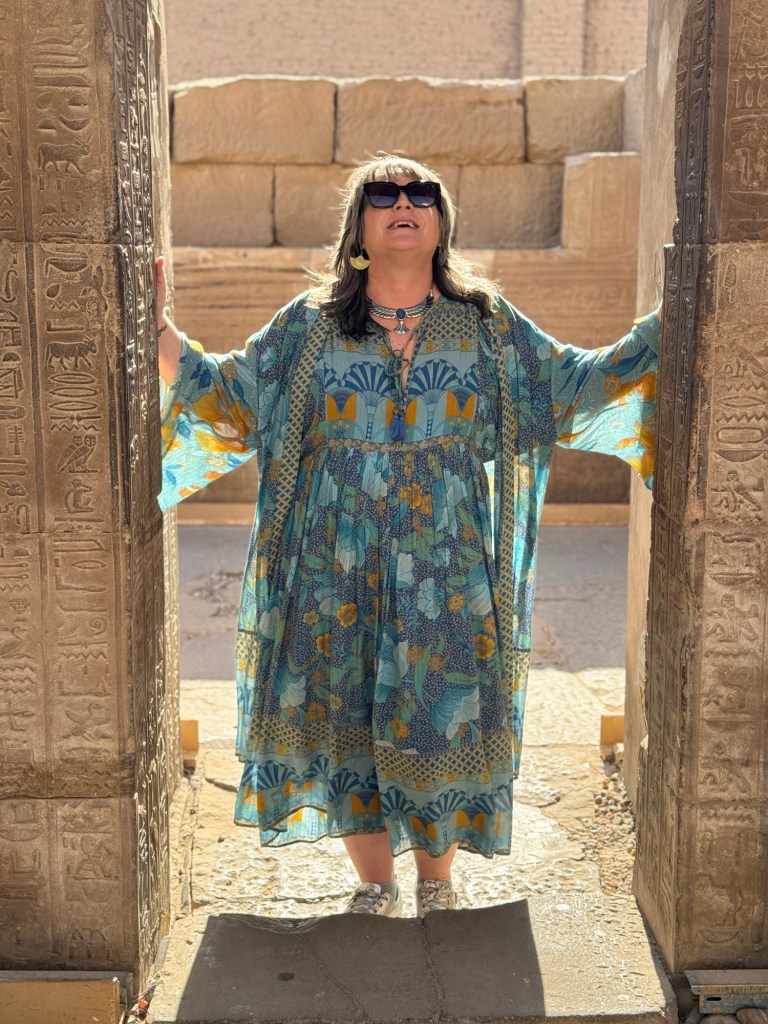
At the temple I’m wearing Nine Lives Bazaar.
At tea I’m wearing A painted Village, Camilla. Nubian motifs. I bought this dress with the voucher I received from Marian College when I left.




 coddiwomple