Opened the curtains to greet Amun and instead was greeted by a view that I can only use cliches to describe- it literally took my breath away. I swear I made an audible gasp.

Some had organized to take a very early morning balloon flight over the Valley of the Kings and Queens and I’m sure they also had breathtaking views, but I am just too scared!
The West Bank
We crossed the Nile to the West Bank, where the ancient Egyptians believed the sun set into the realm of the dead. The landscape shifts quickly—green riverbanks give way to golden cliffs and quiet desert.
Colossi of Memnon
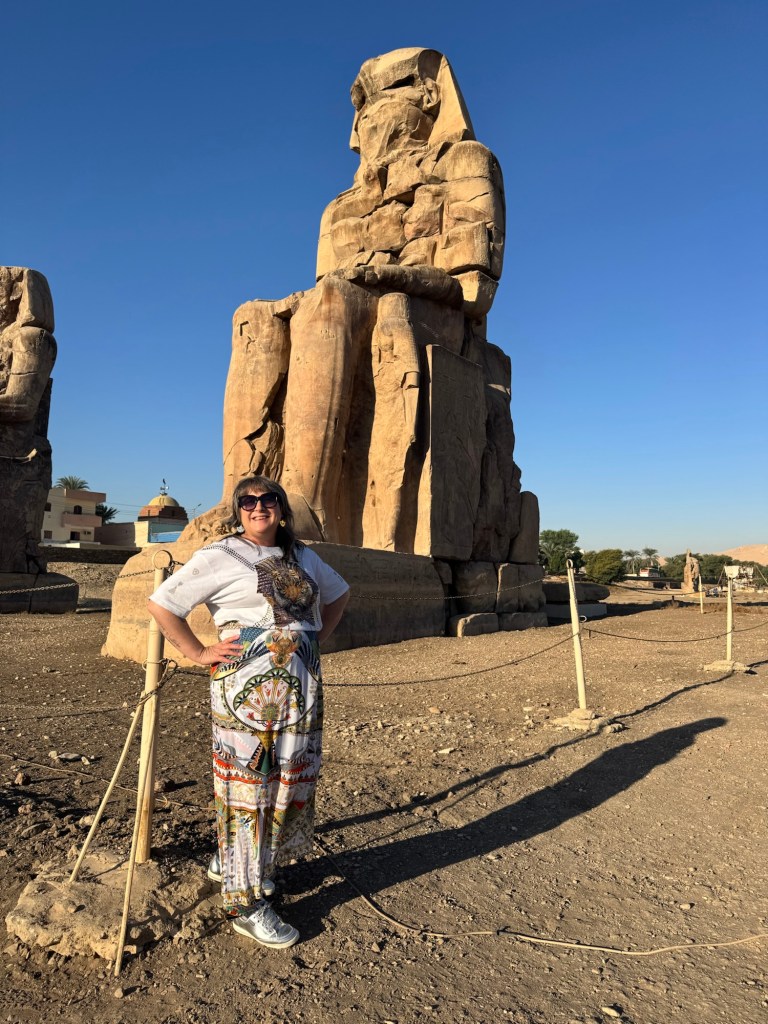
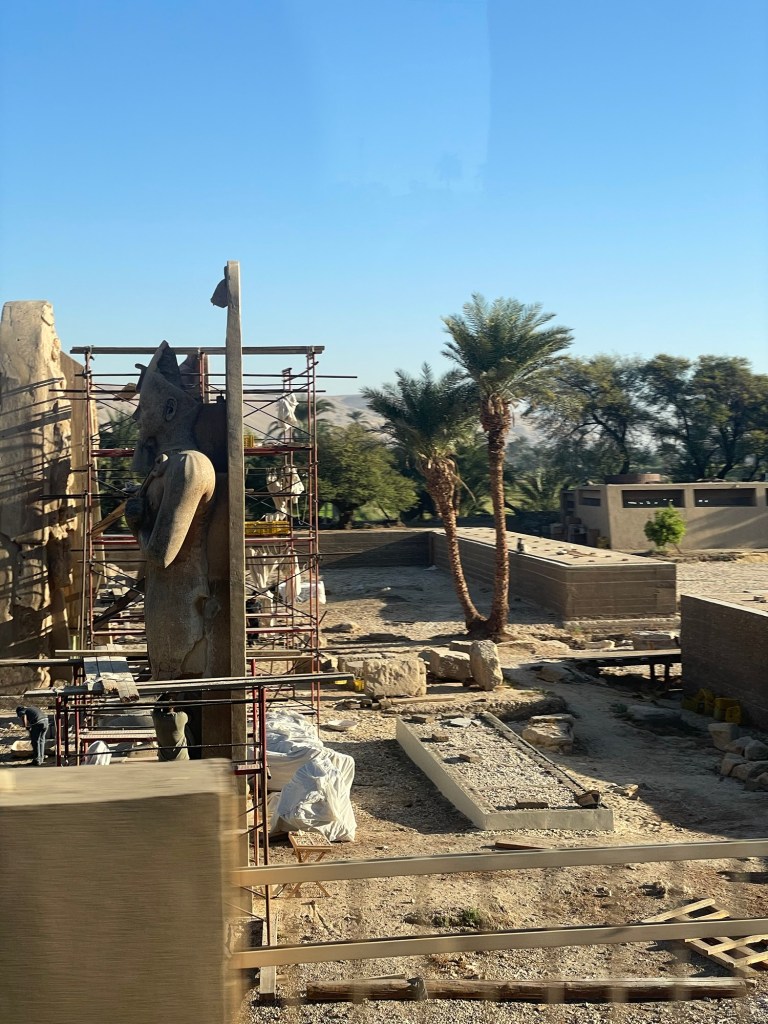
We paused at the Colossi of Memnon – two massive stone guardians watching the desert watching the desert as they have for over three thousand years. They feel less like monuments and more like guardians. Silent. Patient. Eternal.

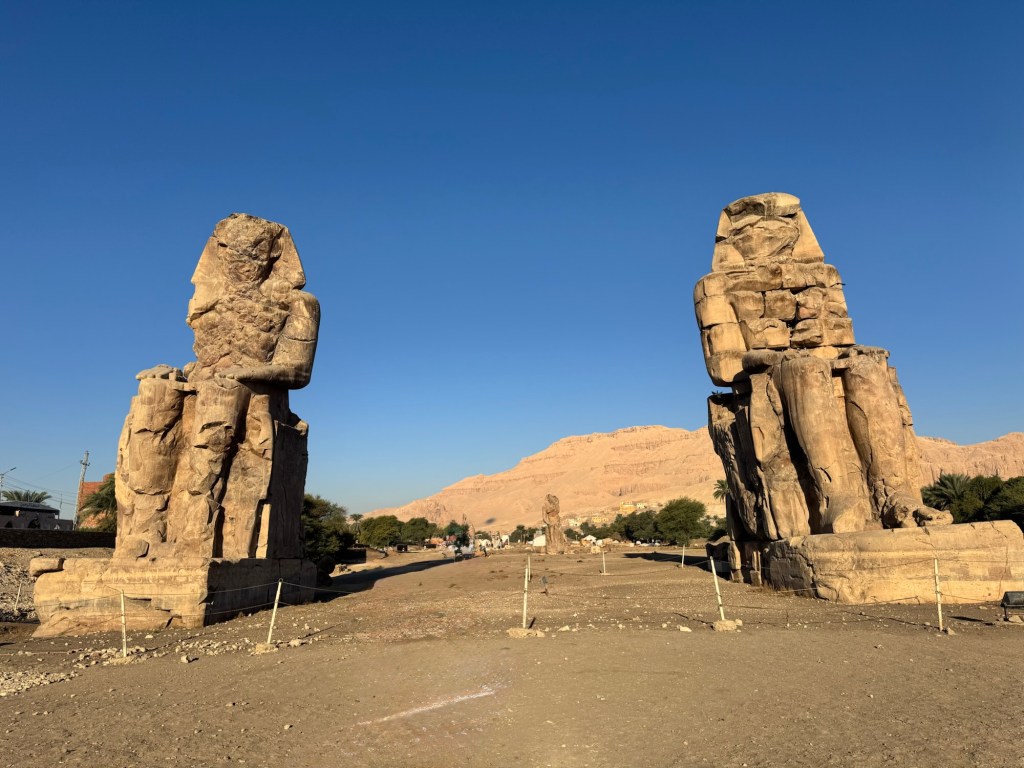


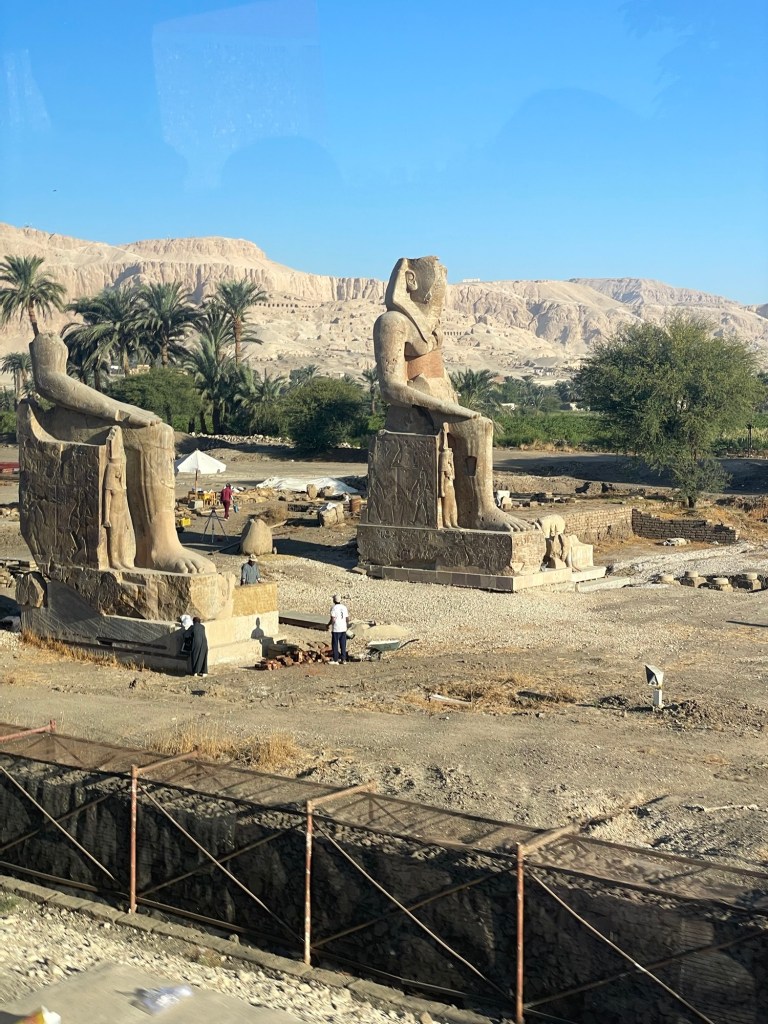
There are recent excavations there as the statues would have been at the entrance of a great temple. I was expecting Indiana Jones kind of archeological digs but that’s just silly



Valley of the Kings

We stepped into the Valley of the Kings, where tombs lie hidden beneath the stone.

We spent the morning wandering the honeycomb of royal tombs in the Valley of the Kings, ducking into the afterlife real estate of Ramesses III, Ramesses IV, Ramesses IX, and – the headliner: Tutankhamun himself.
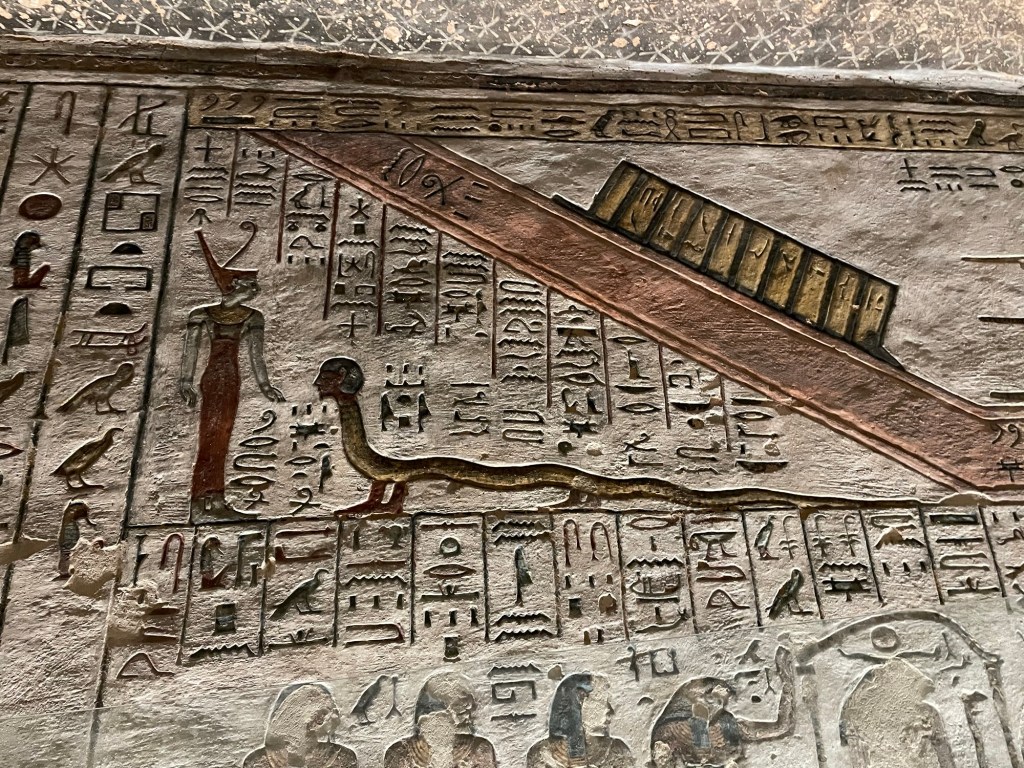
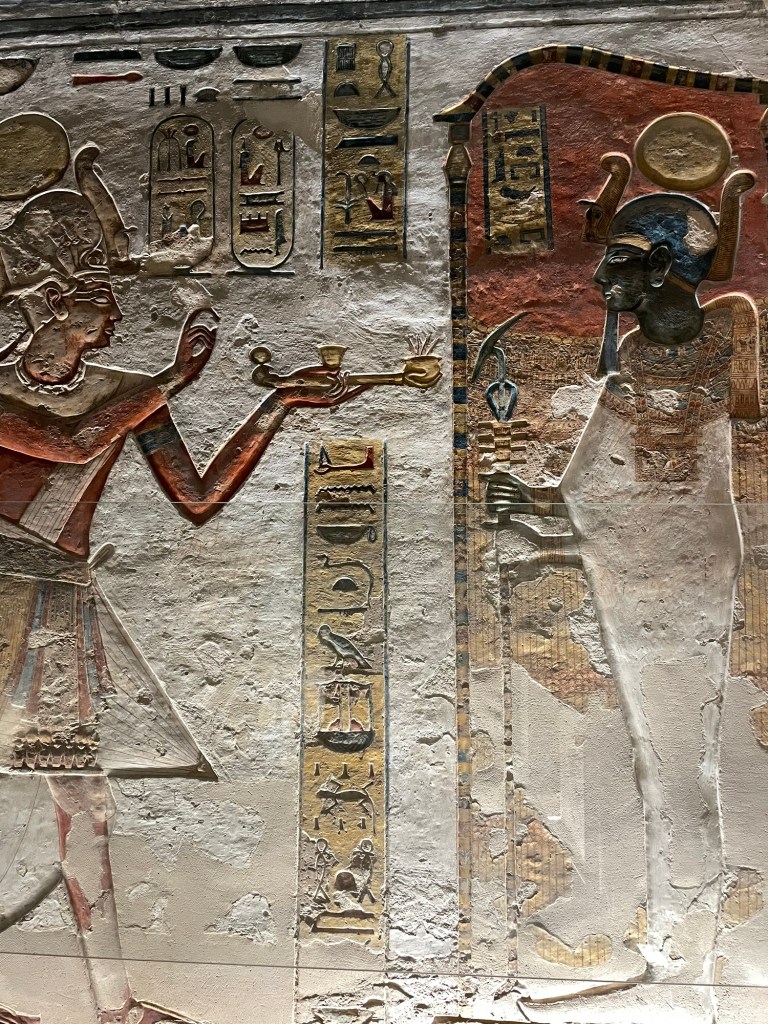
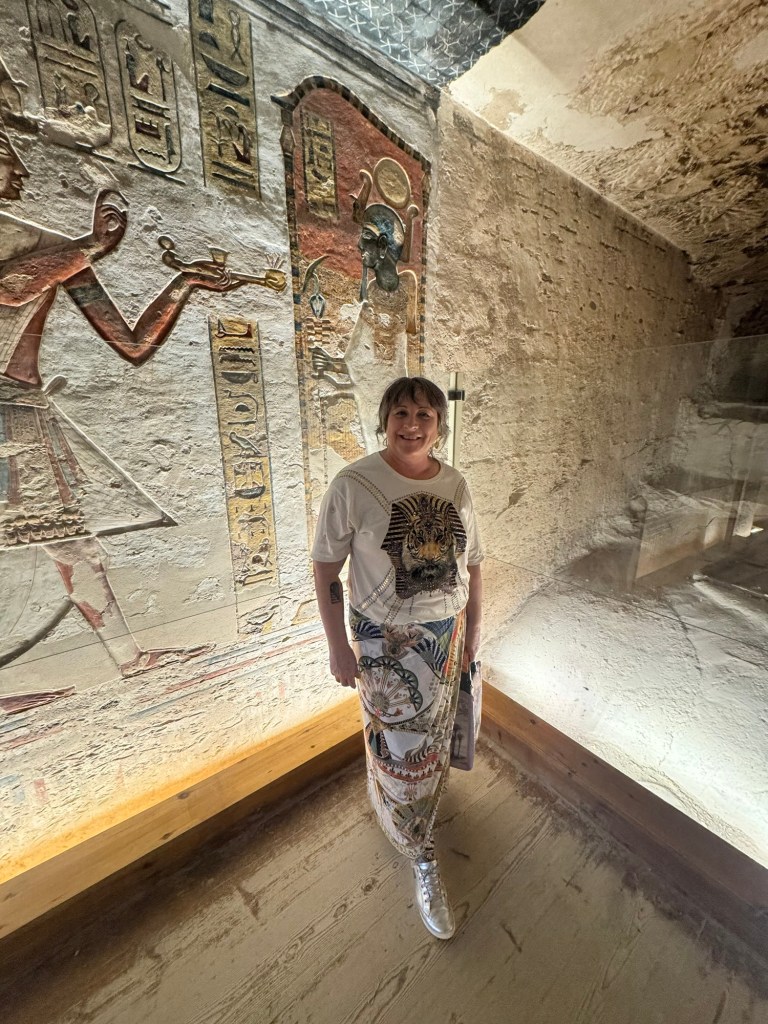
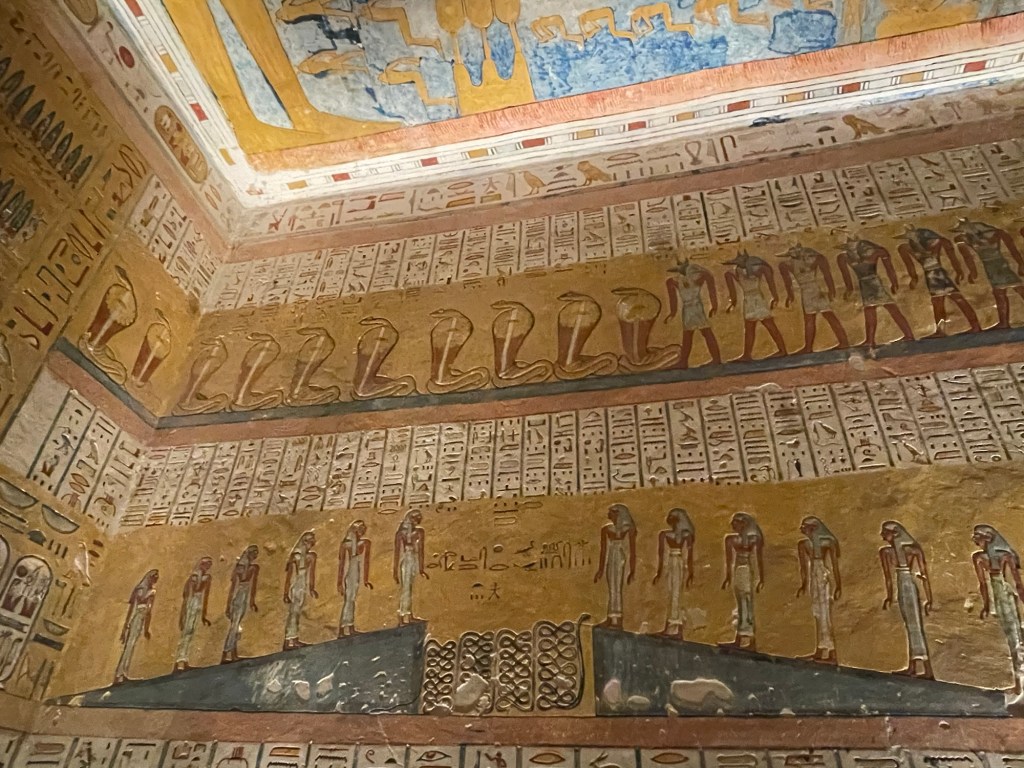
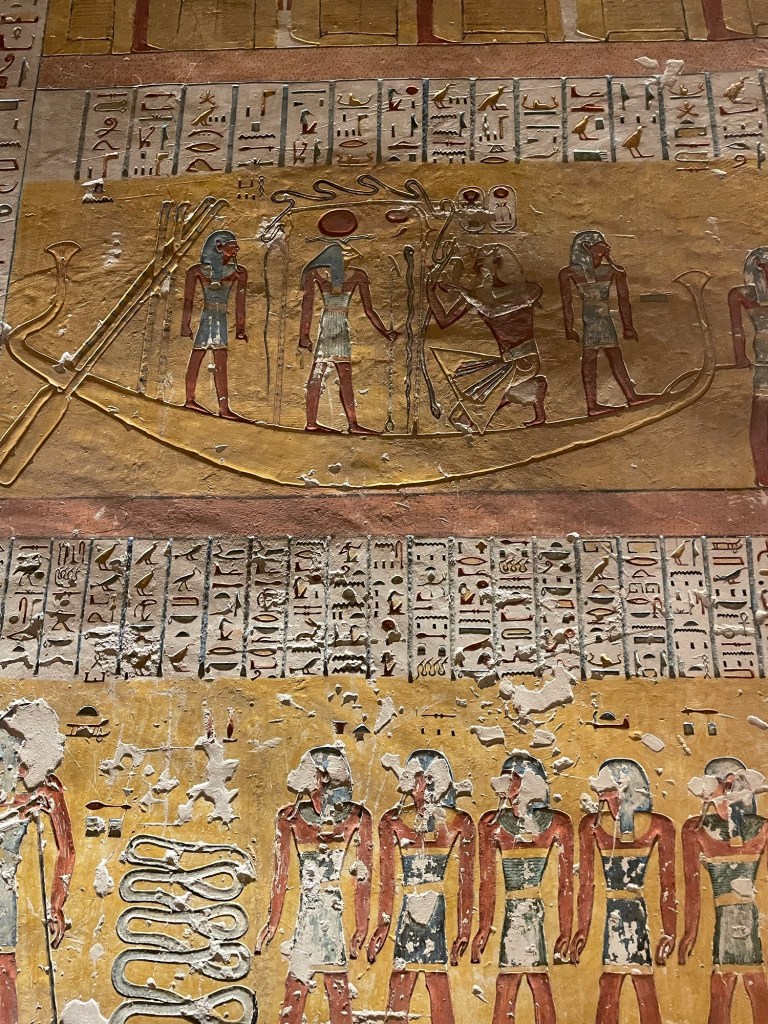
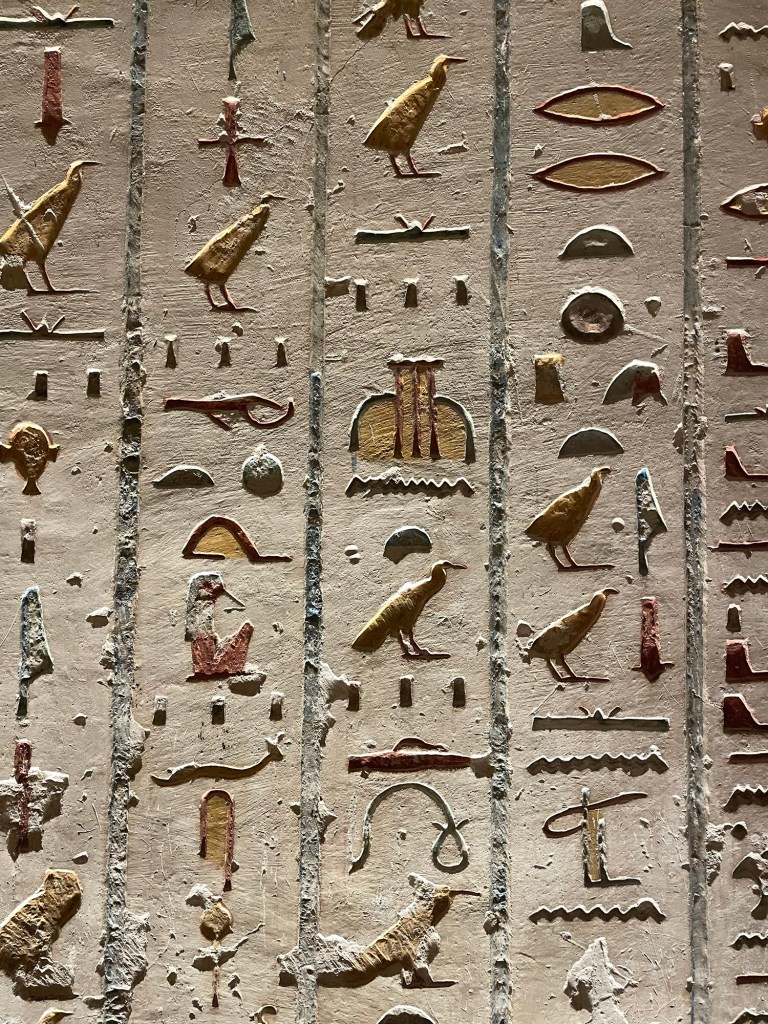
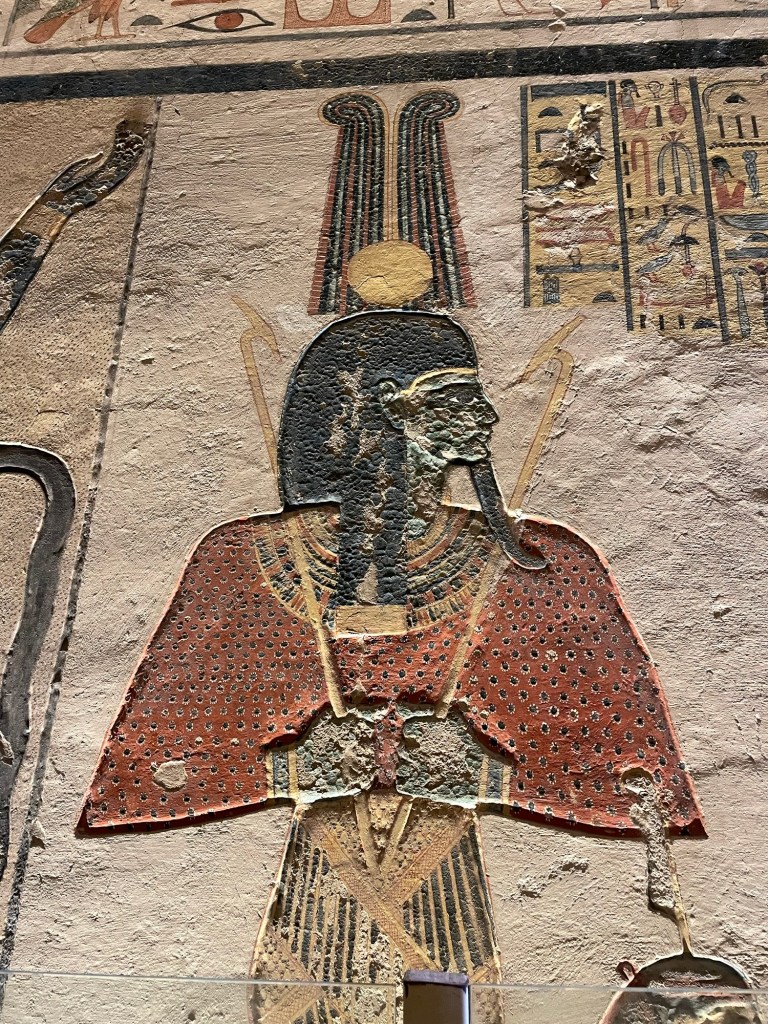
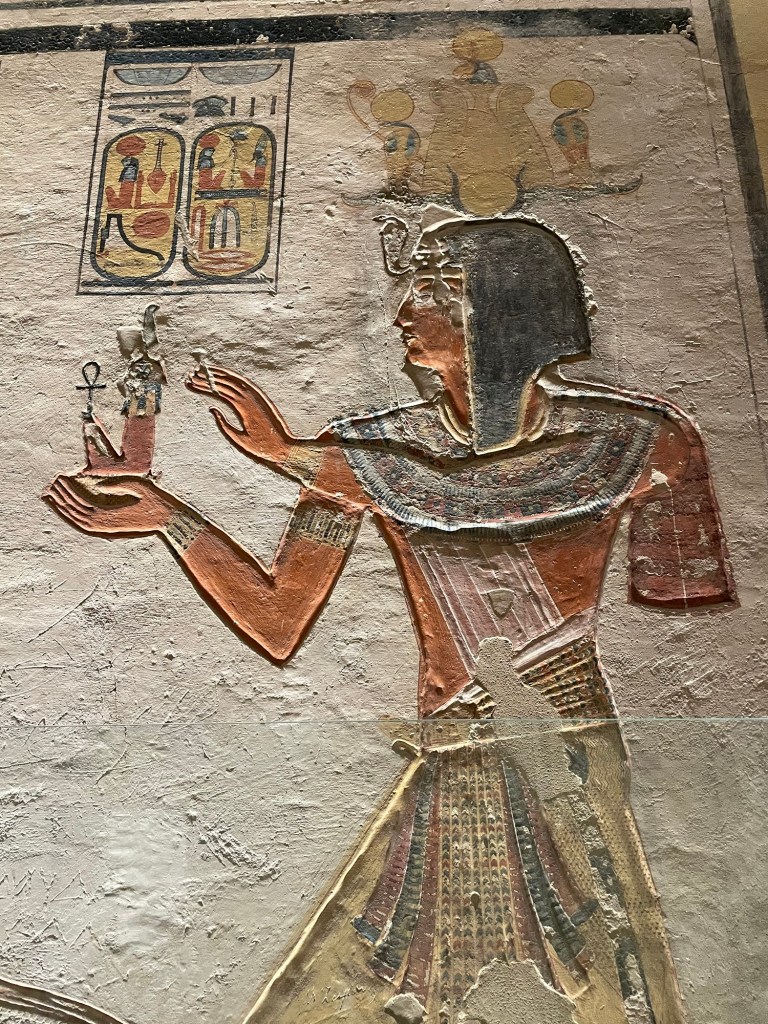
No matter how much you prepare, stepping down into the tombs is something else entirely. The colours are the first surprise: vivid, bright, untouched by time. The walls are alive with gods, stars, spells, journeys. The Book of the Dead unfolds room by room.The walls aren’t just decorated; they’re instructions for eternity. Maps for the pharaoh’s soul to follow.
Rameses III
Ramesses III’s tomb was like stepping into a graphic novel carved in stone: bold colours, muscular deities, entire walls bursting with spells and serpents and solar boats ready to ferry the king safely through the night.




Rameses IV
Rameses IV’s tomb felt quieter but grander in scale, long corridors with ceilings painted like midnight skies, sprinkled with stars.




Rameses IX
And Ramesses IX – beautifully preserved, intricate, and strangely intimate – felt like a whispered conversation with the past. Each corridor took us further underground, further back in time, further into the minds of people who believed the next world needed as much planning as this one.



Tutankhamun
And then came Tutankhamun’s tomb. It’s small, almost startlingly so after the vastness of his neighbours, but that only makes it more powerful. The walls are bright, the colours almost youthful compared to the others, and of course – there he is. Tutankhamun himself, lying to the side, away from his golden-hued sarcophagus, the so called boy king was 19 and so tiny: both ordinary and extraordinary. It was sad to see him like that – his head and feet sticking out from under a shroud- his beautiful mask and delicate sandals and toe sheaths, so far away, back in Cairo. Things that were meant to be with him in the afterlife are now attracting thousands of visitors a day. I wonder what he’d think of the reality of his eternity?

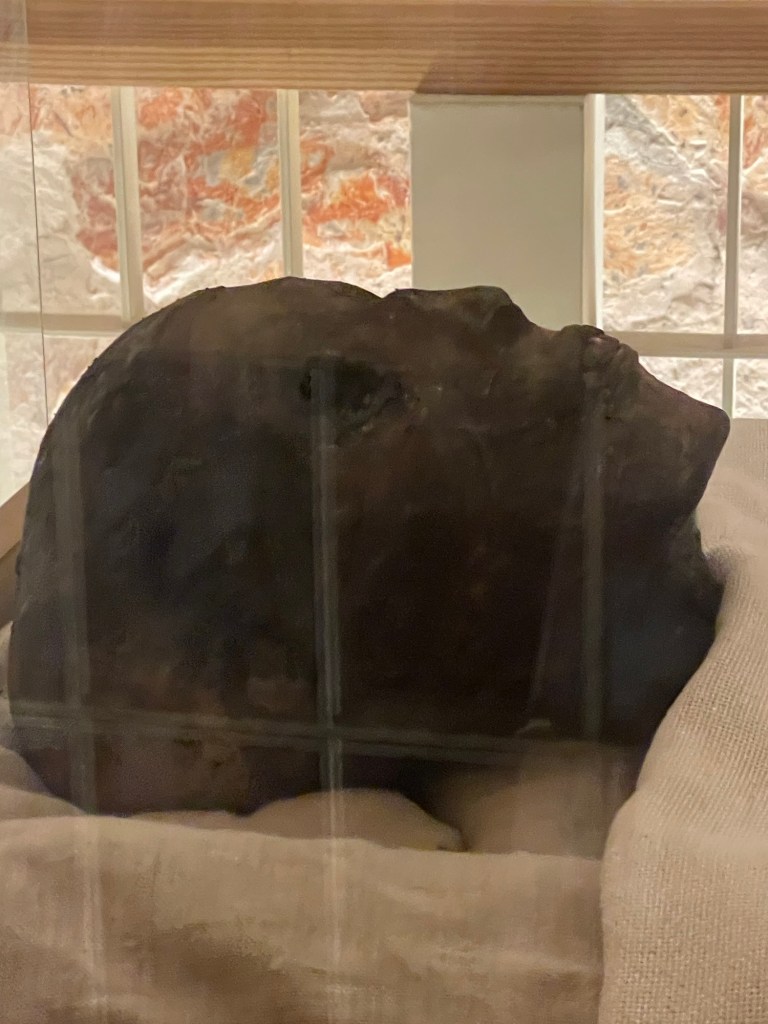

Standing in that tiny chamber, knowing the world once lost its mind over the treasures pulled from this very space, felt surreal. It’s one of those moments where you say nothing, because anything you try to say sounds too small.


Valley of the Queens
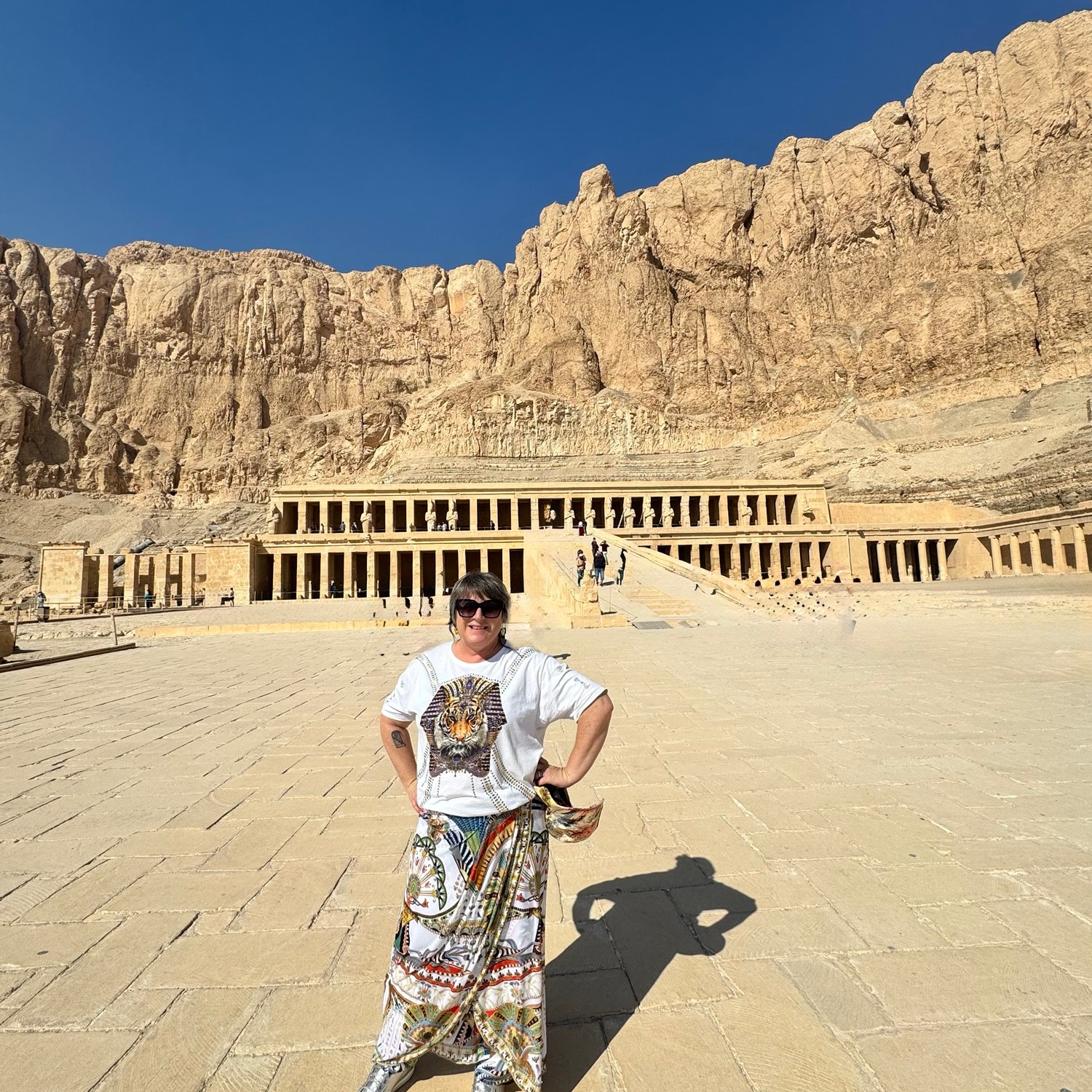
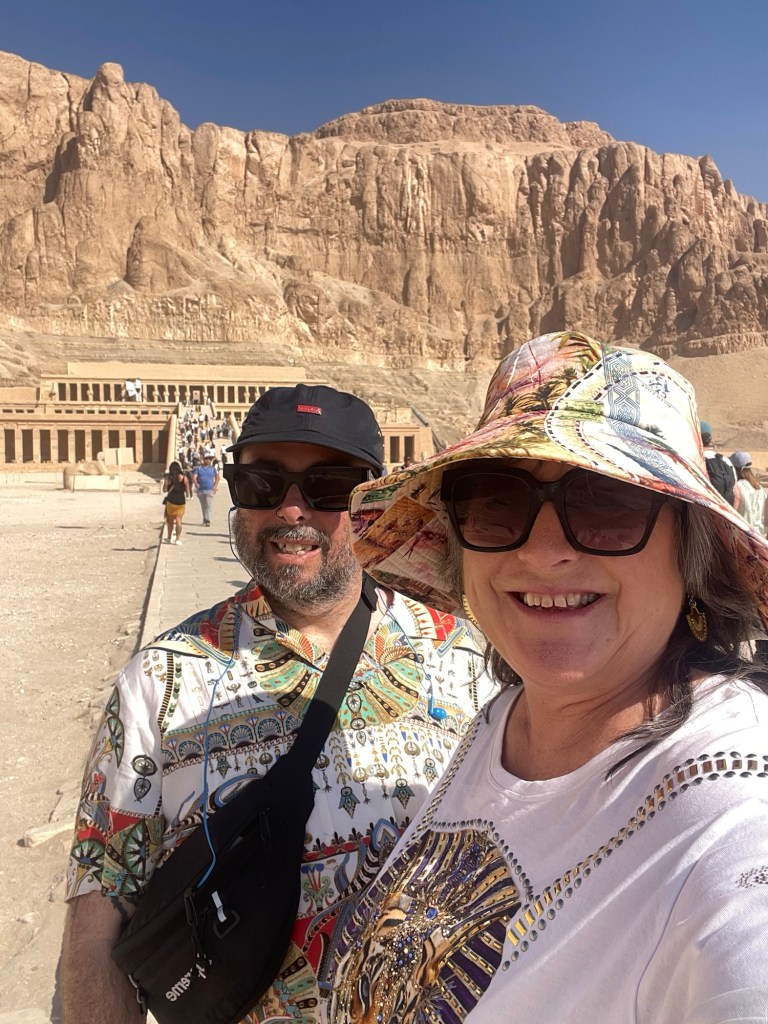
And then, Hatshepsut. Her temple rises in perfect terraces carved directly into the cliffs – strong, elegant, absolutely commanding. It feels architectural in a modern sense, with symmetry and clarity that stop you mid-step.
Imagine becoming pharaoh in a world that didn’t believe women could rule, and then ruling so well that your temple is still breathtaking 3,500 years later. A queen who refused smallness and whose step son tried to erase her memory, which only made her more memorable.


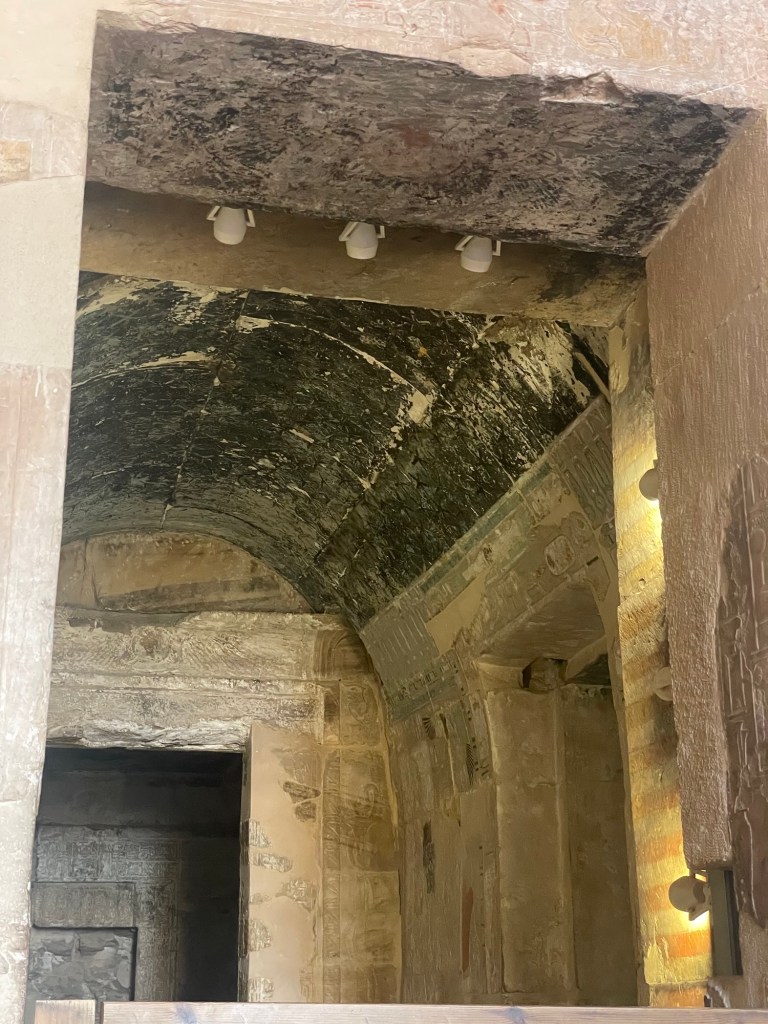


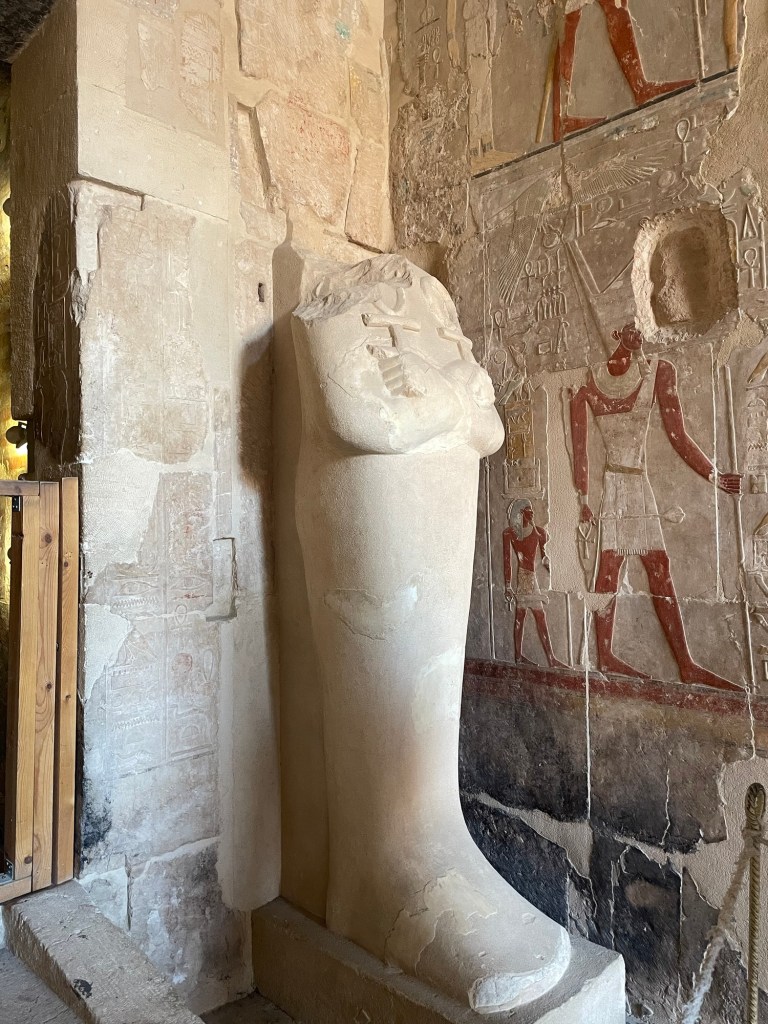

In those quiet chambers, it is very clear: They did not build for death.
They built for eternity.
We left quietly, dust on our shoes, thoughts full.
Alabaster Sales Pitch
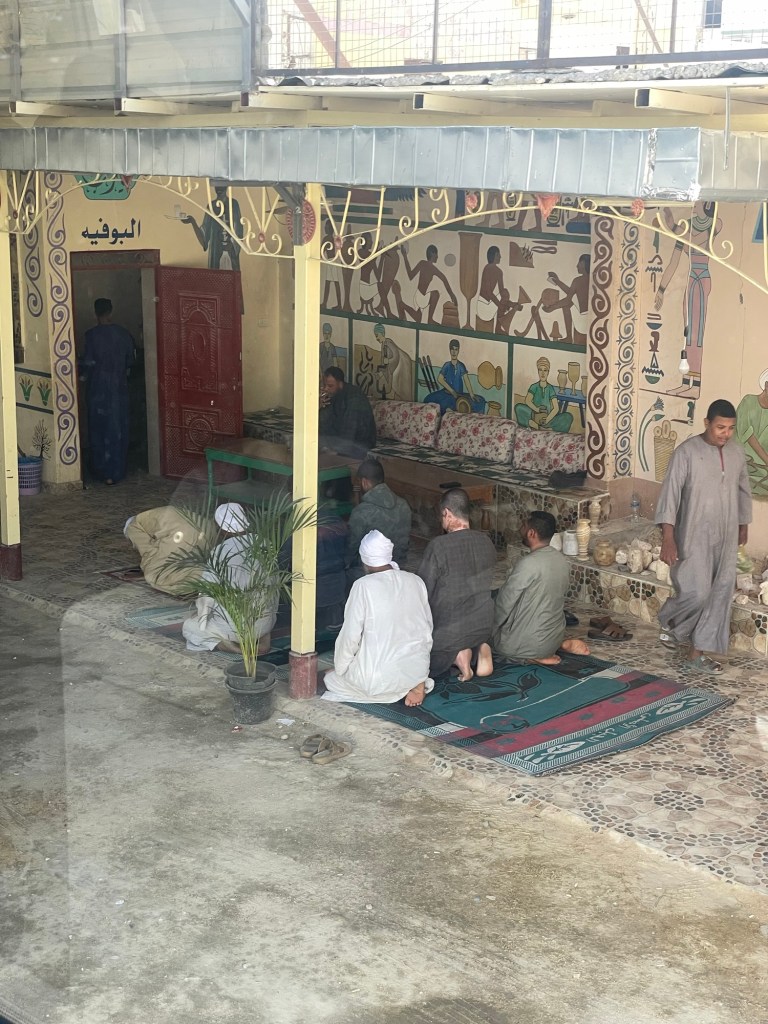
And because no West Bank itinerary is complete without it, we were whisked off to an alabaster workshop – the kind that somehow every tour group “accidentally” finds themselves in. We watched the classic demo: men shaping alabaster by hand with the ancient tools they’ve apparently been using since Hatshepsut herself was in office.

Then, of course, we were ushered into the showroom, where the real archaeological skill required is haggling. Vases, candle holders, pharaoh heads, bowls we absolutely did not need (and yet somehow needed desperately) – all gleaming in soft stone colours. It was theatrical, a little chaotic, and weirdly endearing. We left with lighter wallets, heavier bags, and the sense that we had just participated in a ritual as old as the Nile itself.


Sailing to Kom Ombo
Sailing began at lunch. The river moves gently. The air cools. The ancient world feels close enough to touch. Vendors yell out from boats – selling their wares as we sail. Negotiating from windows.
We are moving south along the river, toward Kom Ombo and Aswan – toward crocodile gods, desert temples, and the slow unfolding of the Nile.
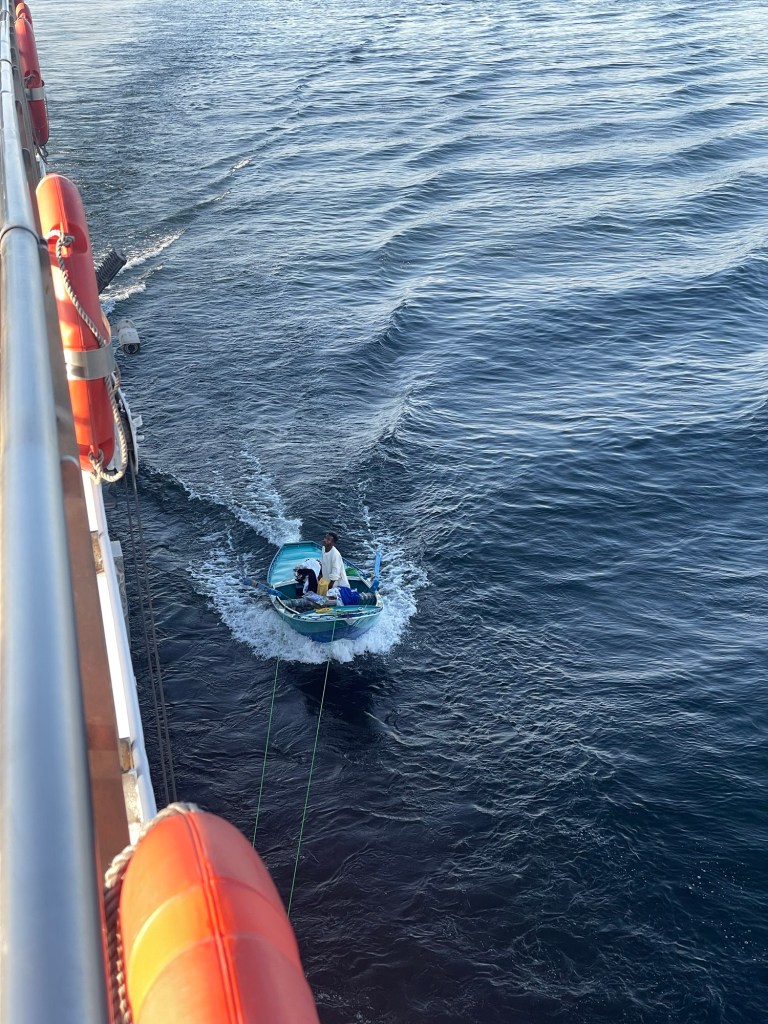
The shores are so different from each other. West Bank has palms and mountains. East bank has banana plants. Both sides have thriving villages, children waving and mosques with their beautiful call to prayer. Every time I look up I want to pinch myself.
No alarms, no hurry. Palm trees drifting past. Villages at the edge of the desert. Children waving from the banks. The hush of the water against the ship.
There’s something meditative about moving along the Nile. It is the oldest travel route in the world, and we are just the latest guests.
We sat on deck, read, chatted, sunbathed, wrote blogs, found zen doing yoga, and some silly ones (Josh) jumped in the freezing pool, but all of us occasionally staring dreamily into the middle distance like philosophers. The crew served drinks and life slowed to the pace of the river.

Through our first Loch
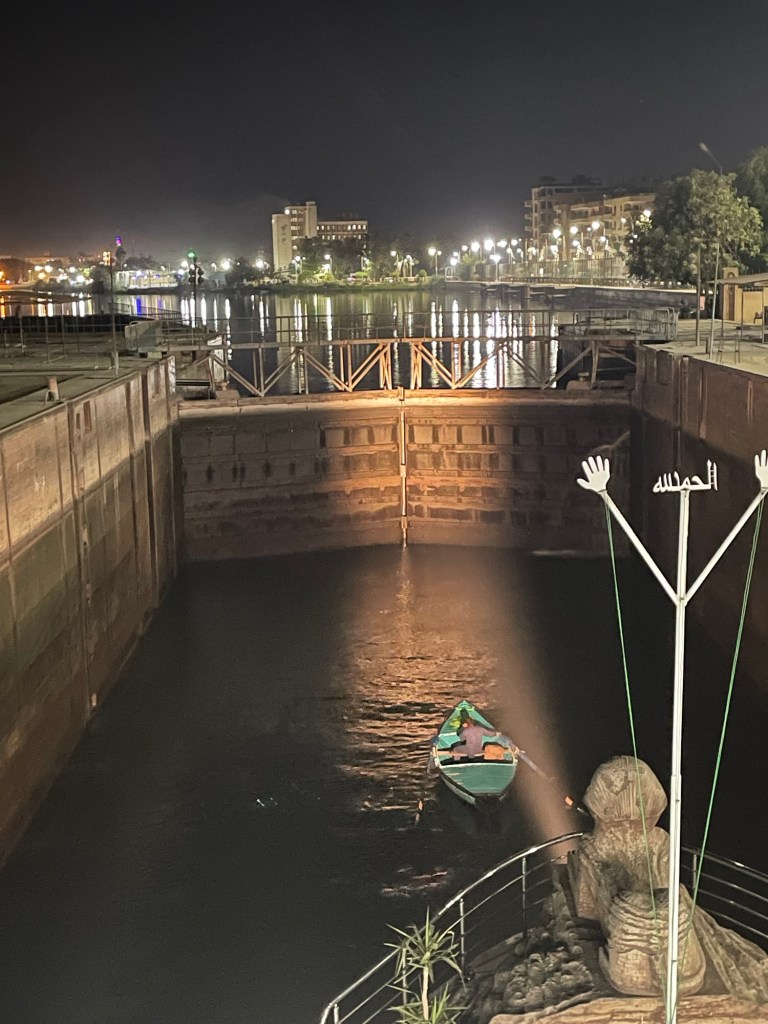
Somewhere between leisurely Nile-gazing and Kom Ombo, the ship slowed and we found ourselves approaching a lock — one of those marvels of engineering that never feels quite real until you’re inside it. I’ve only ever experienced a lock on a tiny boat in Paris, where it felt charming and a little chaotic. This, however, was a Nile-scale lock, and watching our entire ship sink (or rise) between concrete walls was strangely hypnotic, especially with a guy in a row boat throwing table cloths and pashminas up at us to buy! Josh kept throwing them straight back and earned the nickname ‘crazy guy’ from the crazy guy in a row boat in a loch with a huge ship. The gates clanked, water shifted around us, and we gently settled like a giant bathtub toy being lowered into place. It was unexpectedly fun — a little pause in the day that felt both technical and magical.

Dinner & a show!
Dinner tonight was a full dive into traditional Egyptian cuisine, the kind of meal that feels like it should be eaten slowly, with stories and laughter braided between each dish. A whole Nile perch, grilled kofte, falafel, fragrant rice, tahina, baba ghanouj, stuffed vegetables, fresh breads of all varieties- everything rich with spice, but never heavy.
And then… the galabeya party.
At some point, the music started drifting through the corridors and the ship transformed into a Nile-side celebration. The crew appeared dressed in flowing galabeyas, all patterns and colour and movement, and we were invited to join in. Some of us committed fully; others dipped a cautious toe into the world of traditional dress (with varying degrees of fashion success). The whole evening was pure joy — clapping, dancing, joking, the kind of lighthearted fun that bridges languages and cultures instantly.
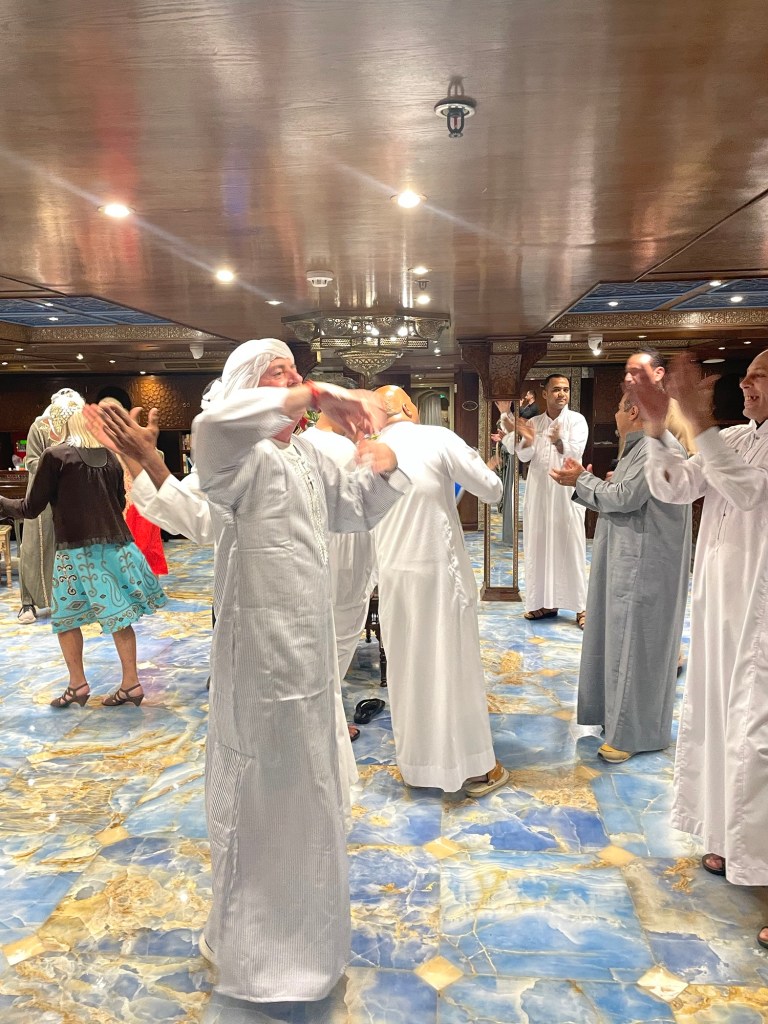
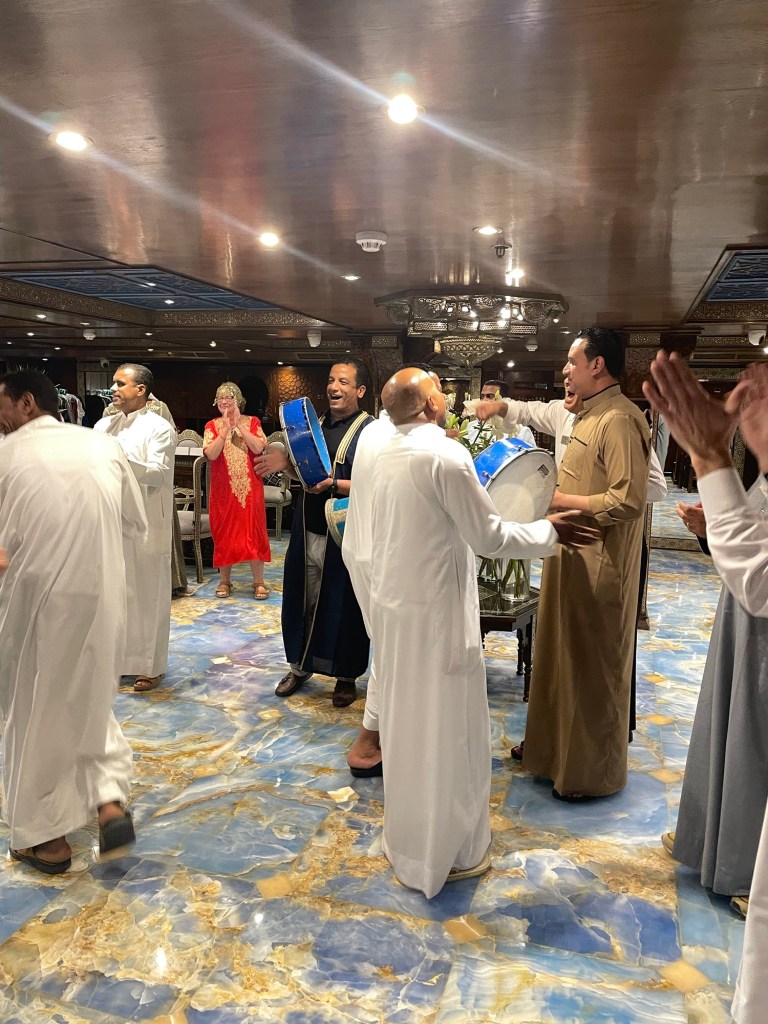

And because of this video, Kathy and I had all the moves 🤣
There was something lovely about seeing everyone loosen up: tourists, crew, strangers-turned-dinner-companions.

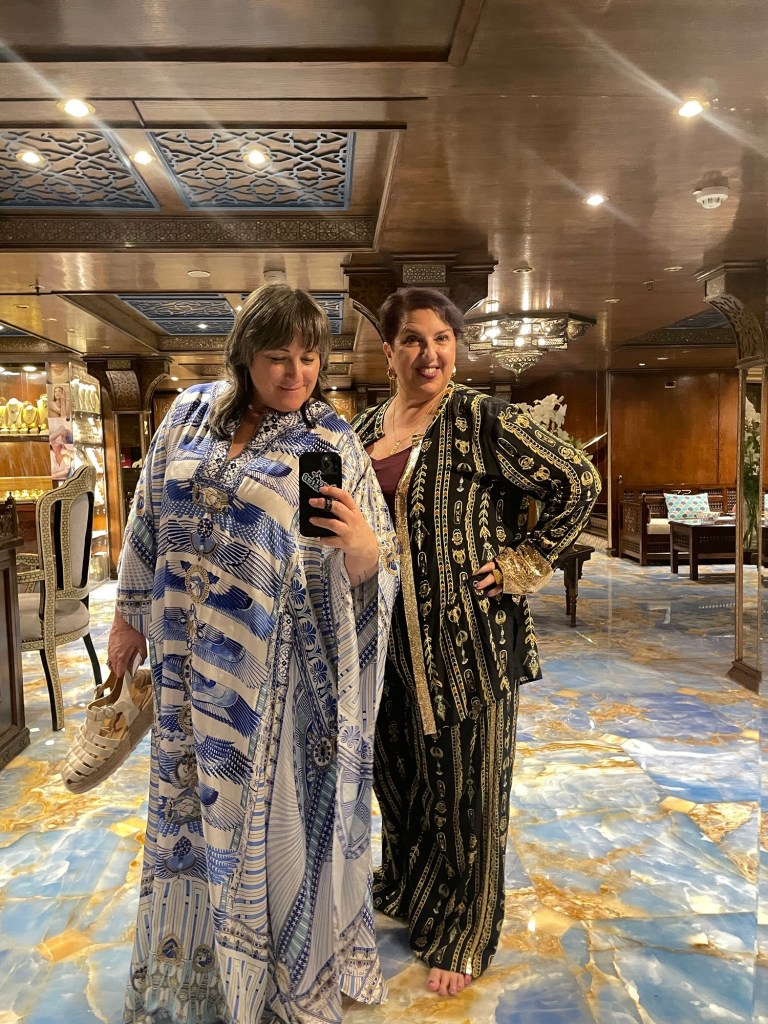

Tonight, we sail overnight, the river guiding us onward, toward Kom Ombo and Aswan.
 coddiwomple