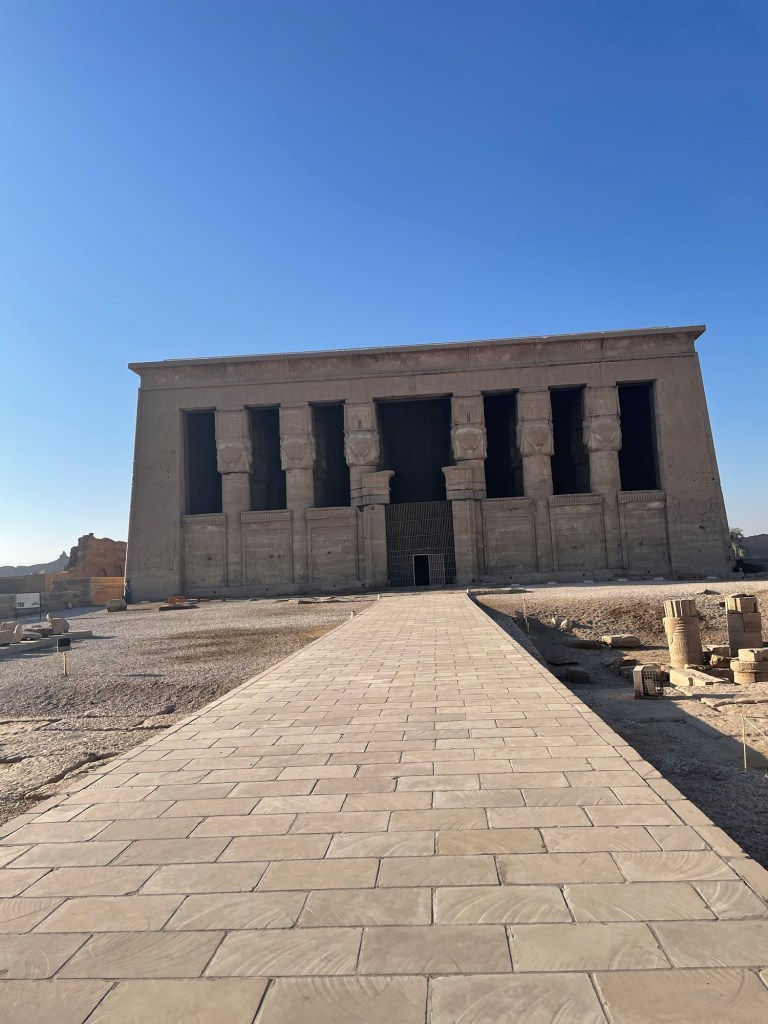
We started the morning at Dendera, home of the Temple of Hathor – goddess of joy, music, love, women, and basically everything that makes life pleasant. Perhaps because of that, it felt different from the other temples. Lighter. More intimate.
You can feel the vibe shift as soon as you walk in. Where some temples feel stern or formal, Hathor’s feels like she wanted visitors to relax, breathe, and maybe consider joining a cult dedicated to naps, beauty, and good parties.
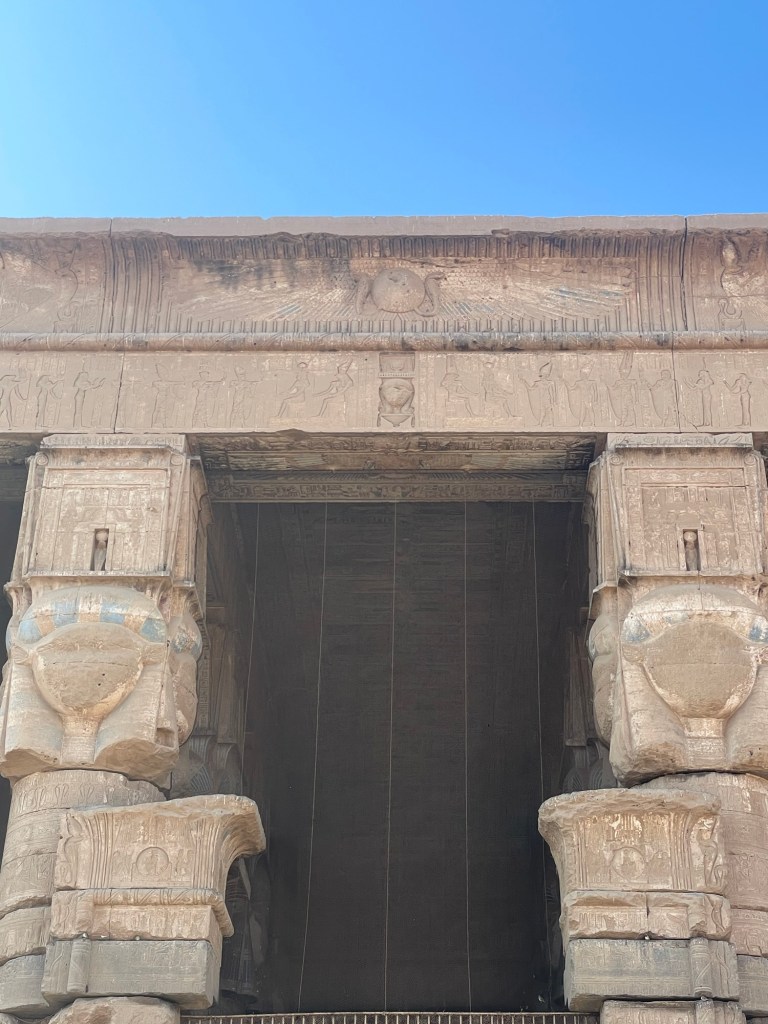
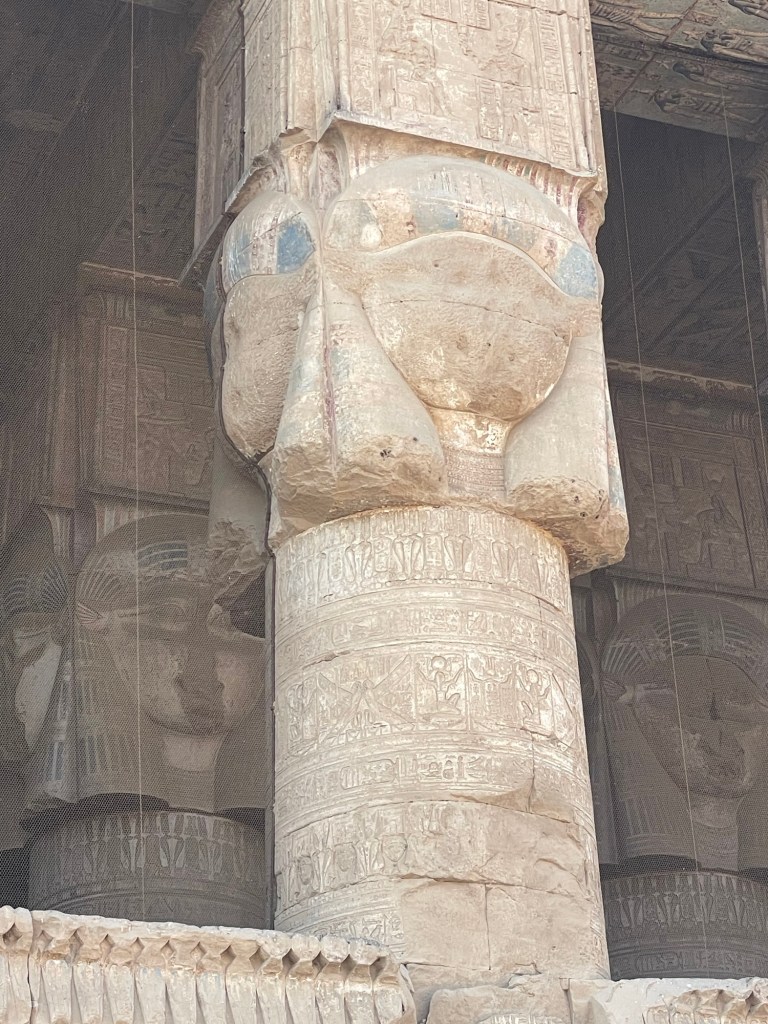
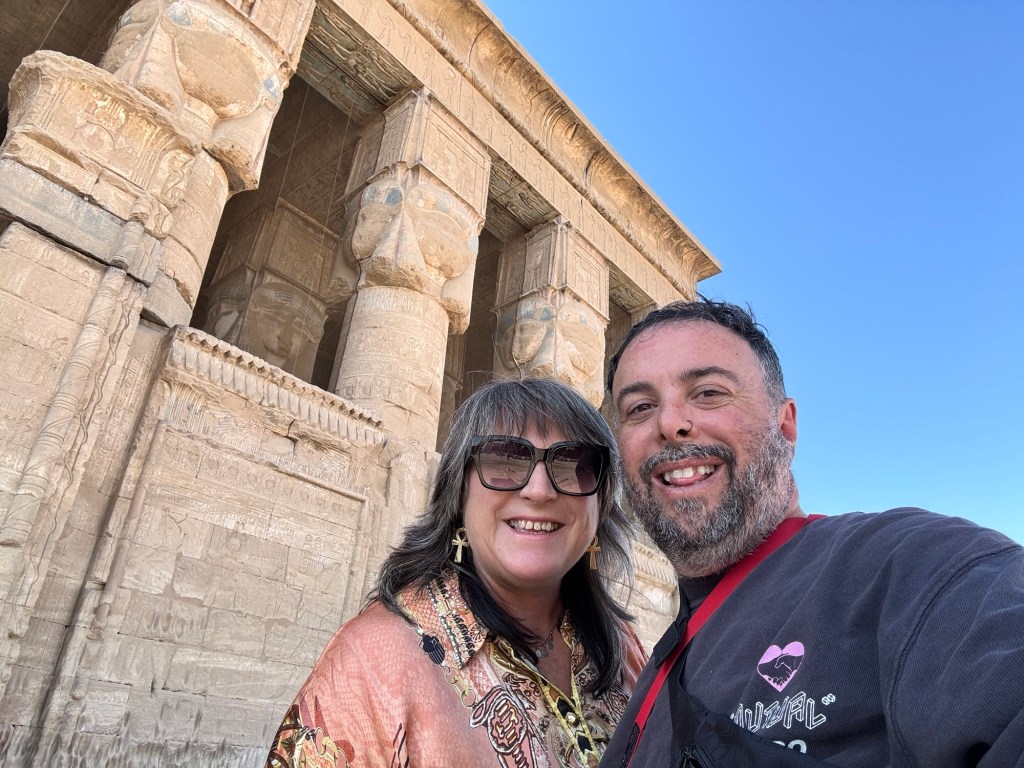
The façade alone is jaw-dropping: six massive columns topped with Hathor’s serene, cow-eared face watching us.
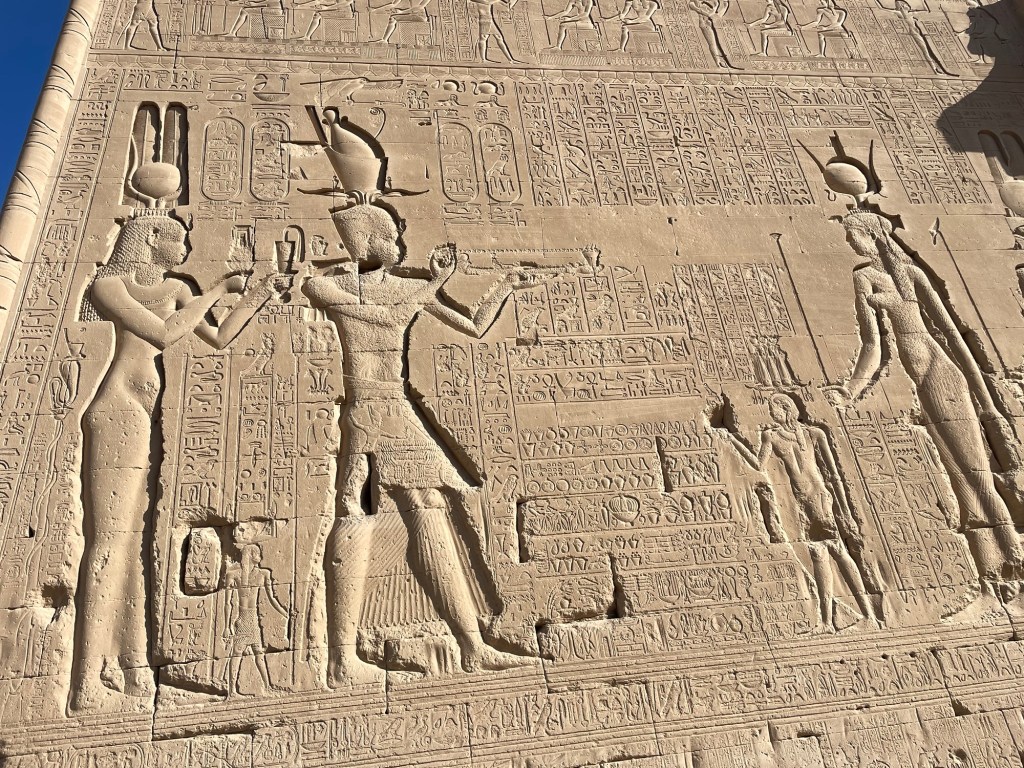
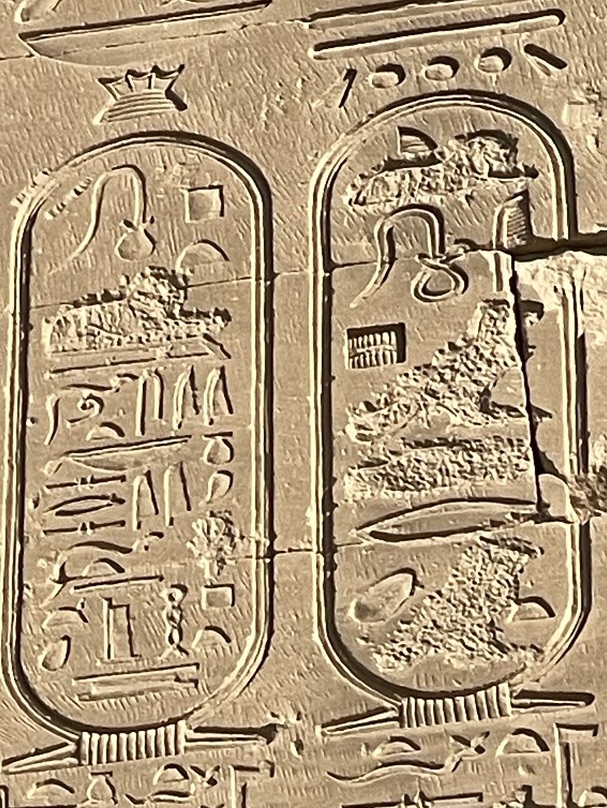
And then, just casually, on the outer rear wall – the famous Cleopatra VII and little Caesarion (the son she had with Julius Caesar) relief. There she was. carved into stone, still poised and regal two thousand years later.

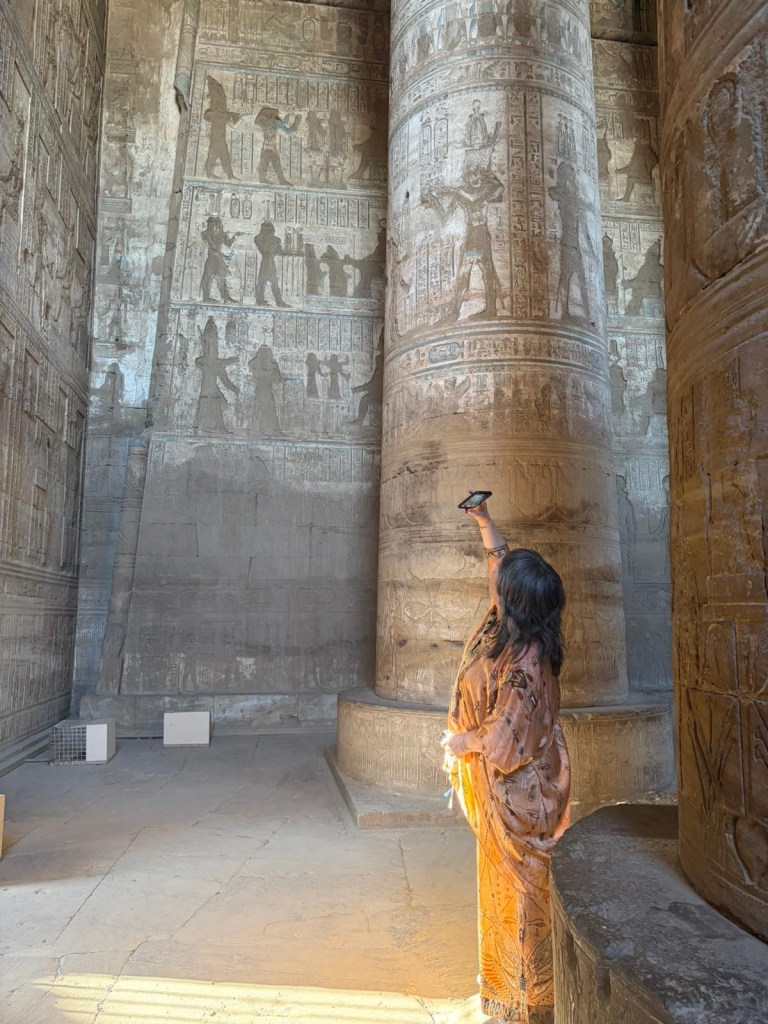
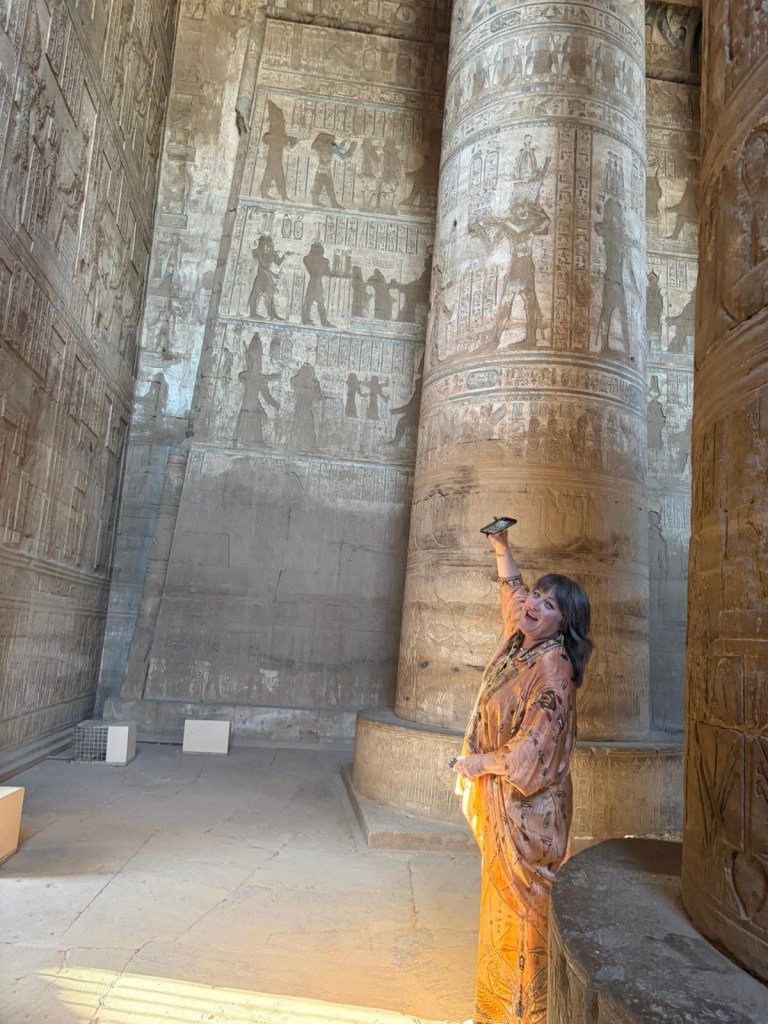
Inside, the temple is enormous and shadowy, The ceilings are extraordinary — deep celestial blues and gold stars, intricate and bright, as though the sky has been brought indoors. Time has touched them, of course, but the colours still breathe. You look up, and it feels like being held beneath a painted night.
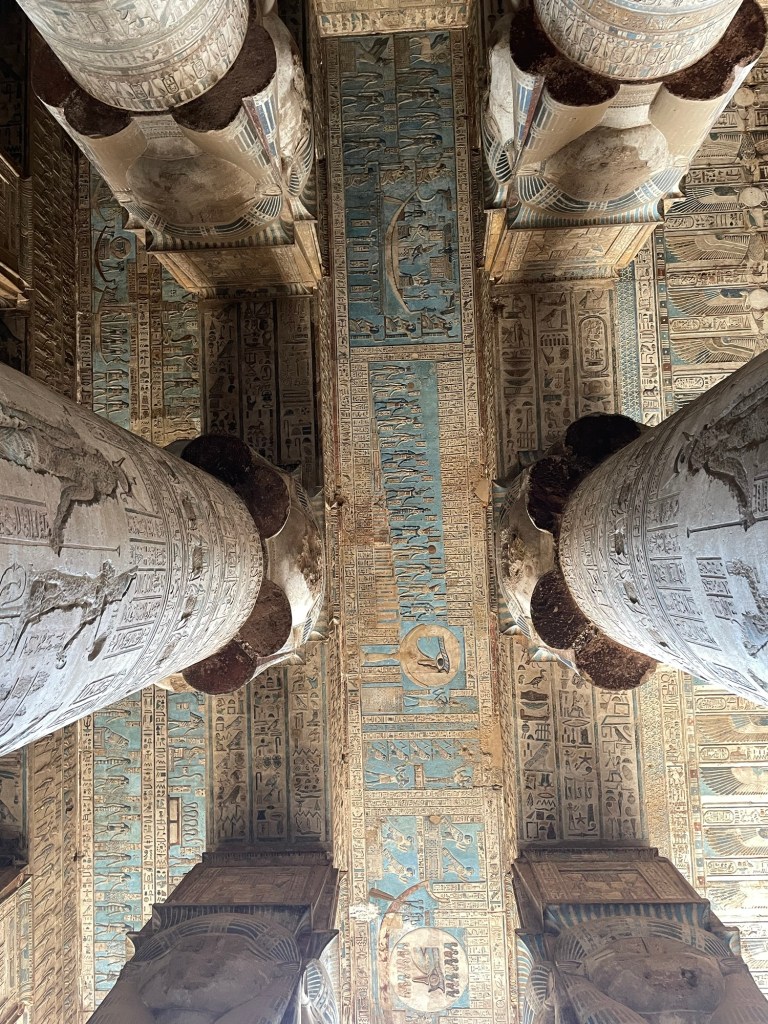
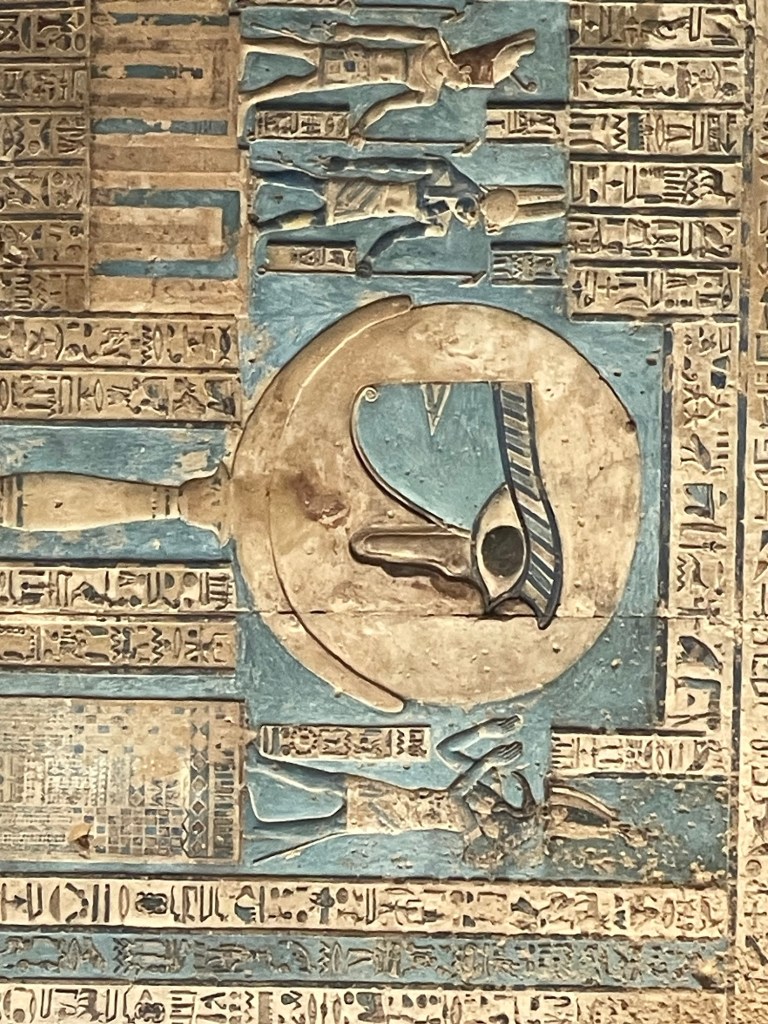
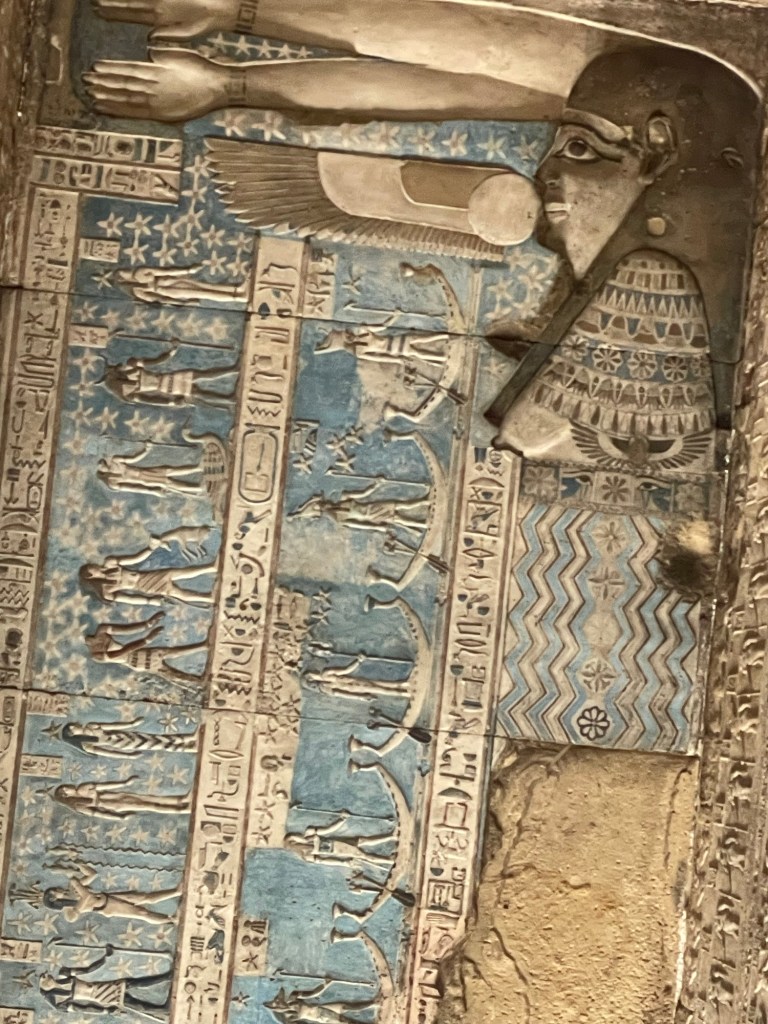
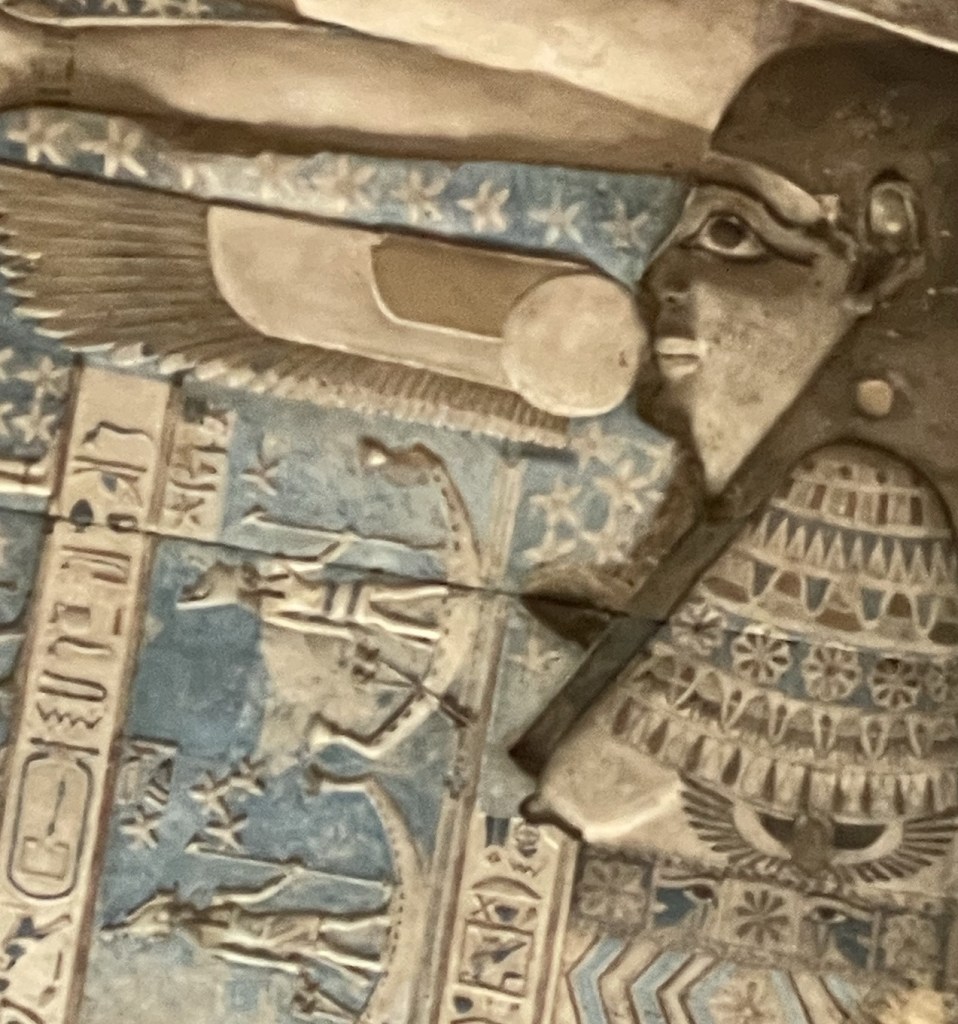
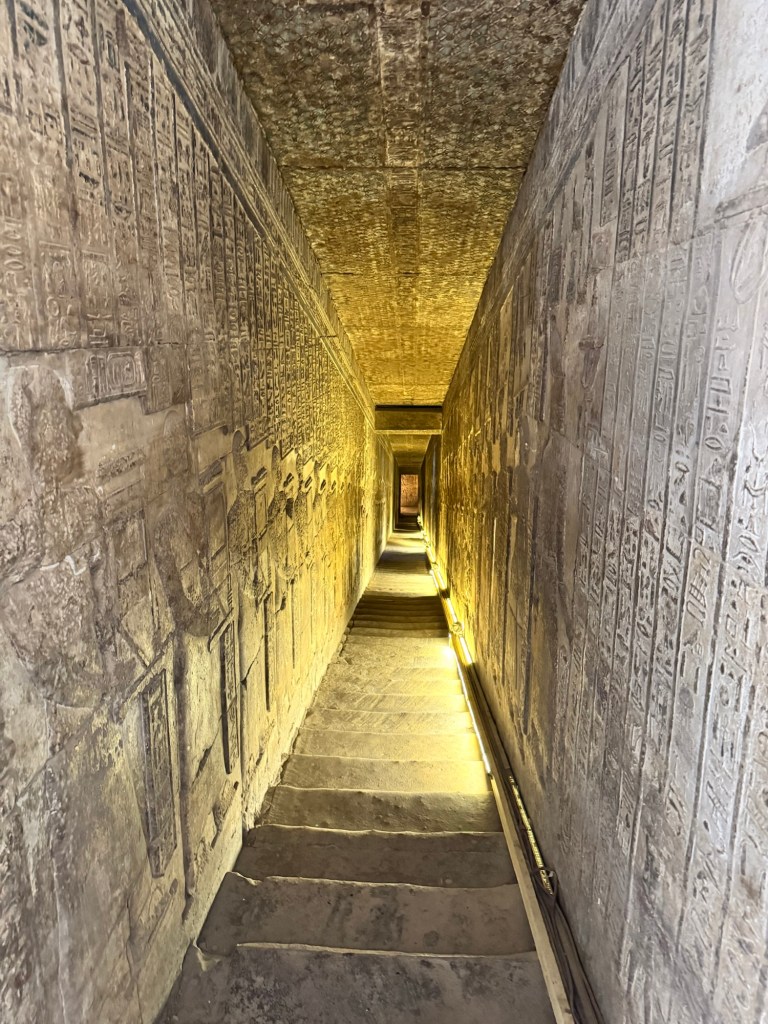
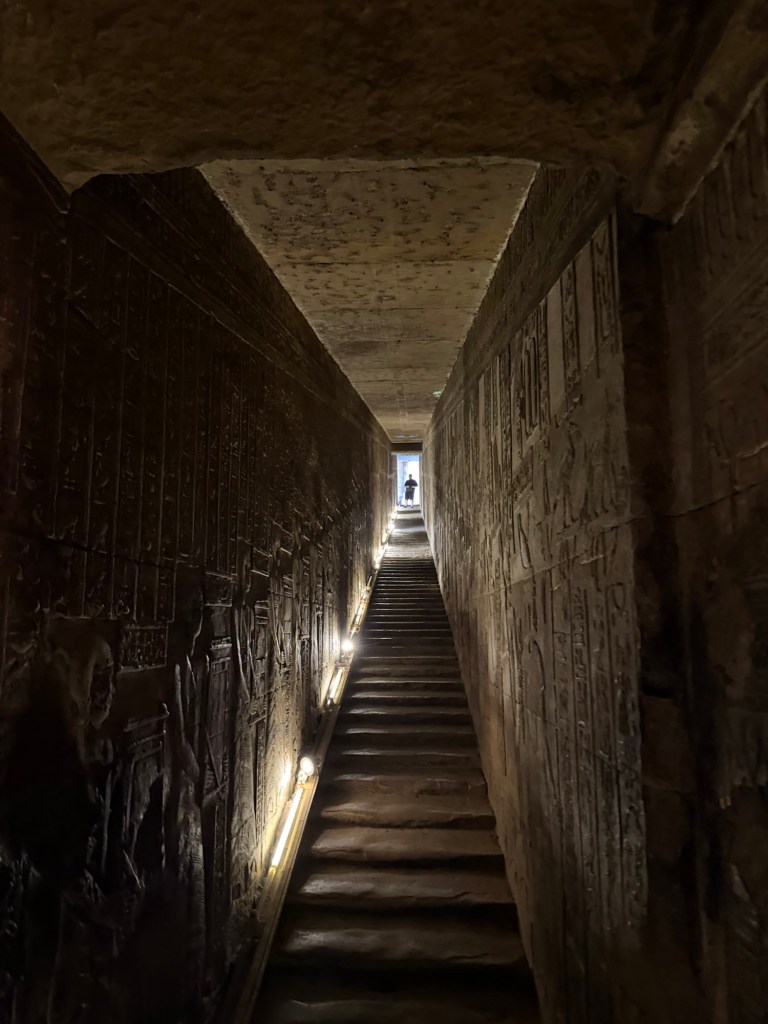
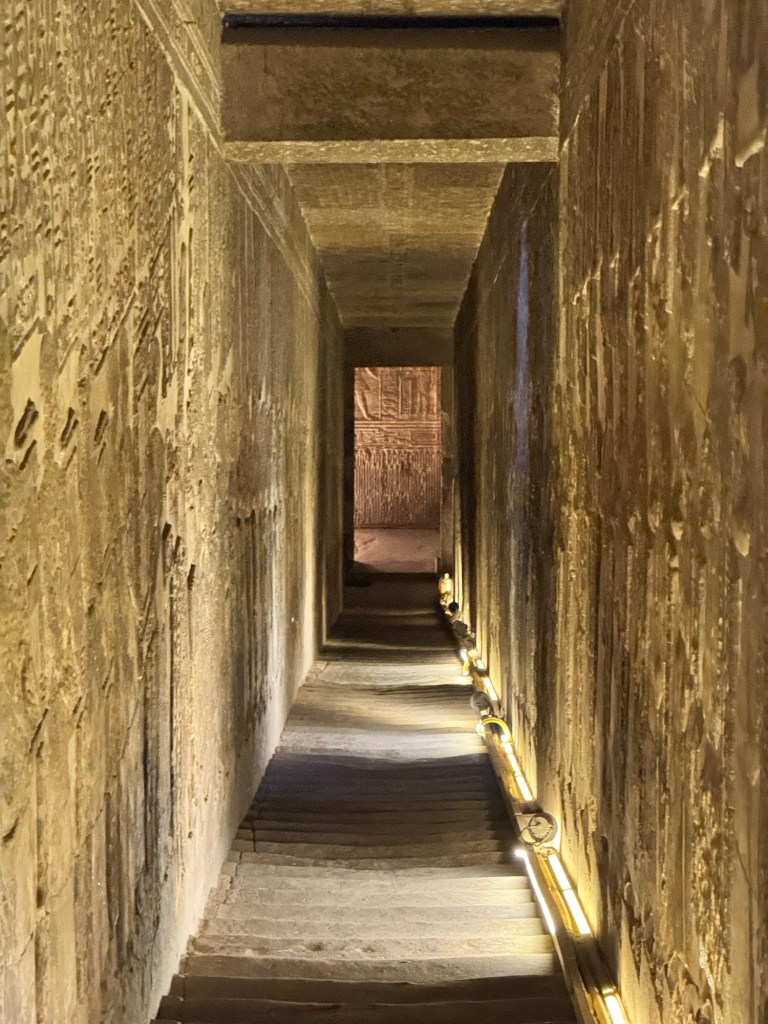
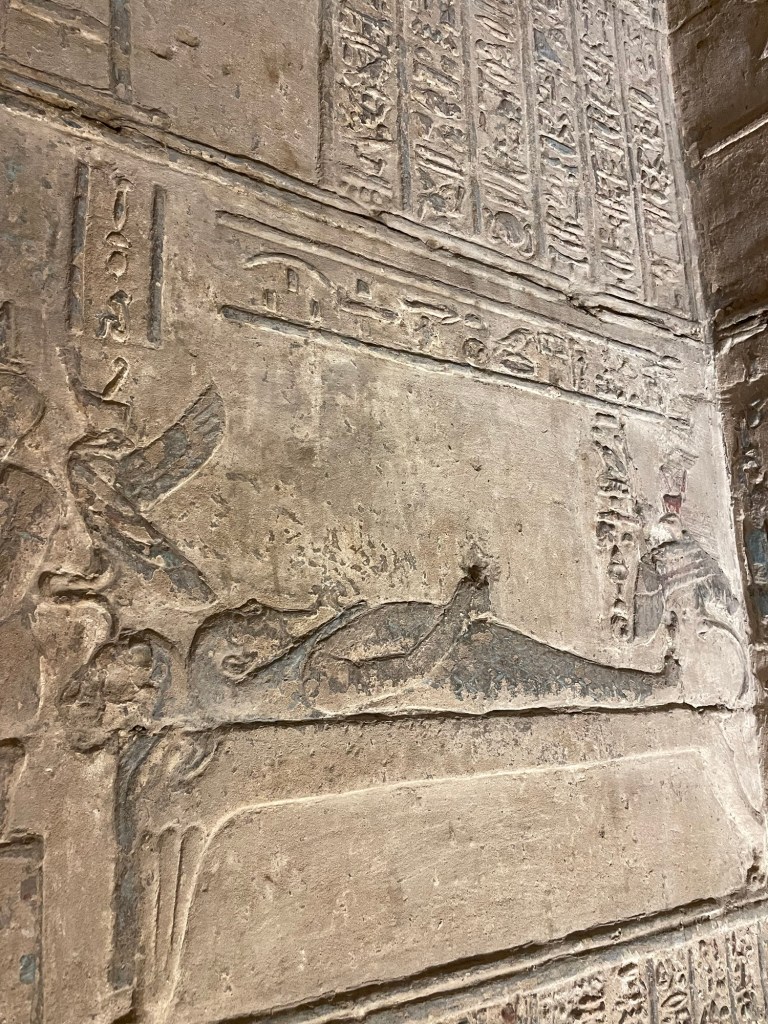
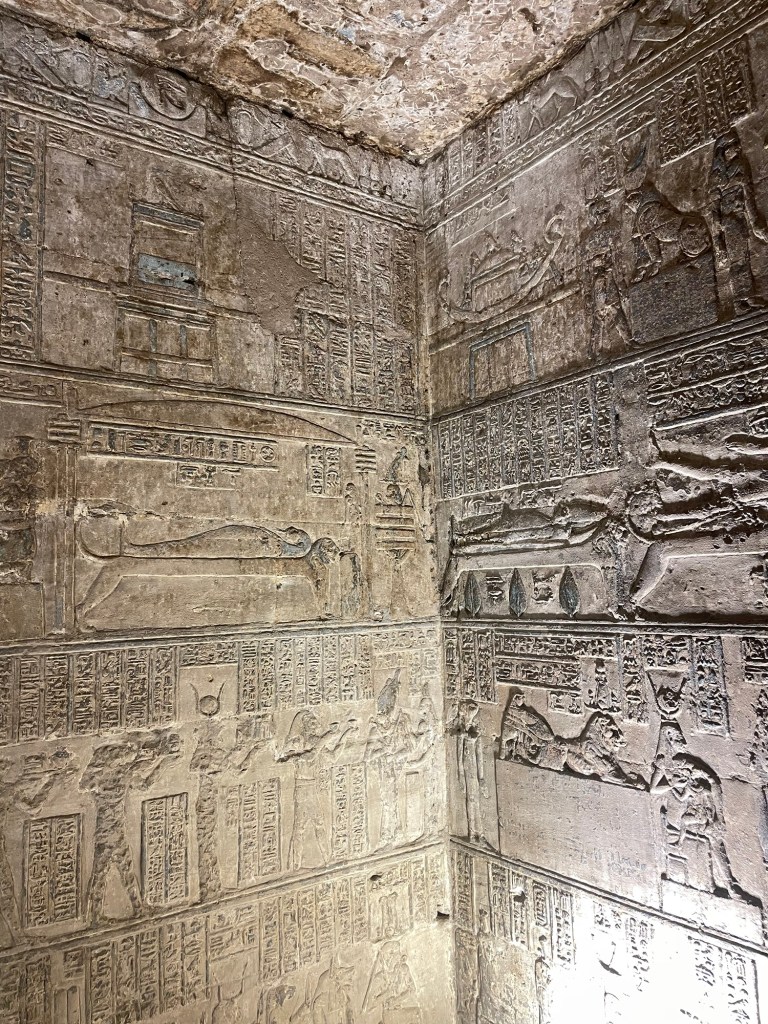
But the real adventure? The staircases. Egyptian temples never do stairs by halves. One spirals up and up, and the other spirals back down. Both lead to the rooftop chapels and the mummification room, where the cult statue of Hathor would have been ritually tended.
And then, the absence you can actually feel: the circular Dendera Zodiac, taken by the French in the 1800s and now sitting in the Louvre.
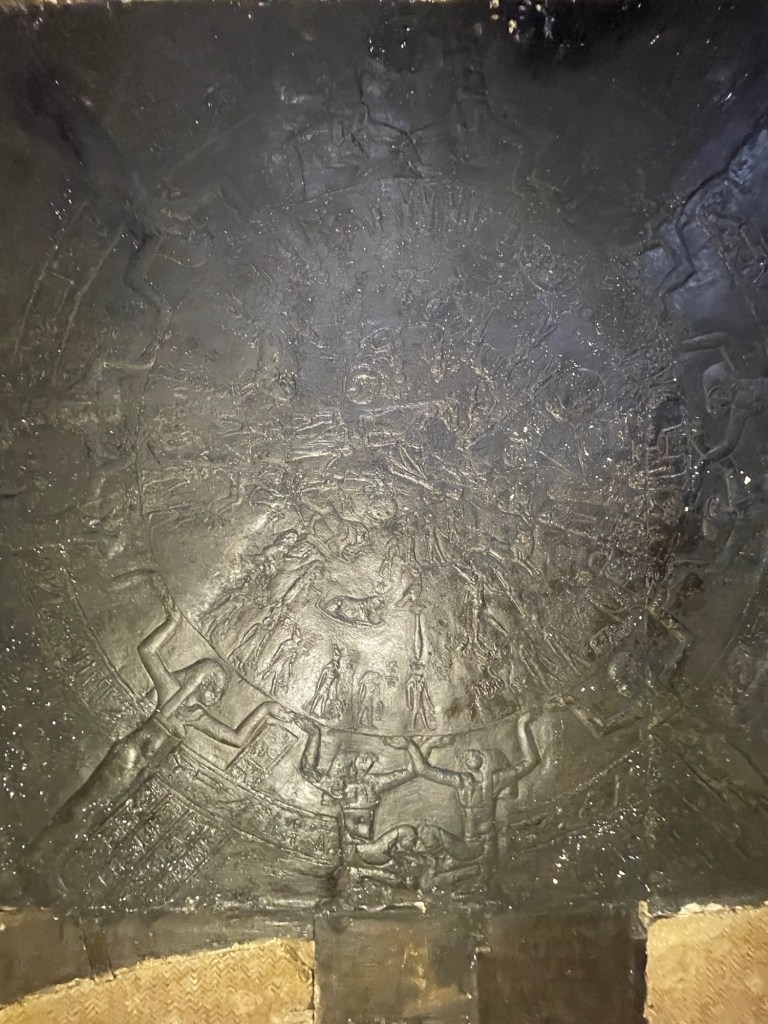
There is a reproduction in the place it once was but when you know the story, there’s an emptiness where that cosmic map should be, and it makes you wish ancient monuments had better security systems.
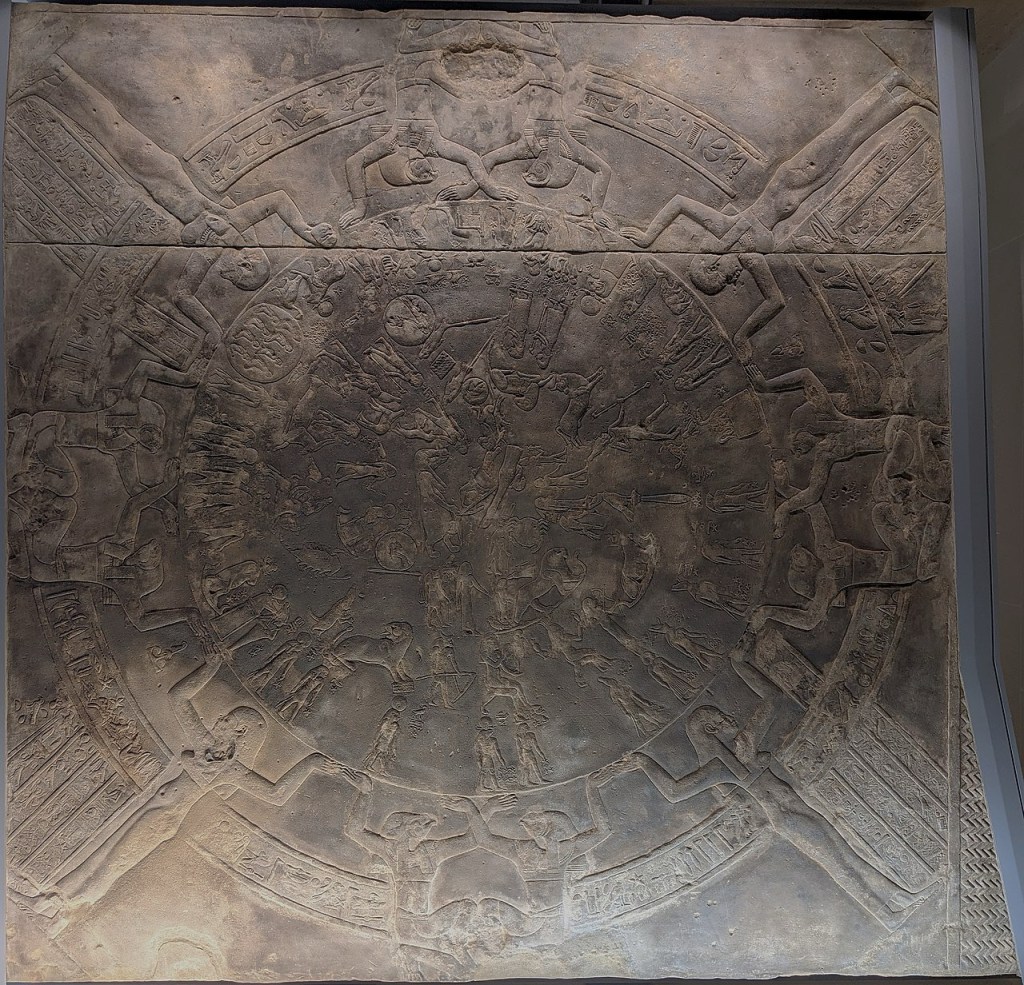
“the only complete map that we have of an ancient sky”

The Sanctuary
The holiest part of the temple that would once have been behind closed wooden doors.
The reliefs in here show the king approaching the doors, knocking, gaining entrance and conversing with Hathor.
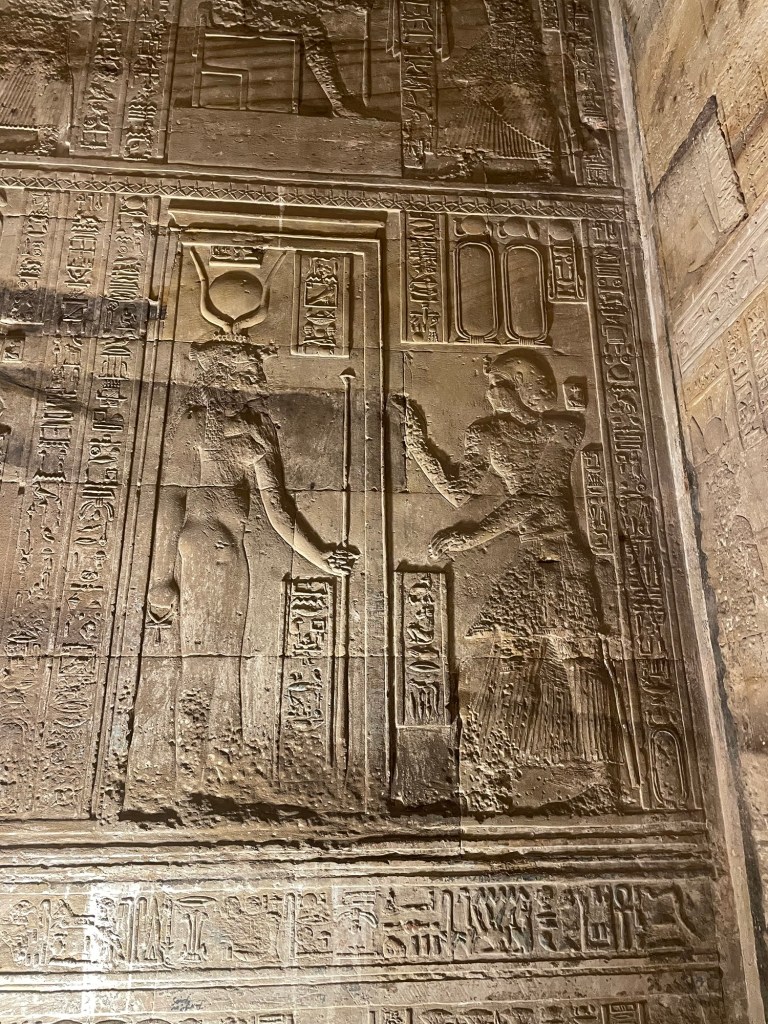

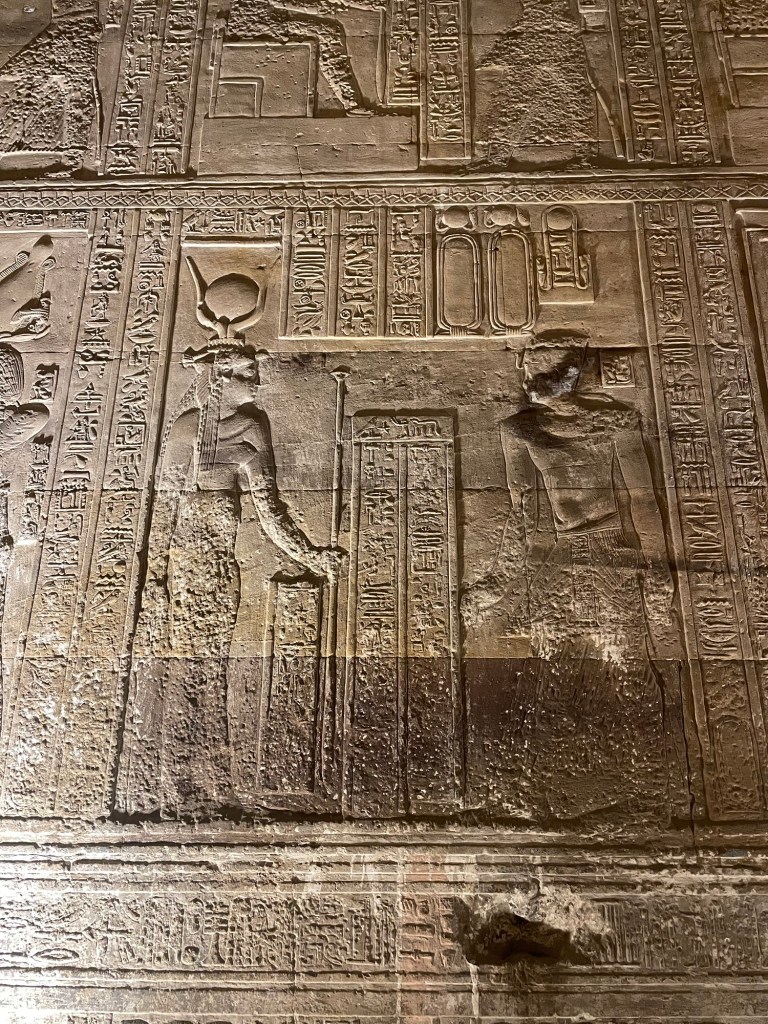
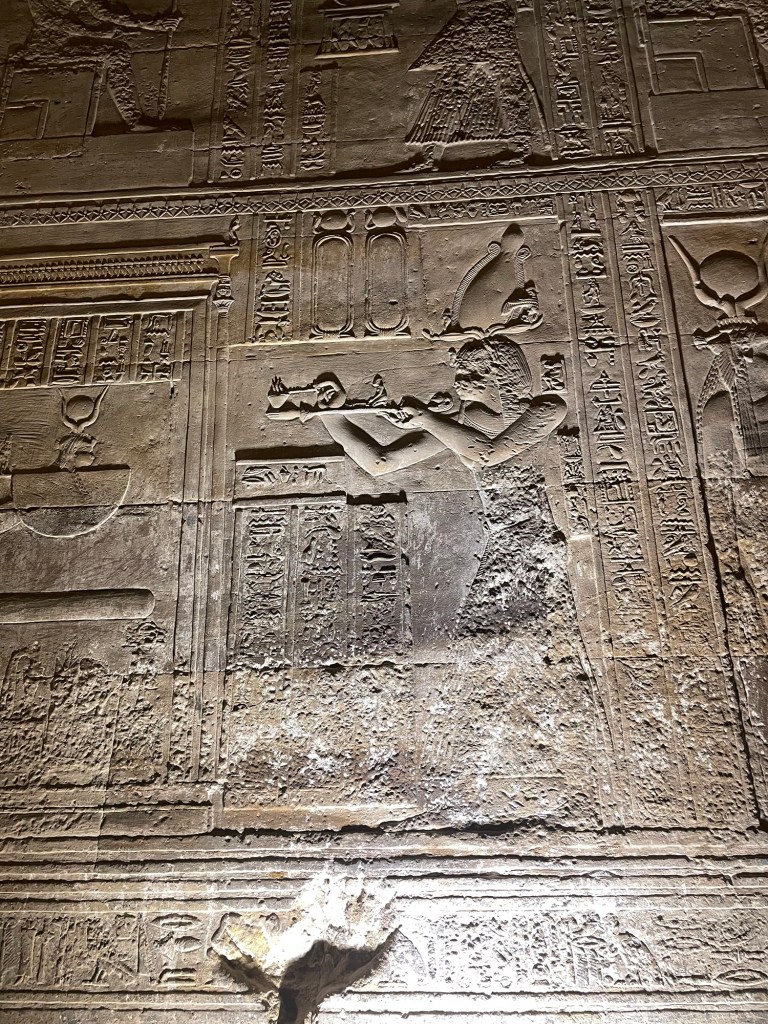

And everywhere you looked there were carvings of musicians, dancers, mothers, queens, people carrying all sorts of everyday items and food Tenderness expressed in stone. It felt like a place where daily life and divine presence met softly, rather than in grandeur.
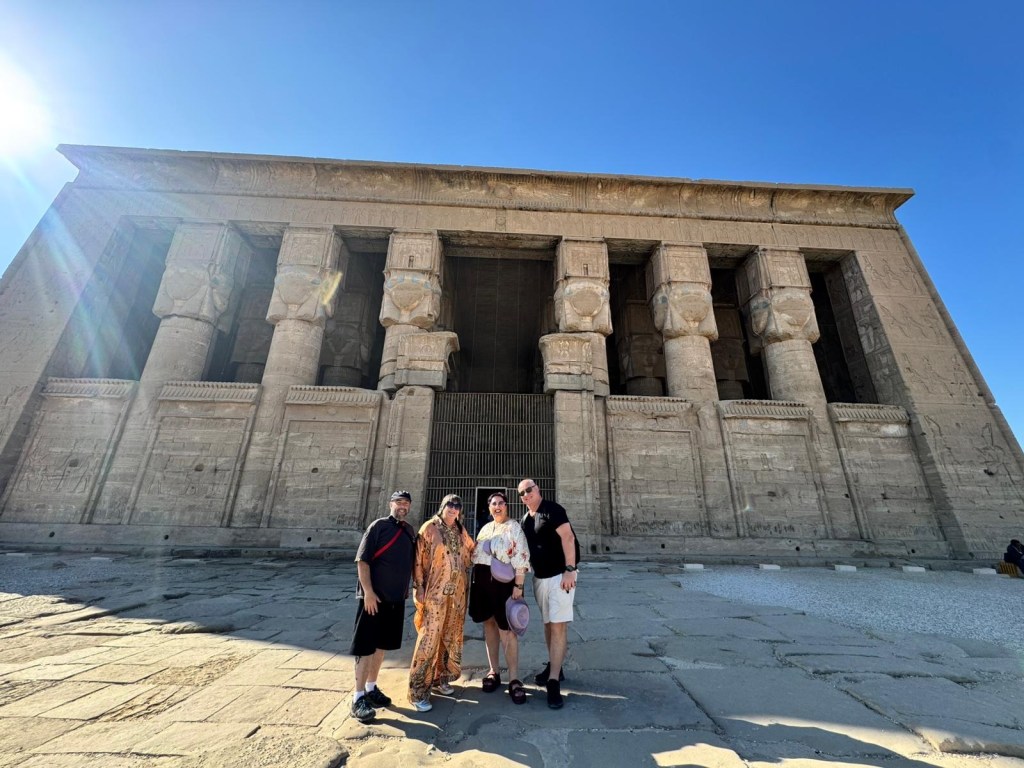
Camilla
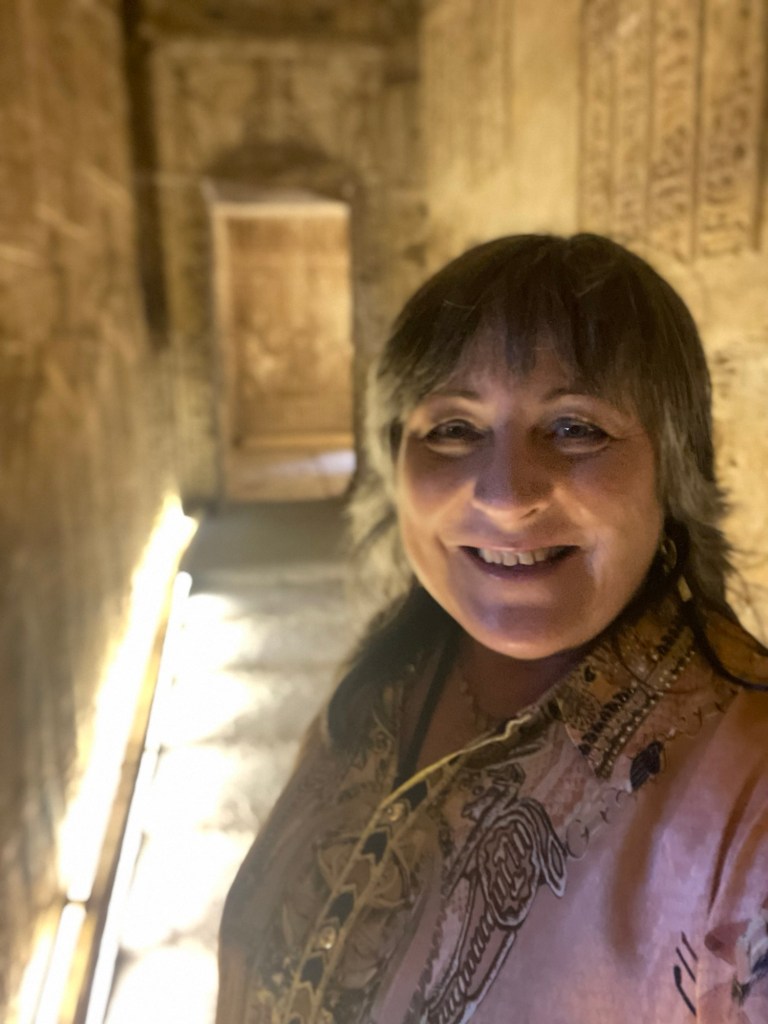
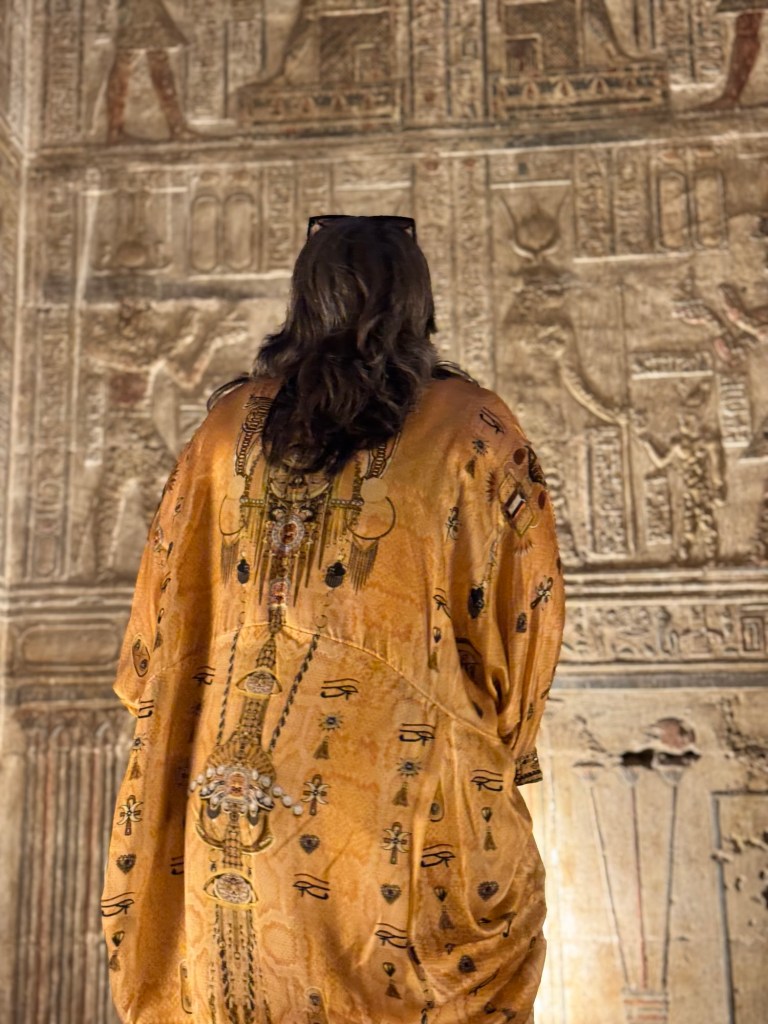
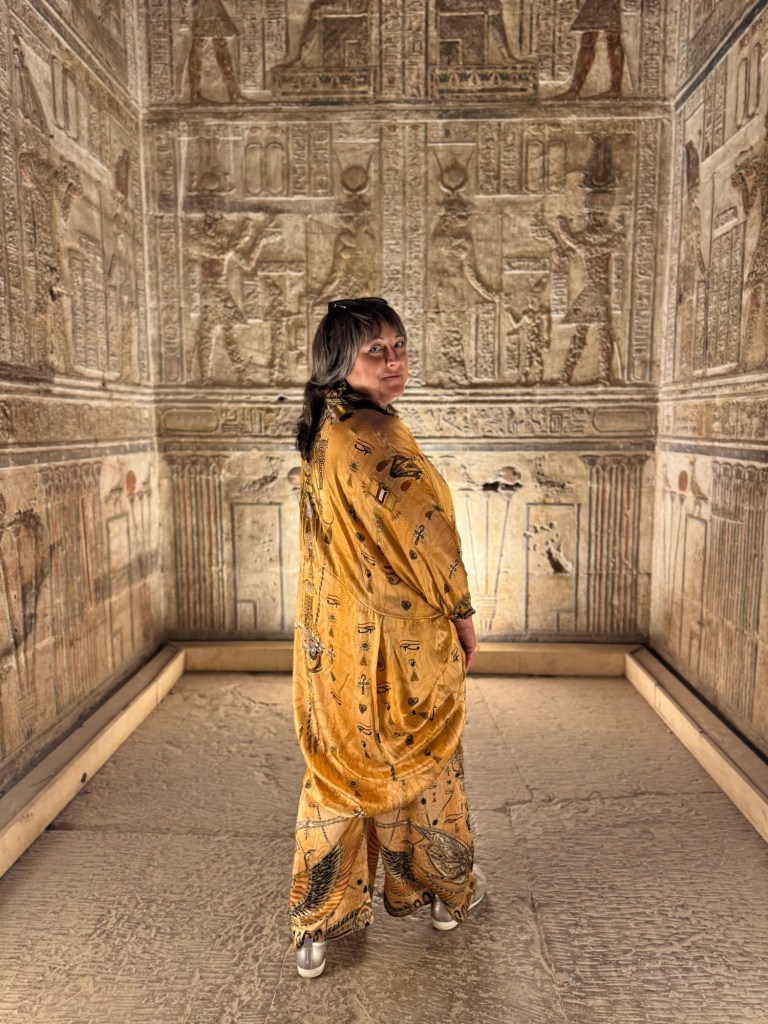
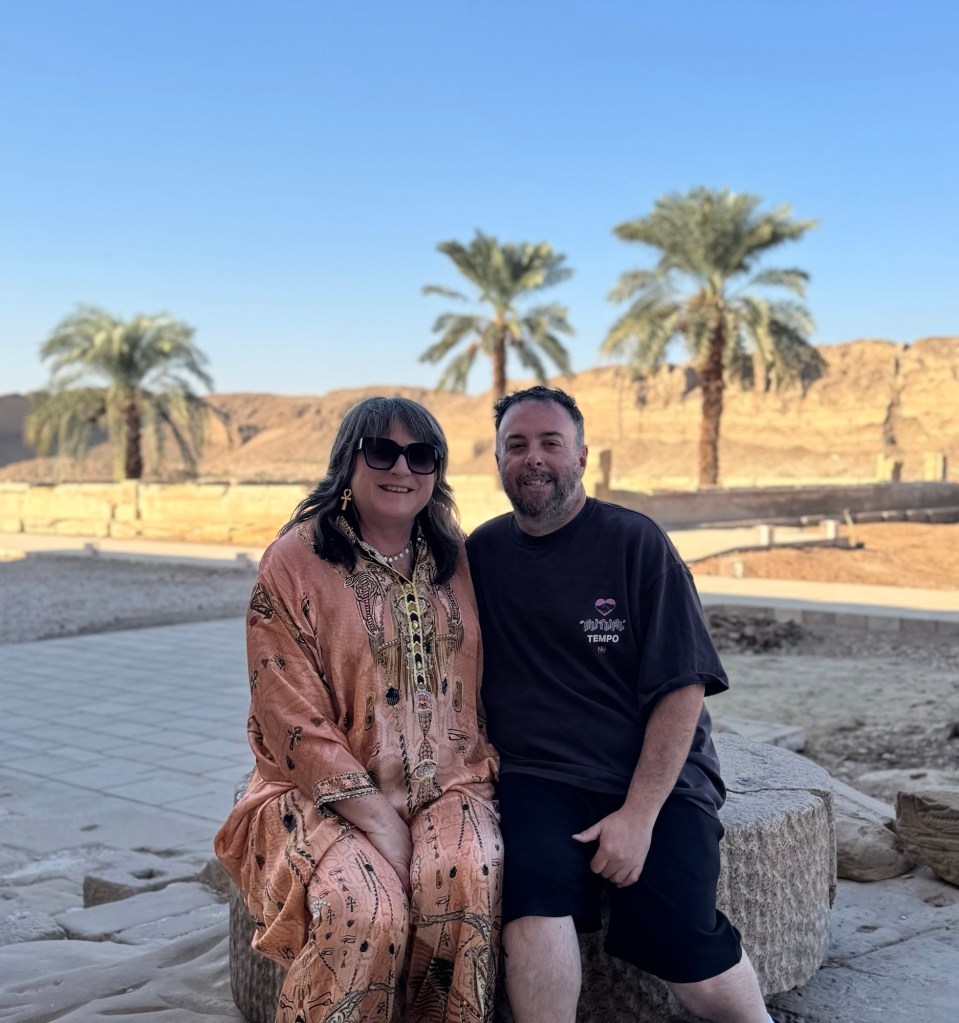
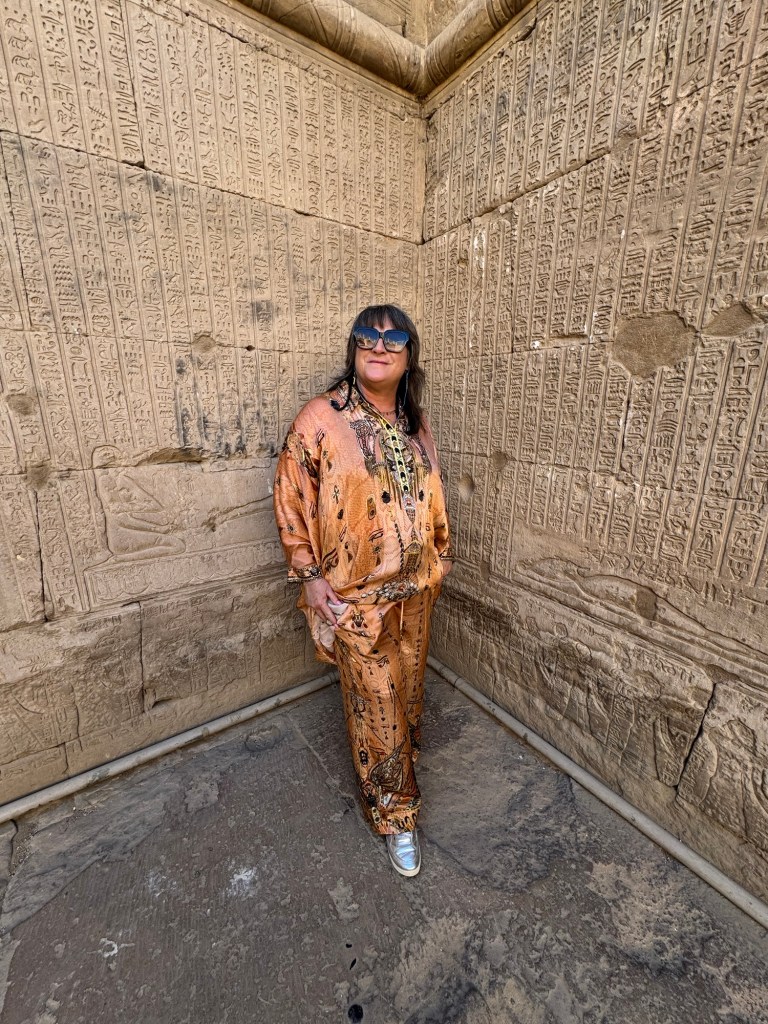
And of course I flounced about in my Camilla of the day – Kingdom of Heiroglyphs

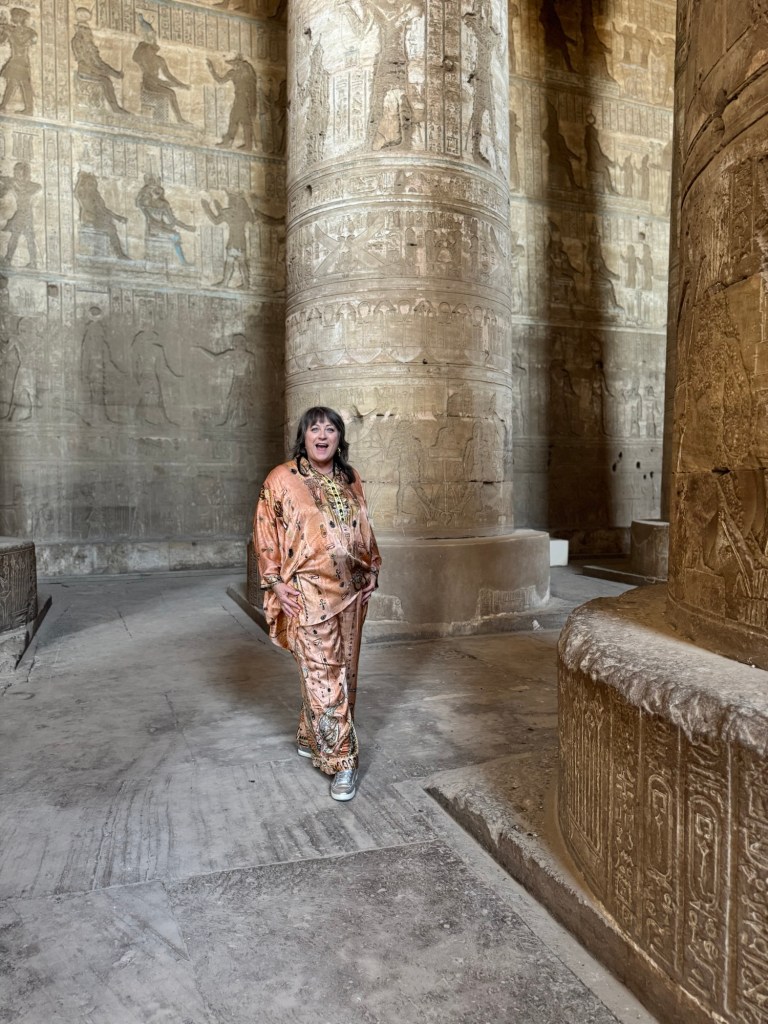
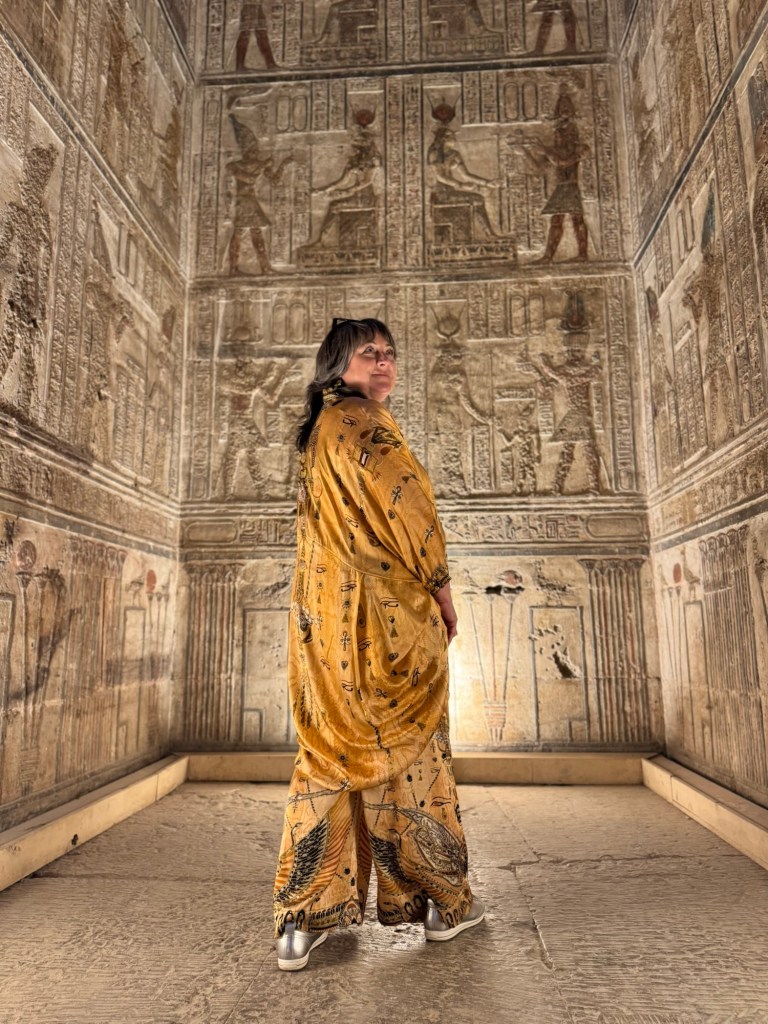
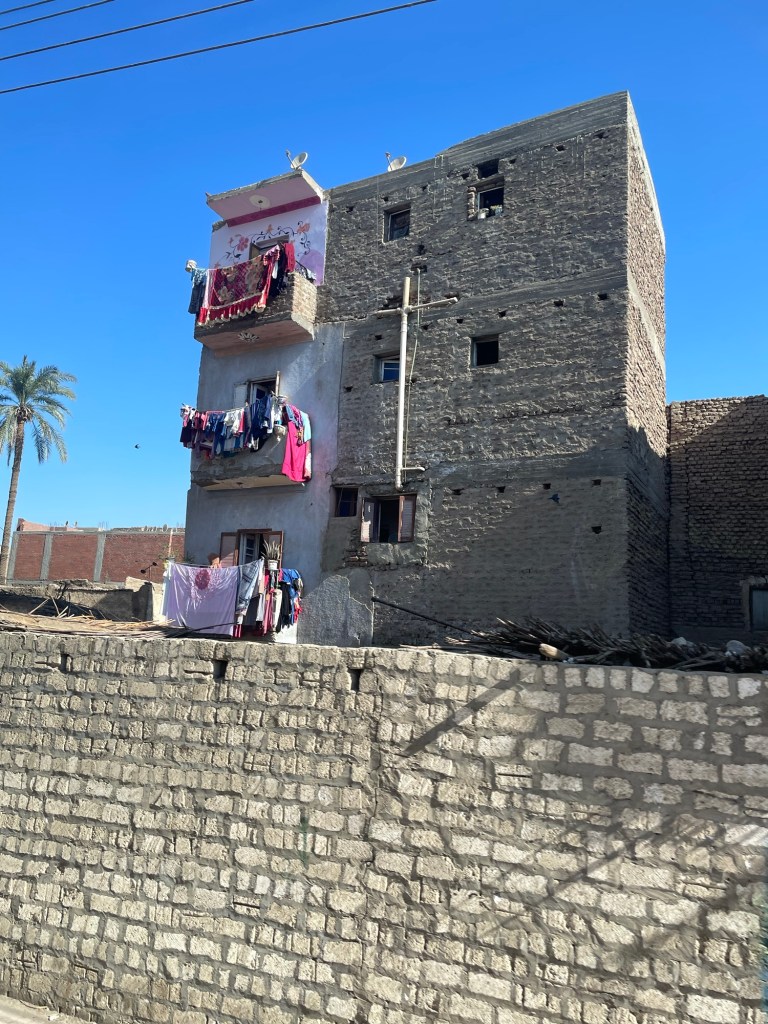
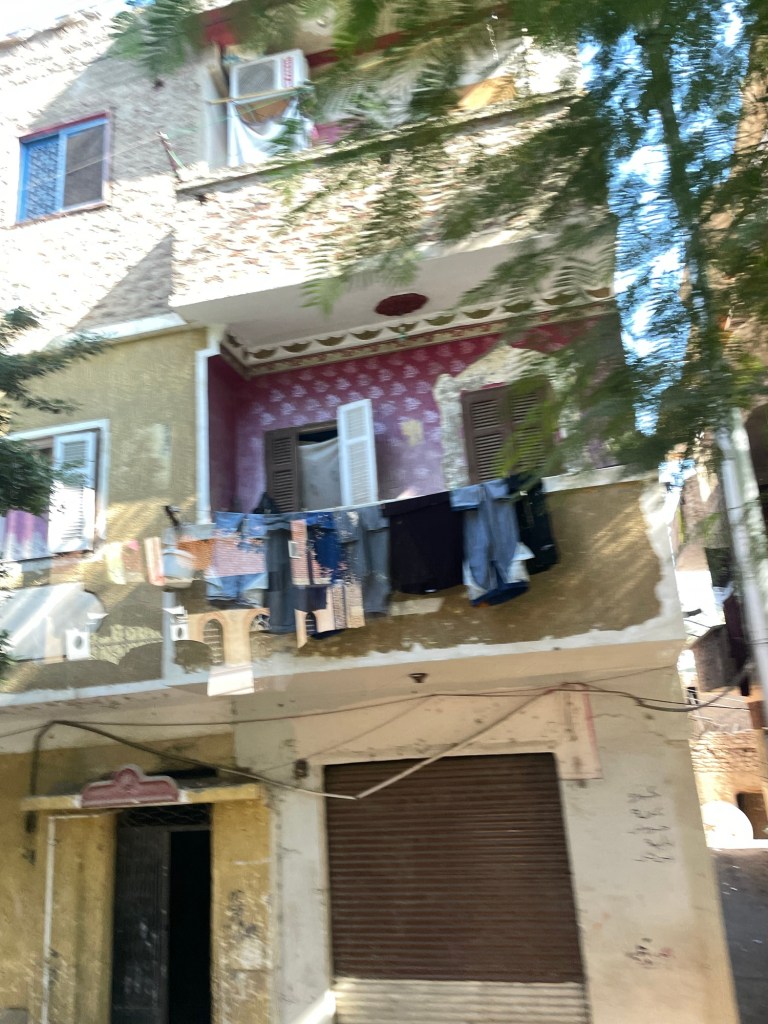
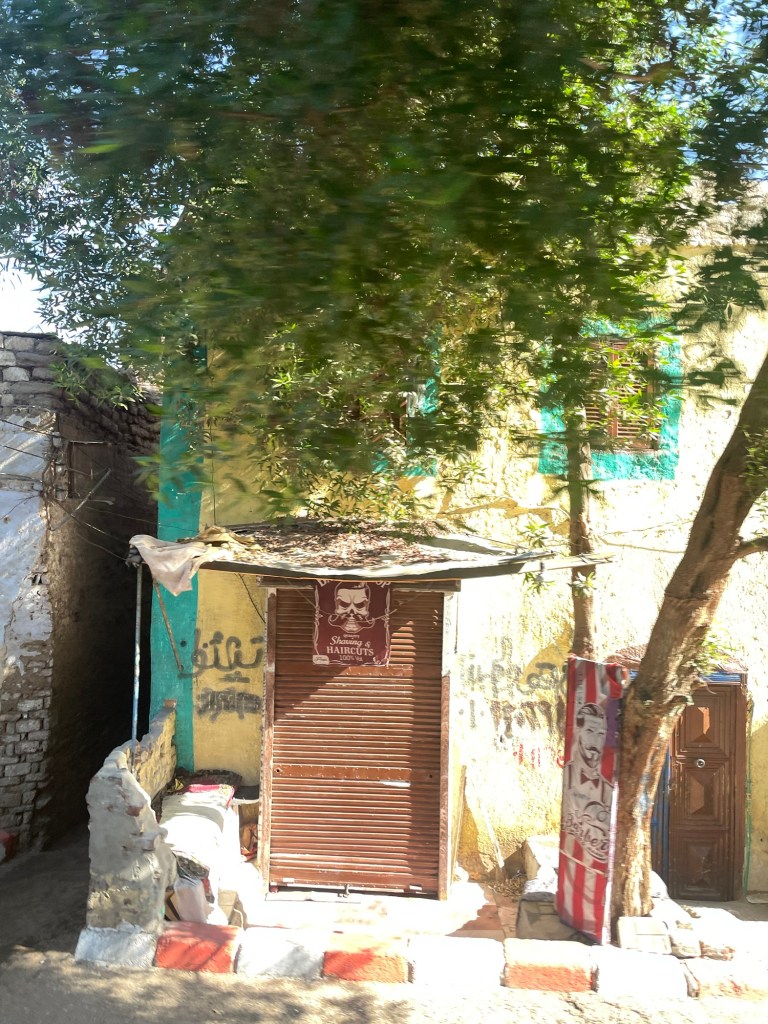
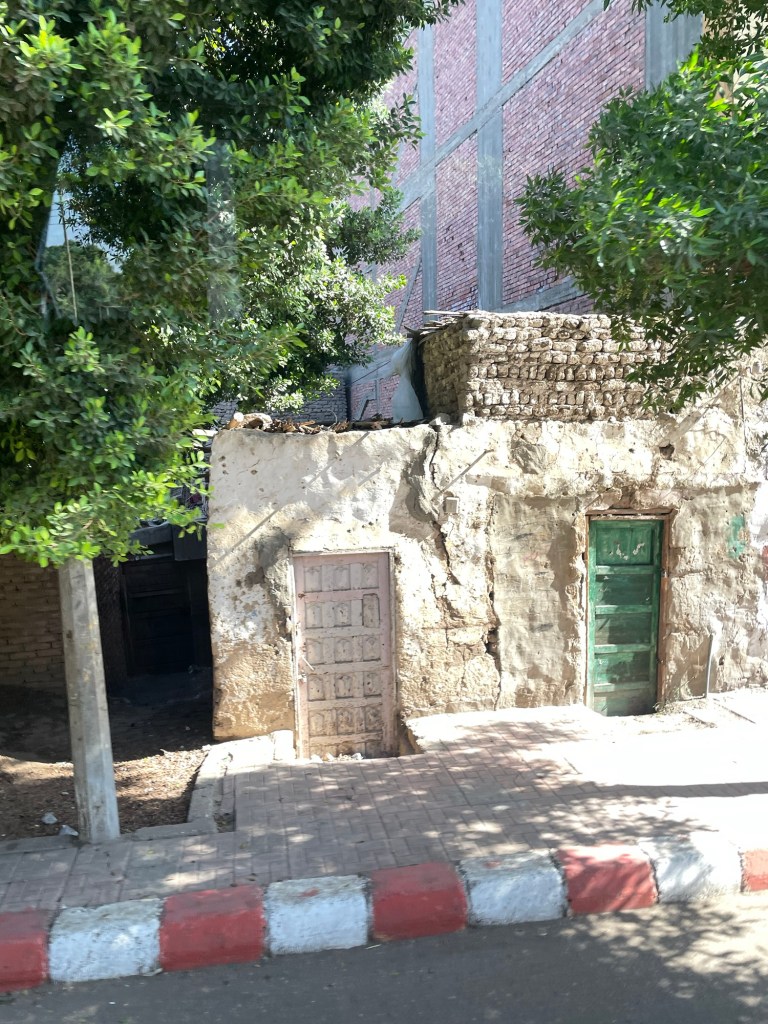
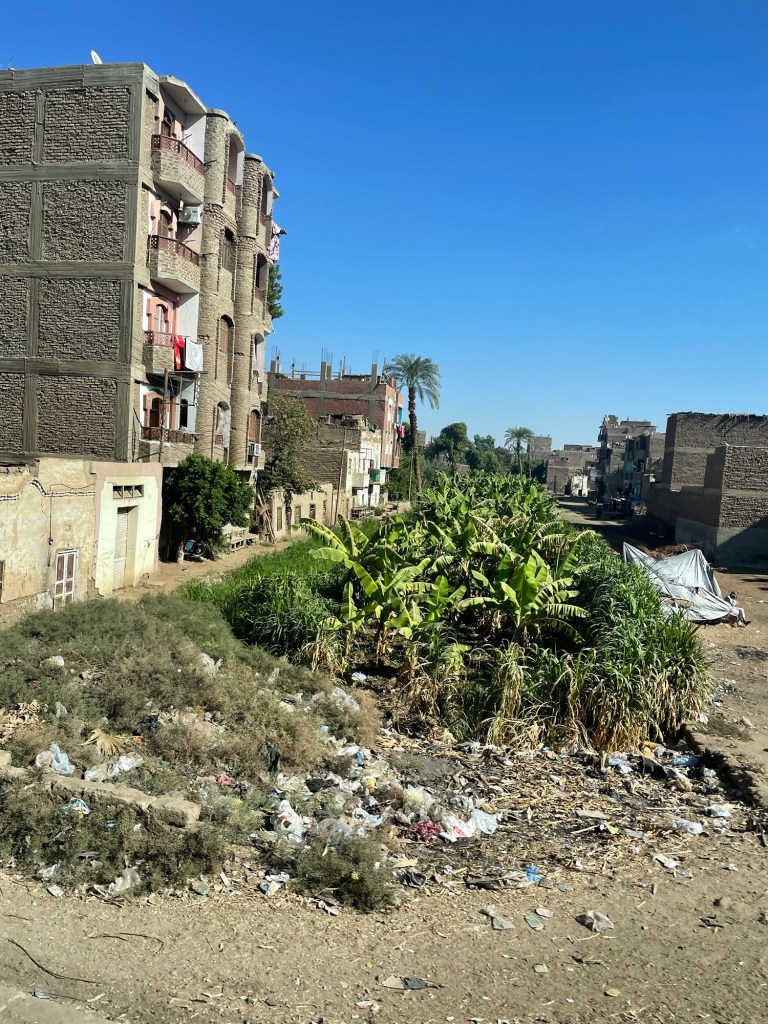
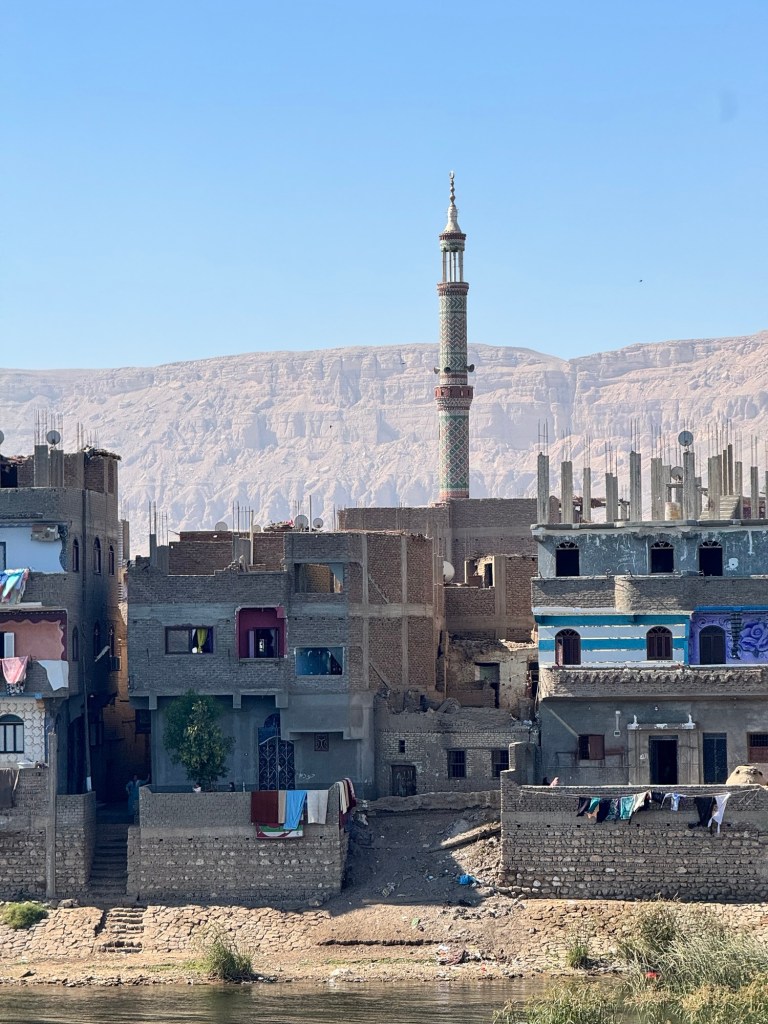
Pics of the village as we drove back to boat
Cruising again
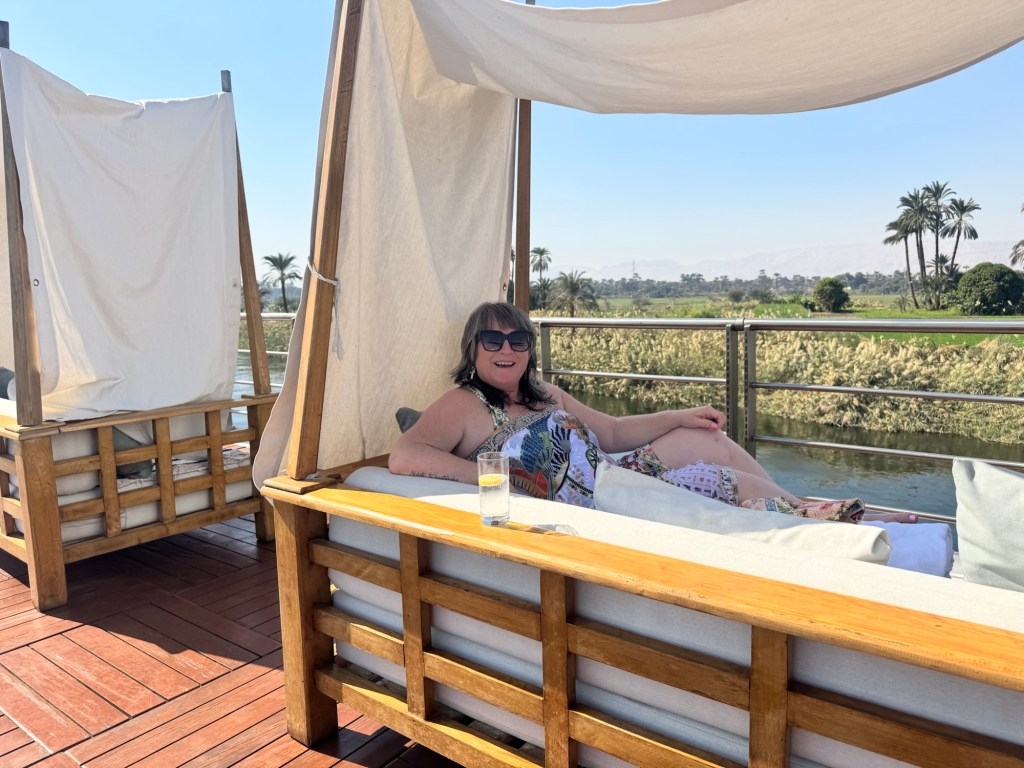
After Dendera, we sailed toward Luxor, watching palm groves, sun-washed villages, and water buffalo drift by like a moving postcard. Nile cruising forces you to slow down; it’s impossible to rush when the river itself refuses to hurry.
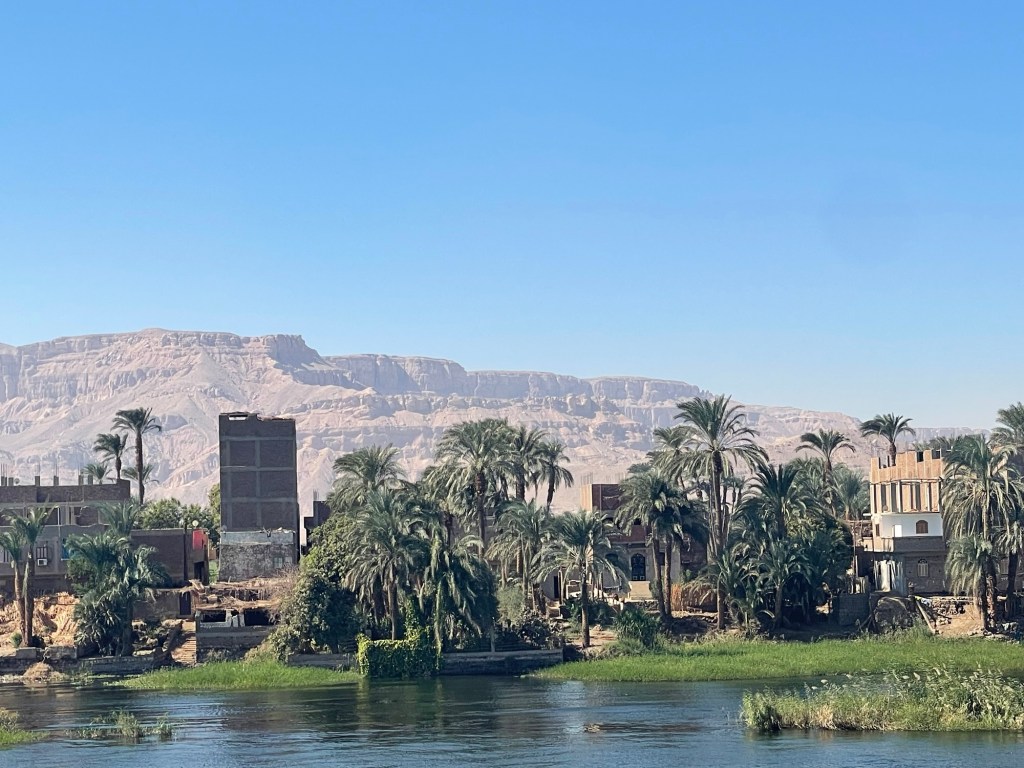

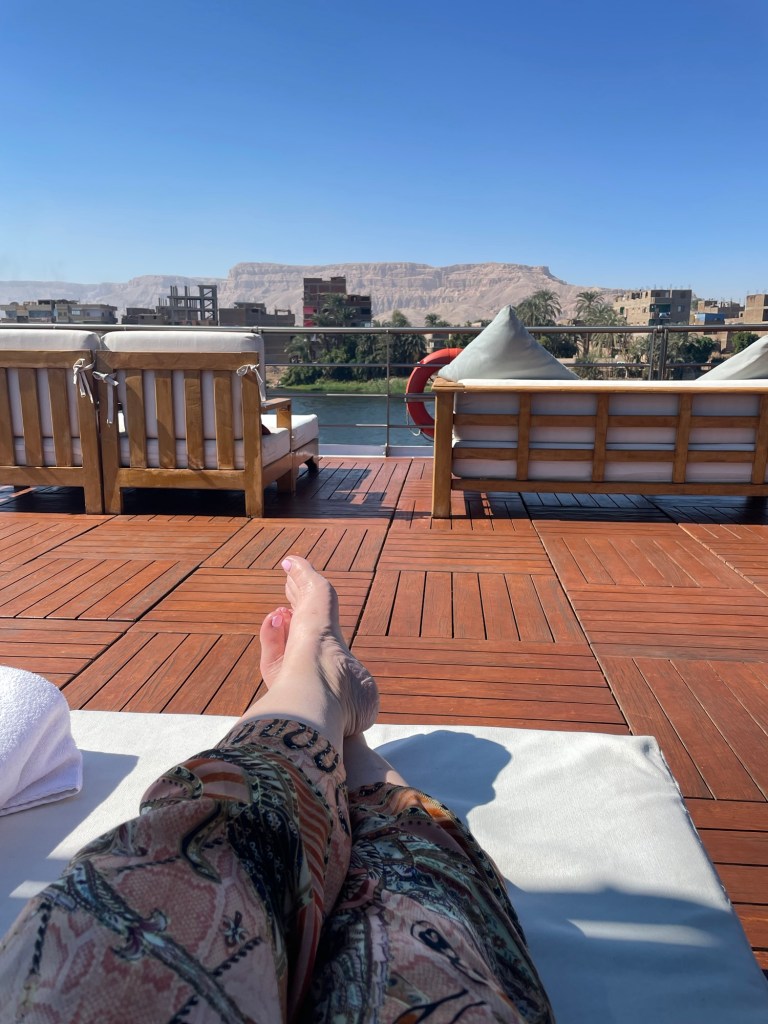
So, we sipped morning tea or champagne, ate delicious food and even braved the pool which was freezing.



Luxor Temple at Sunset
By late afternoon we arrived at Luxor Temple, stepping straight into golden hour magic but a little too late to get to the sunset view points. I had to race ahead of the group to get even a little magic.
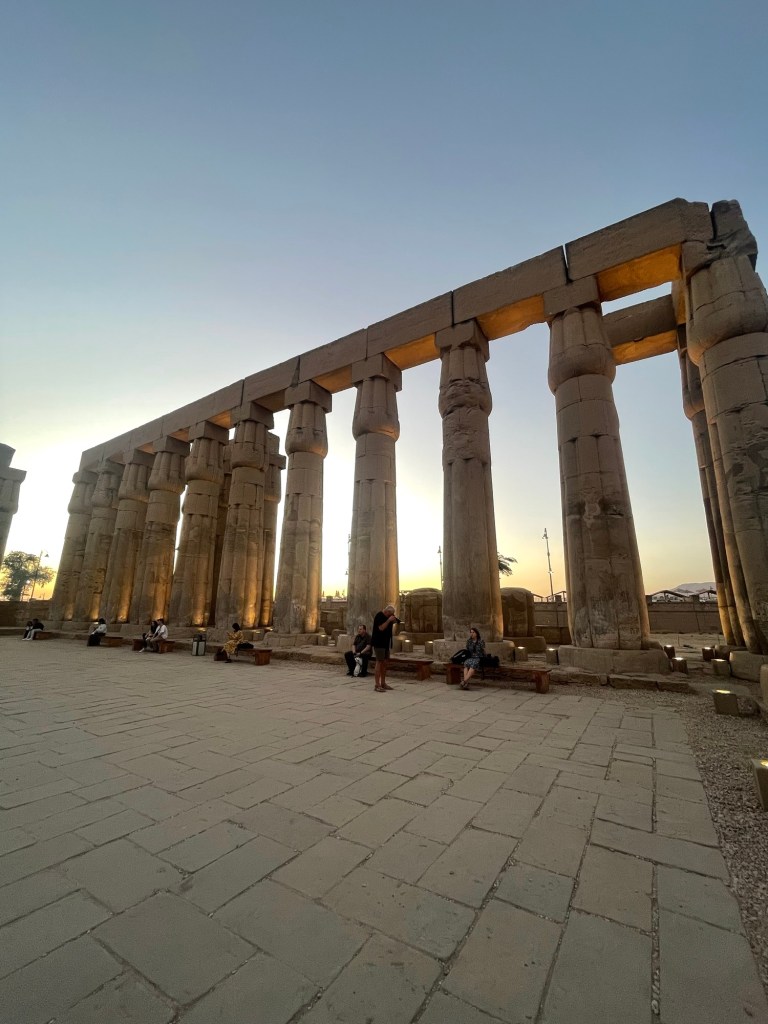
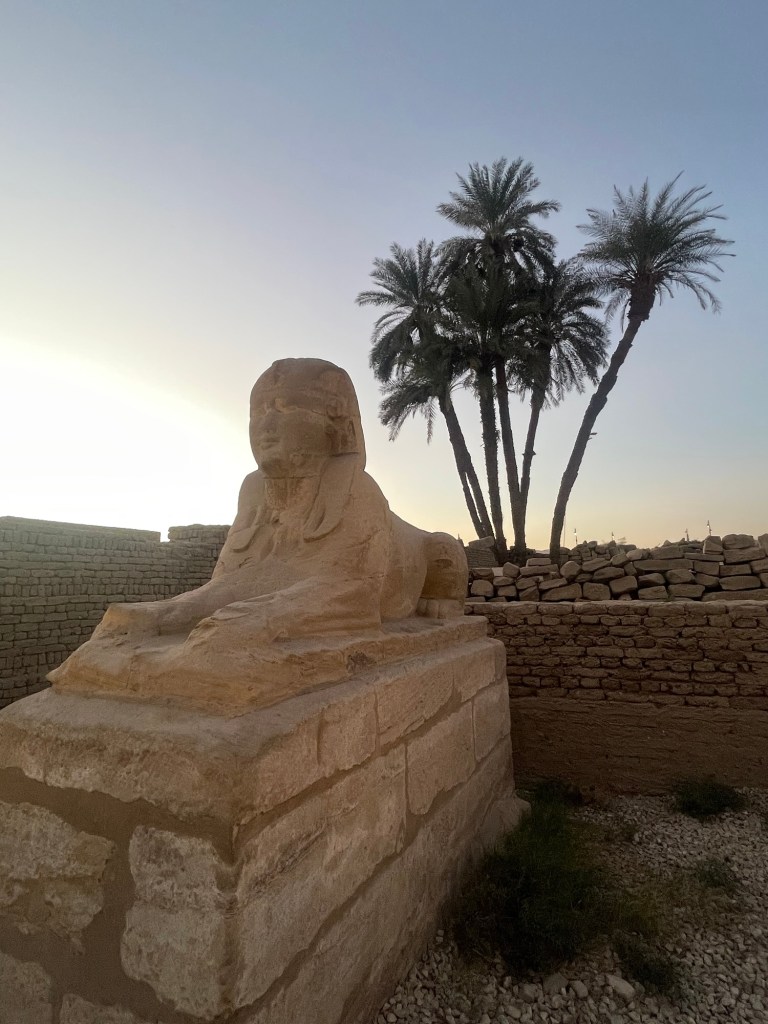
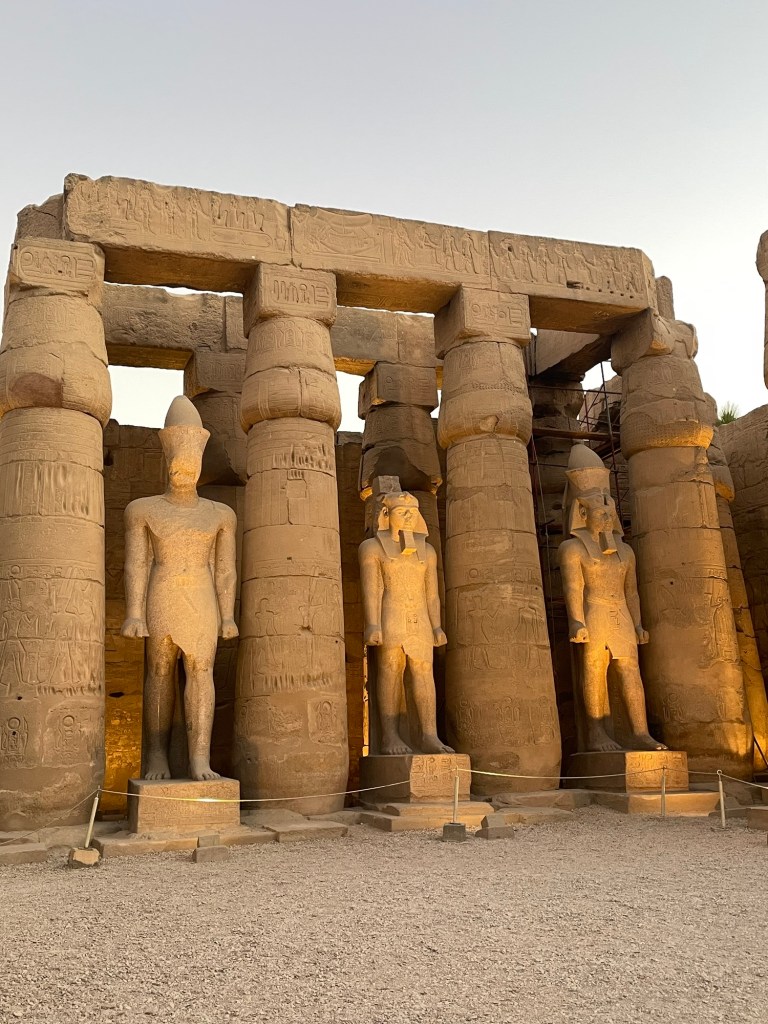
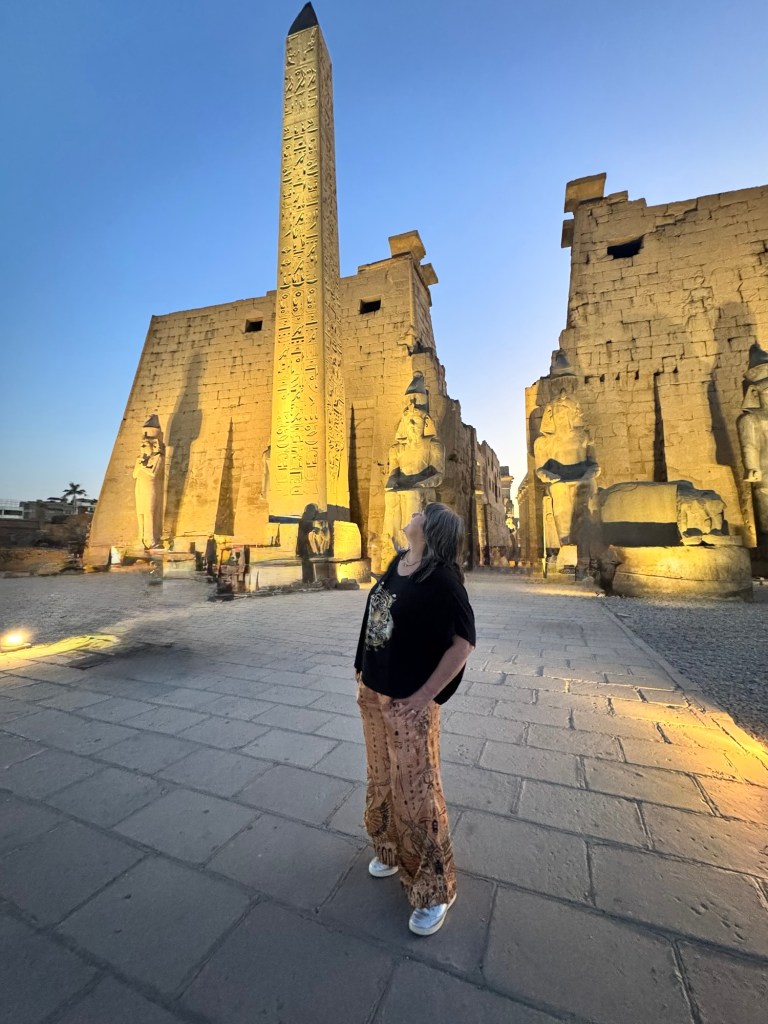
Luxor Temple feels theatrical in the best possible way. As the sun began to sink, the entire place warmed into a burnished glow.
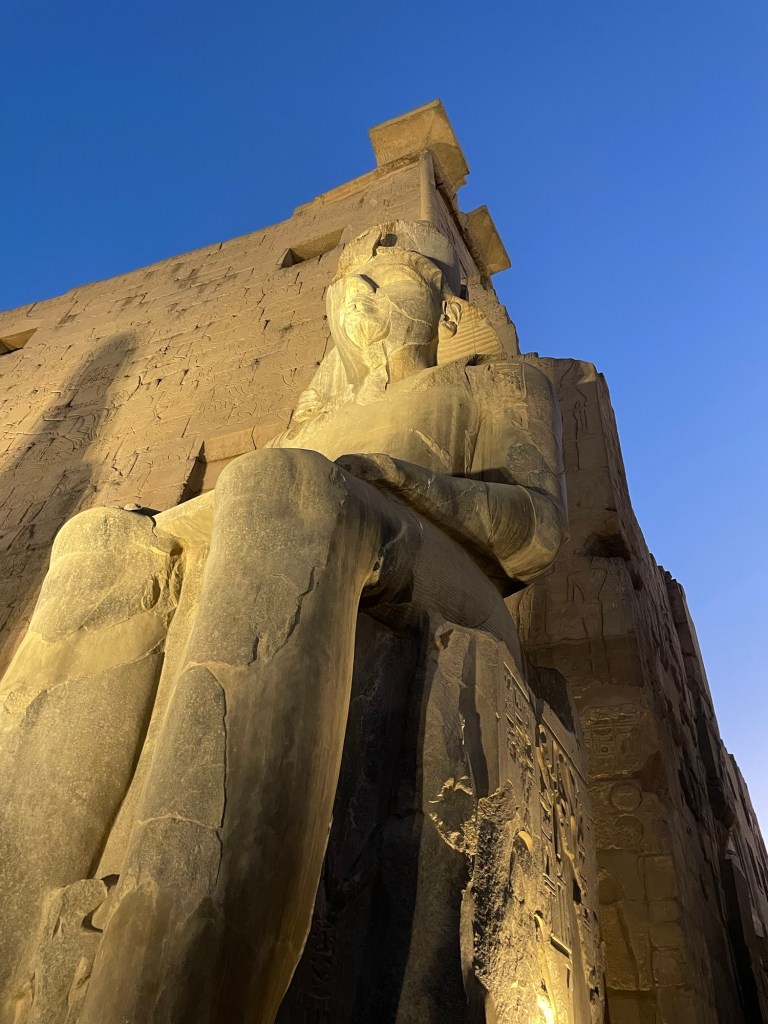
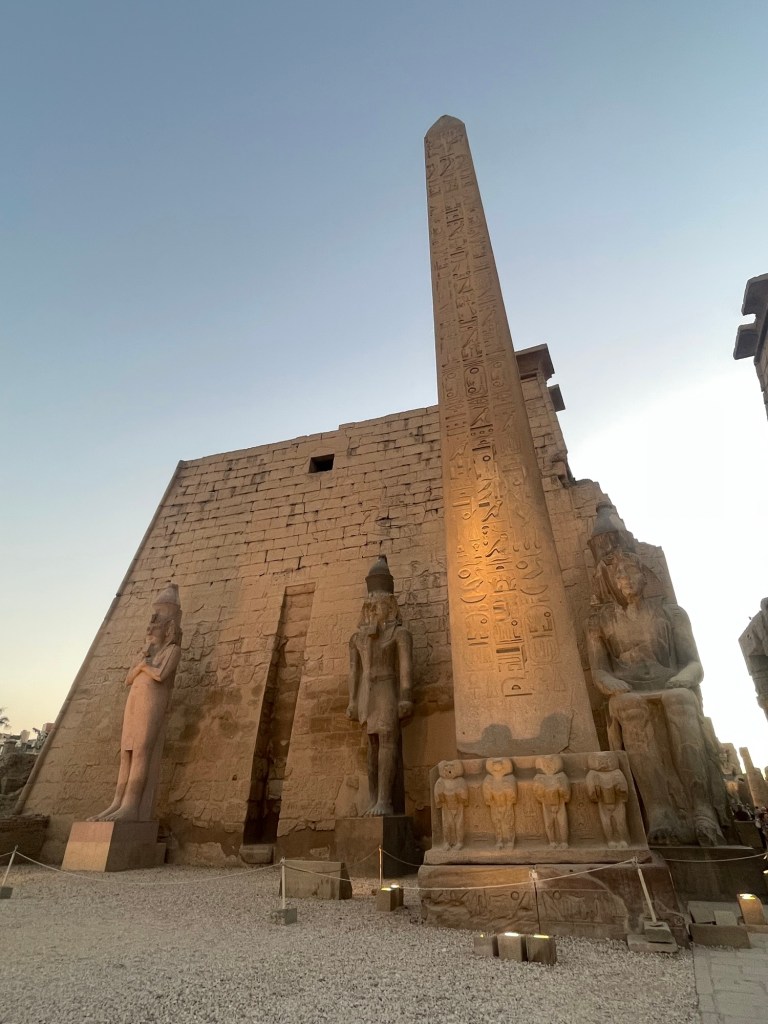
The colossal Ramses II statues guarding the entrance looked almost soft in the apricot light — which is not a sentence I ever expected to write about a man who plastered his name on every available surface.
The single standing obelisk glowed beautifully, shooting upward like a stone exclamation mark (its twin, of course, is now living its best Parisian life).
The Great Court radiated gold, the papyrus columns shimmering like they were lit from within.

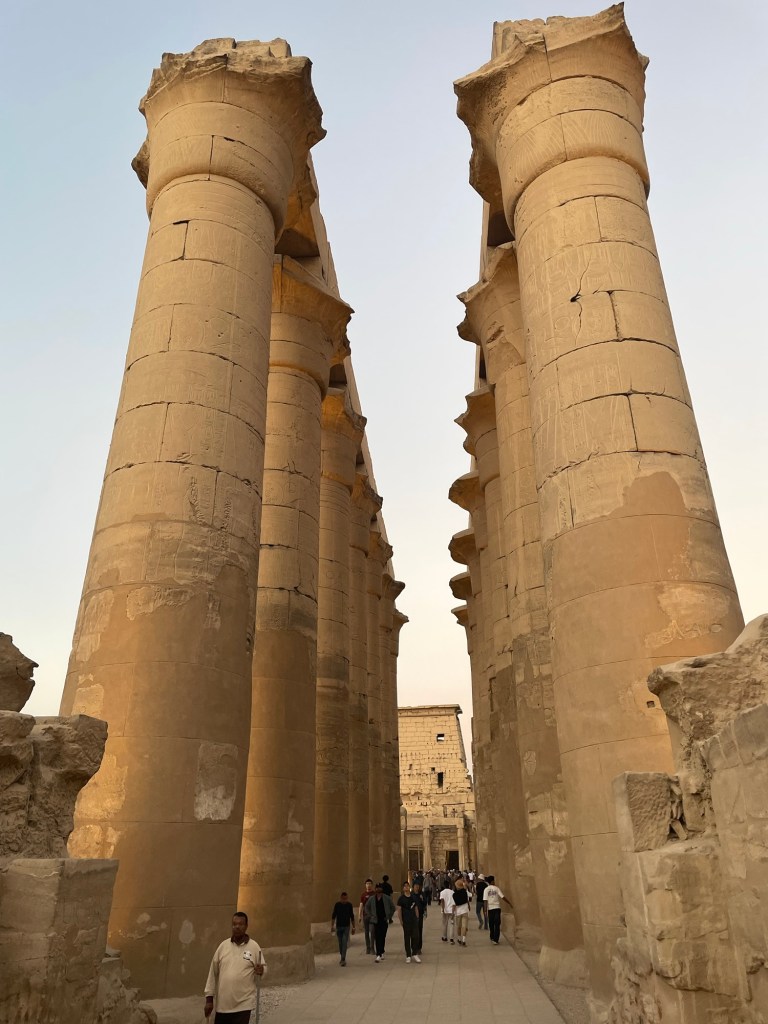
But the real magic was walking the colonnade of Amenhotep III as the day slipped toward dusk. The shadows lengthened, the reliefs sharpened, and suddenly it felt like the temple was breathing — expanding in the warm light, contracting as the sky cooled to a rosy blue.
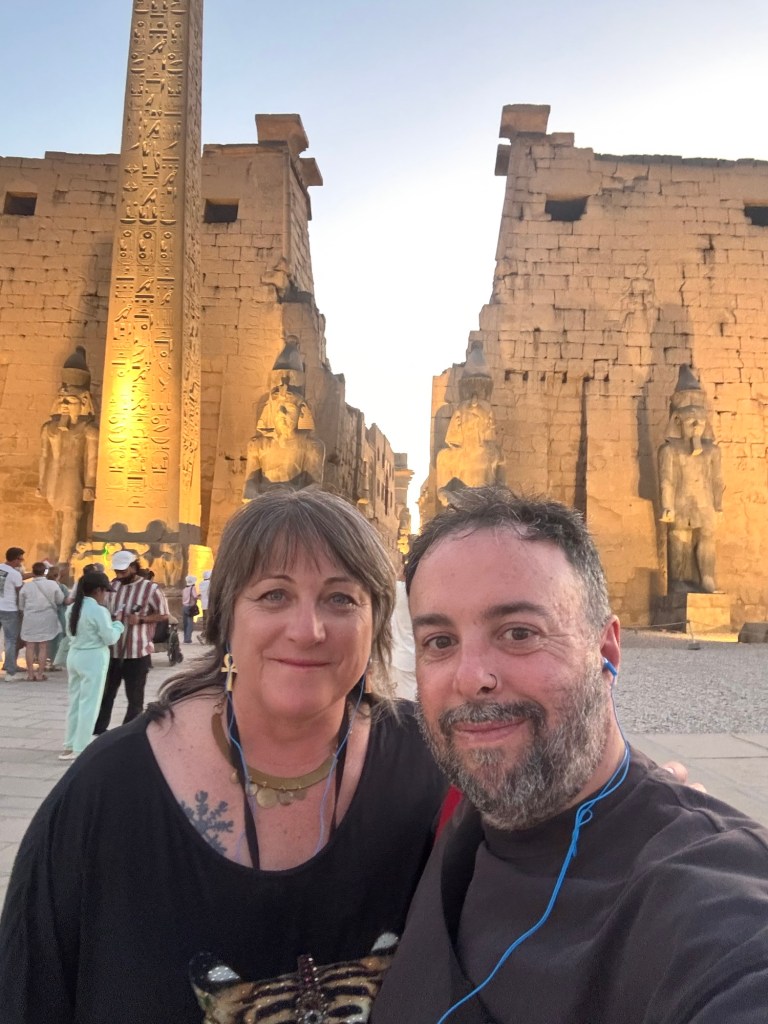
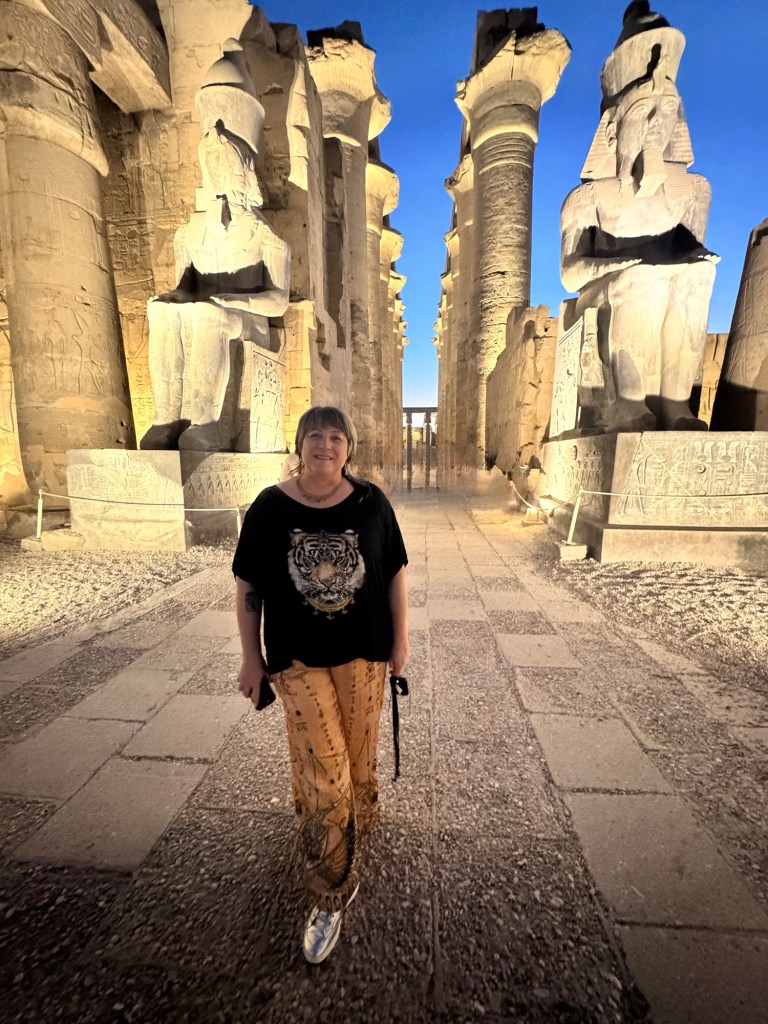
By the time we reached the inner sanctuary, the temple had settled into quiet dusk. We entered in and the lights created shadows on the hieroglyphs which gave each symbol depth and somehow brought them to life a little.
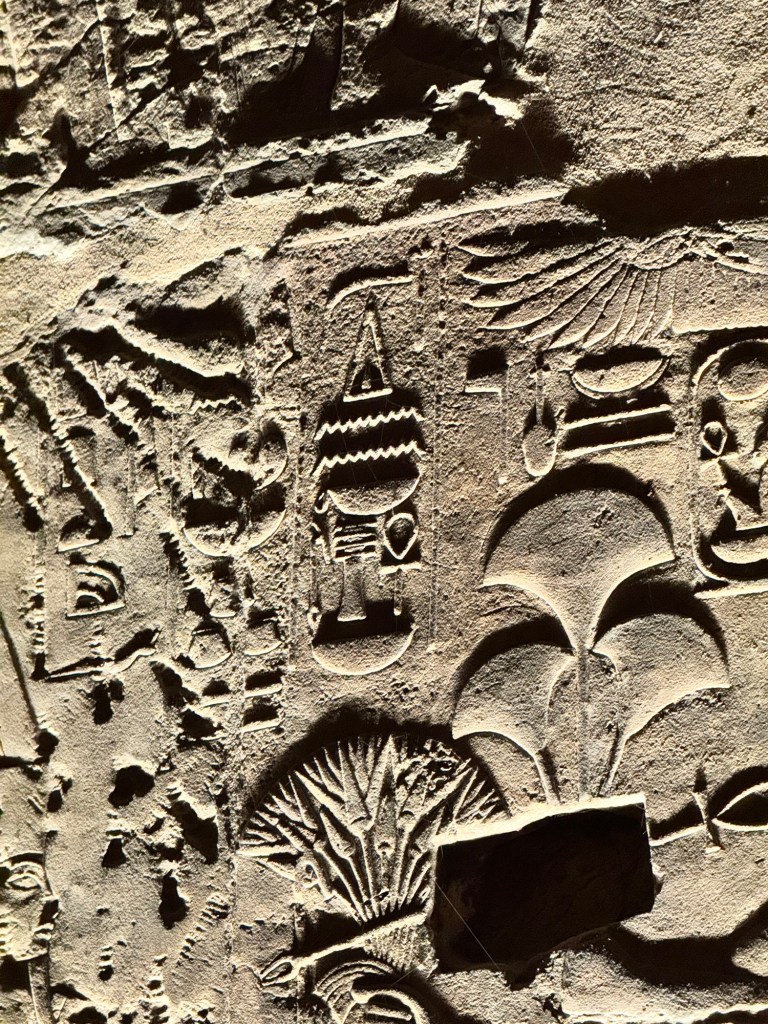
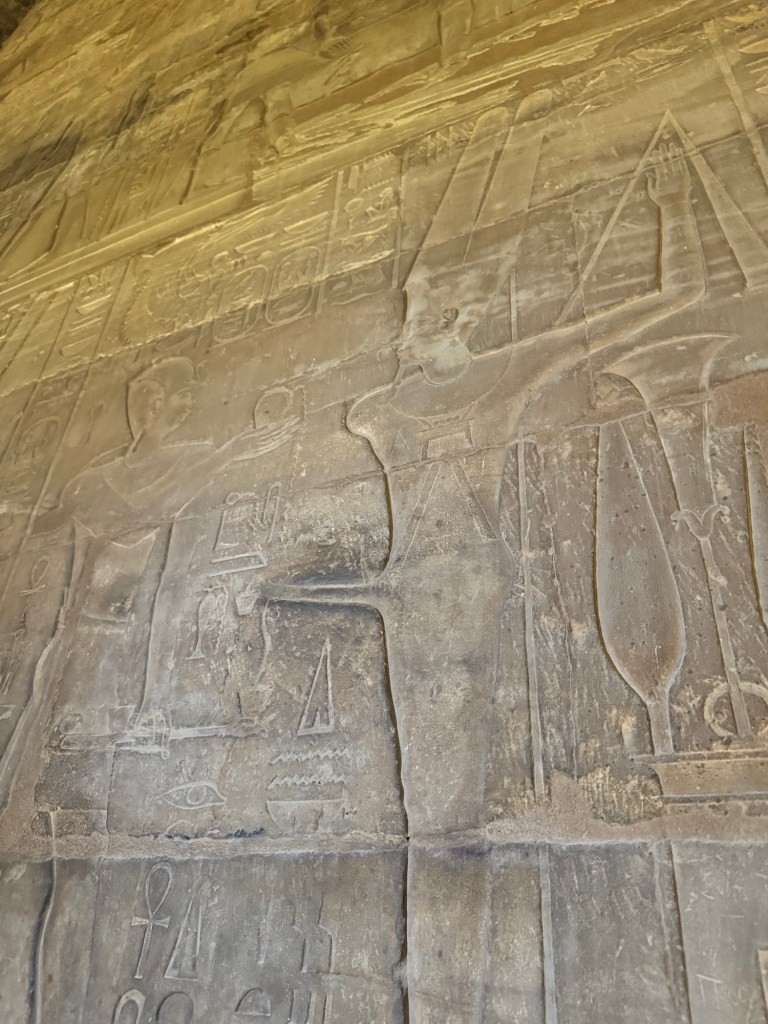
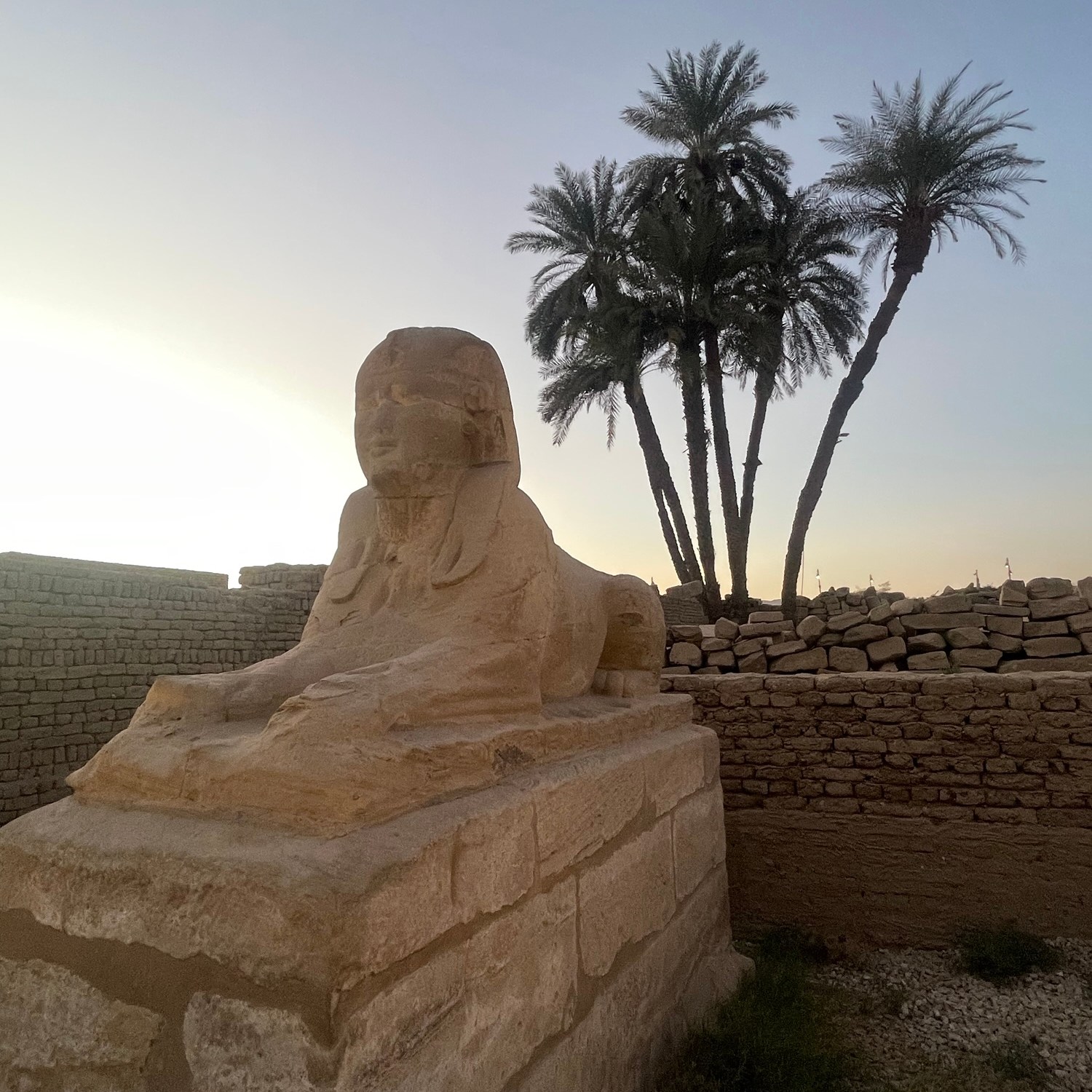
Outside, the sky faded to indigo, and the first electric lights began to illuminate the avenue of sphinxes stretching toward Karnak — a stone pathway tying temples, eras, and travelers together.
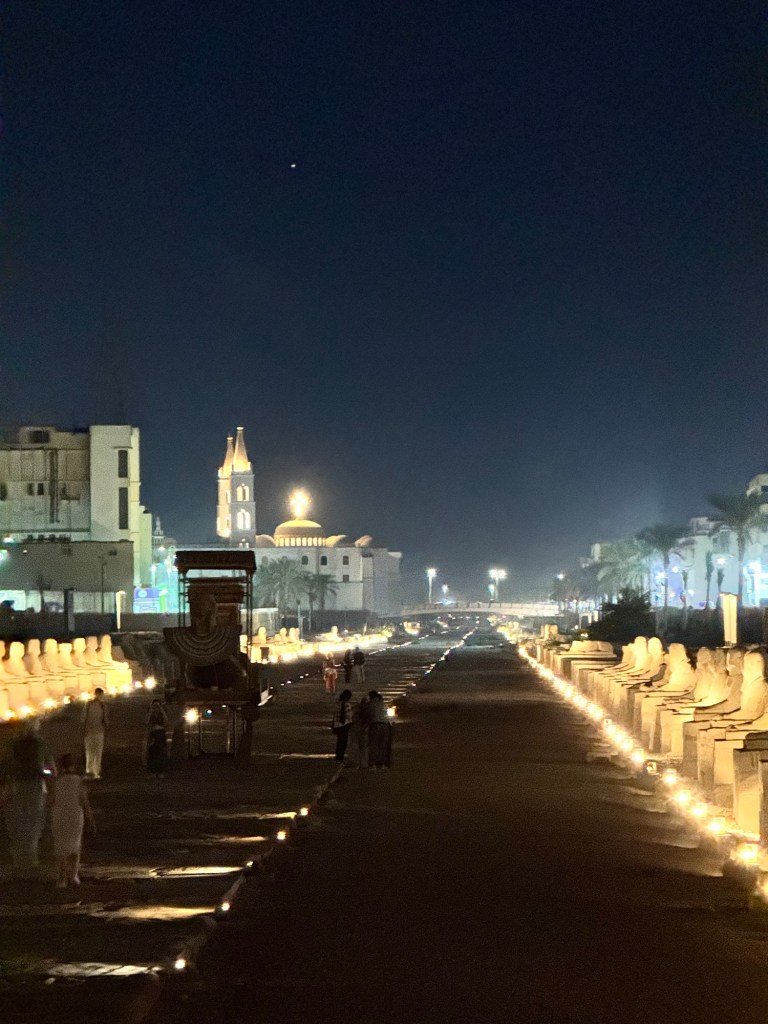
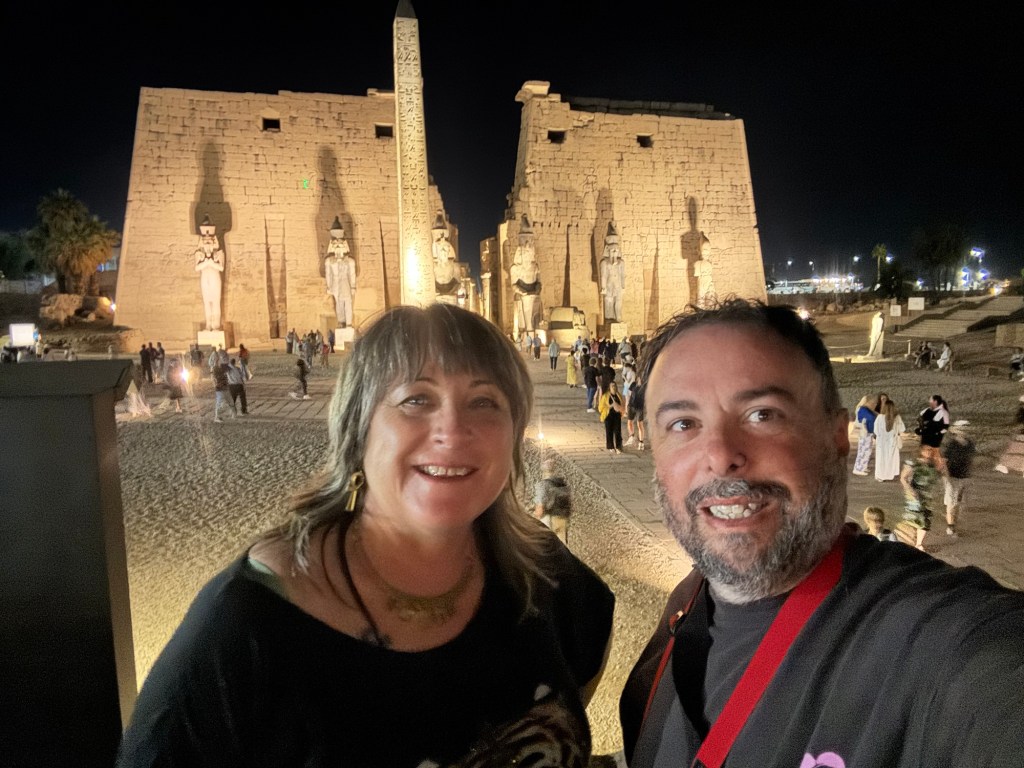
We watched as evening found the temple, the stones warming into a honeyed glow, and the calls to prayer rising around us like a reminder that time is layered here, always.
It was the kind of day that doesn’t need embellishment. A goddess in the morning, a river drifting through the middle, and a temple glowing under a sinking sun.
If Egypt has a signature mood, I think this was it.
 coddiwomple