
The Grand Egyptian Museum (GEM)
Today we visited the brand new Grand Egyptian Museum, and it truly earns the word Grand. The scale alone is astonishing—vast glass, pale stone, and the desert light pouring in like something sacred. It’s modern, but not in contrast with the past. It feels designed not only to display history, but to honour it.
The Grand Entrance


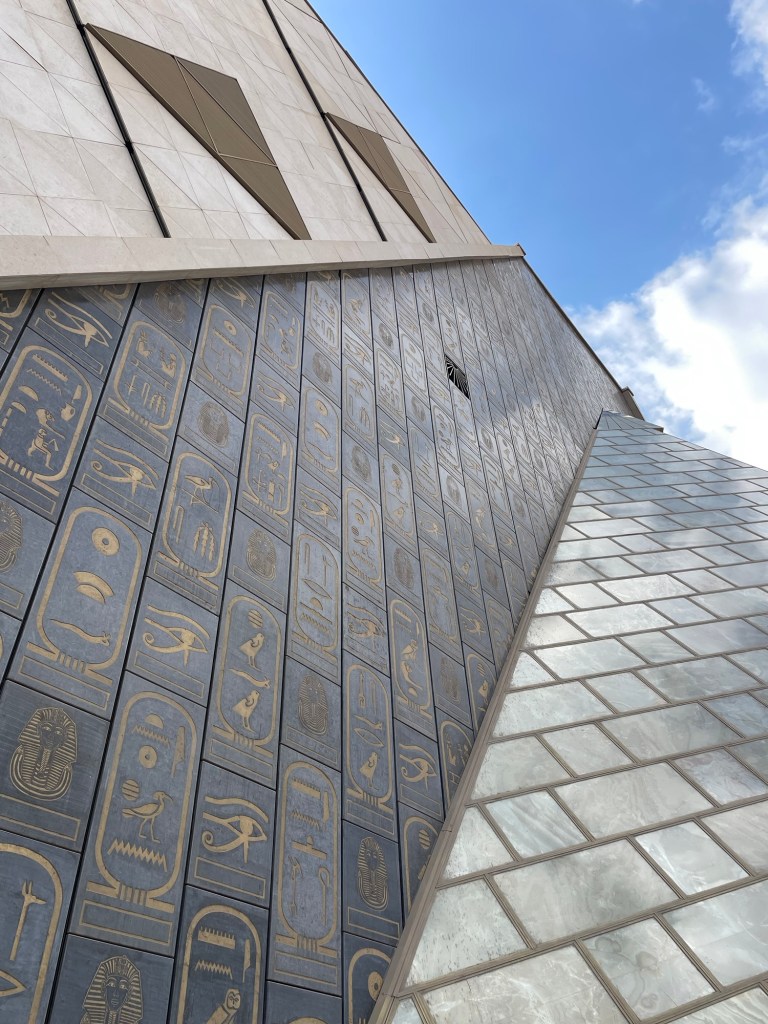
Inside, everything is spacious. There is room to look. Room to breathe.
The artifacts are displayed with respect.

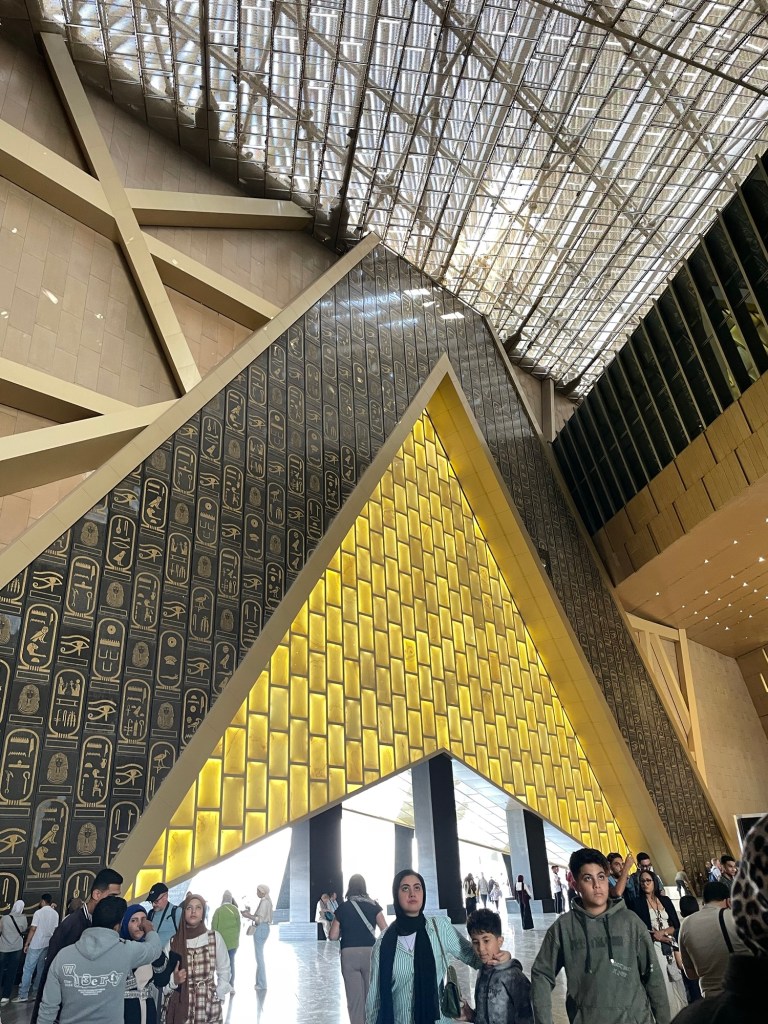

The Grand Hall
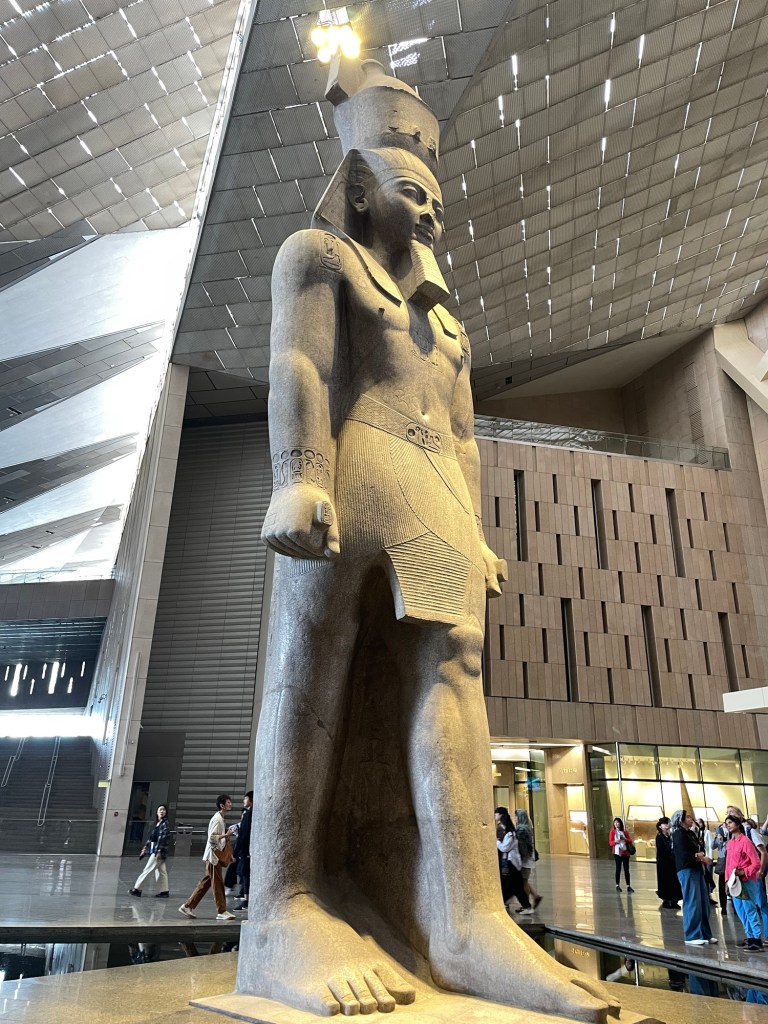
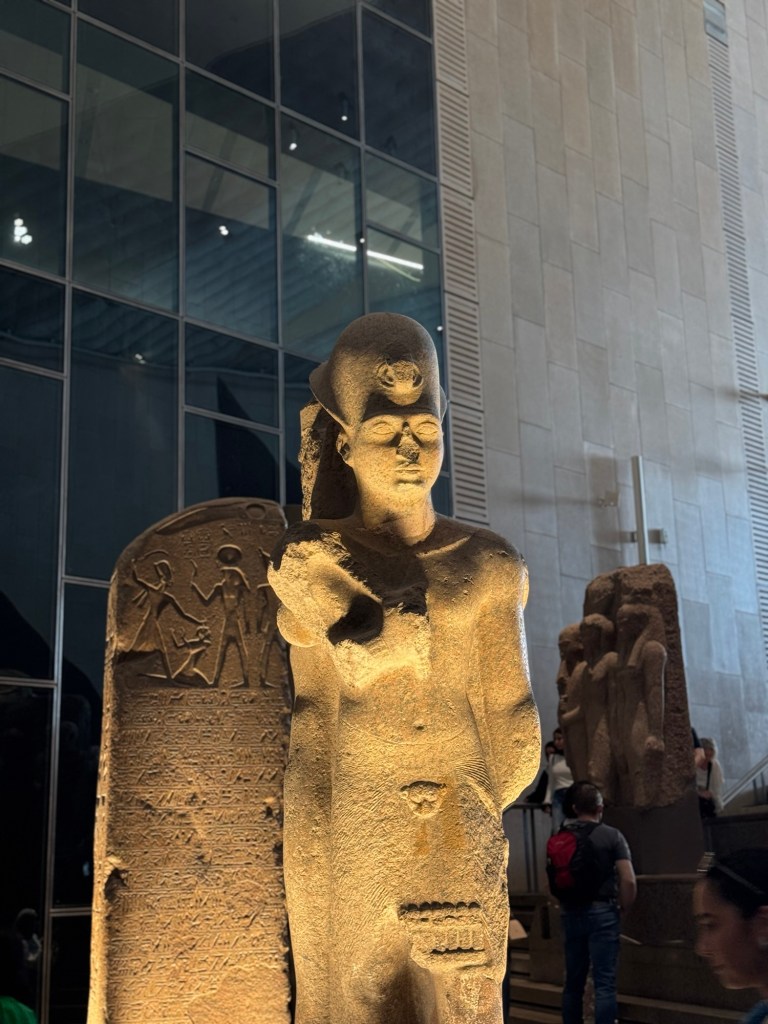
The colossal statue of Ramses II, stands in the atrium greeting each visitor personally. It’s strangely moving—he’s been through so much: time, tomb robbers, foreign collectors, decades in traffic circles—and now here he stands, steady and monumental once again.



The Grand Staircase
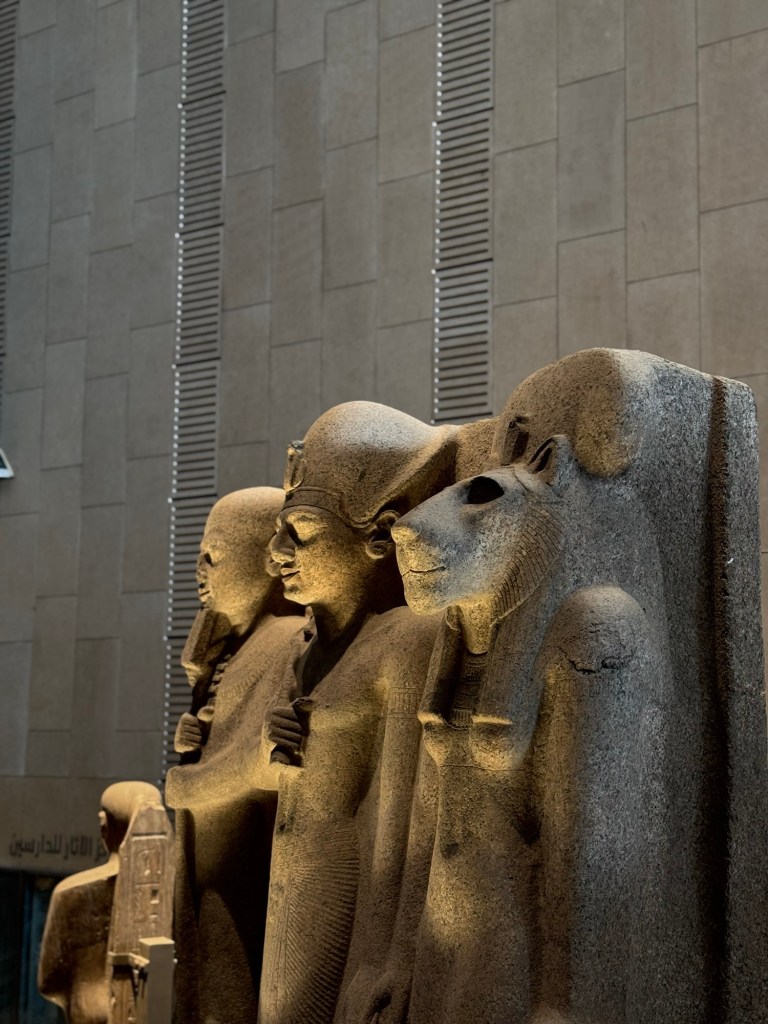
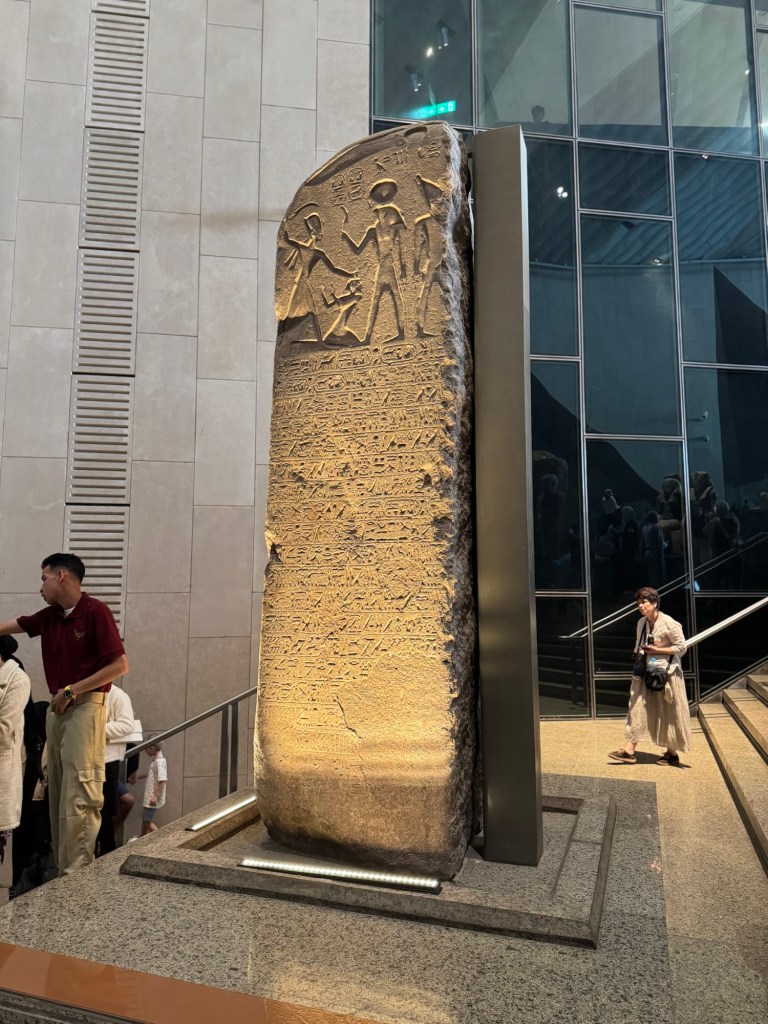
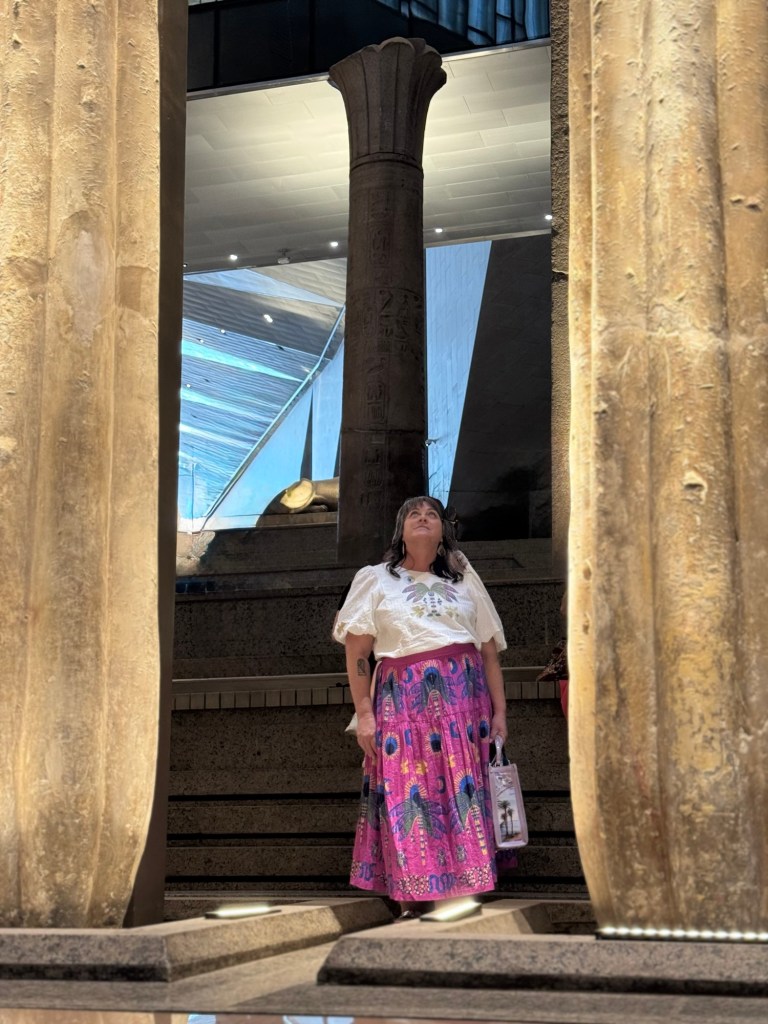
The Grand Staircase feels less like an entrance and more like a slow reveal – a ceremonial ascent into the ancient world. The space is vast and light-filled, lined with colossal statues that rise along the walls like silent sentinels.
We ended up doing the Grand Staircase in reverse – the world’s most majestic descent – because, in true “must-see-Tutankhamun-first” energy, we sprinted up the escalators the moment we arrived. Priorities. Once we’d had our moment with the boy king, we finally exhaled and wandered back toward the staircase, seeing it the opposite way most visitors do.
Even in reverse, the space is jaw-dropping. The Grand Staircase feels like a canyon of stone and light, flanked by colossal statues that seem to watch you from their plinths as you move downward. Instead of a triumphant ascent into the ancient world, we got a slow, grounding descent out of it – a gentle return to the present after the intensity of the treasures upstairs. The scale, the quiet, the way the statues loom with dignified calm… even backwards, it works. It’s the rare staircase that still manages to tell a story, no matter which way you take it.






The Grand Galleries
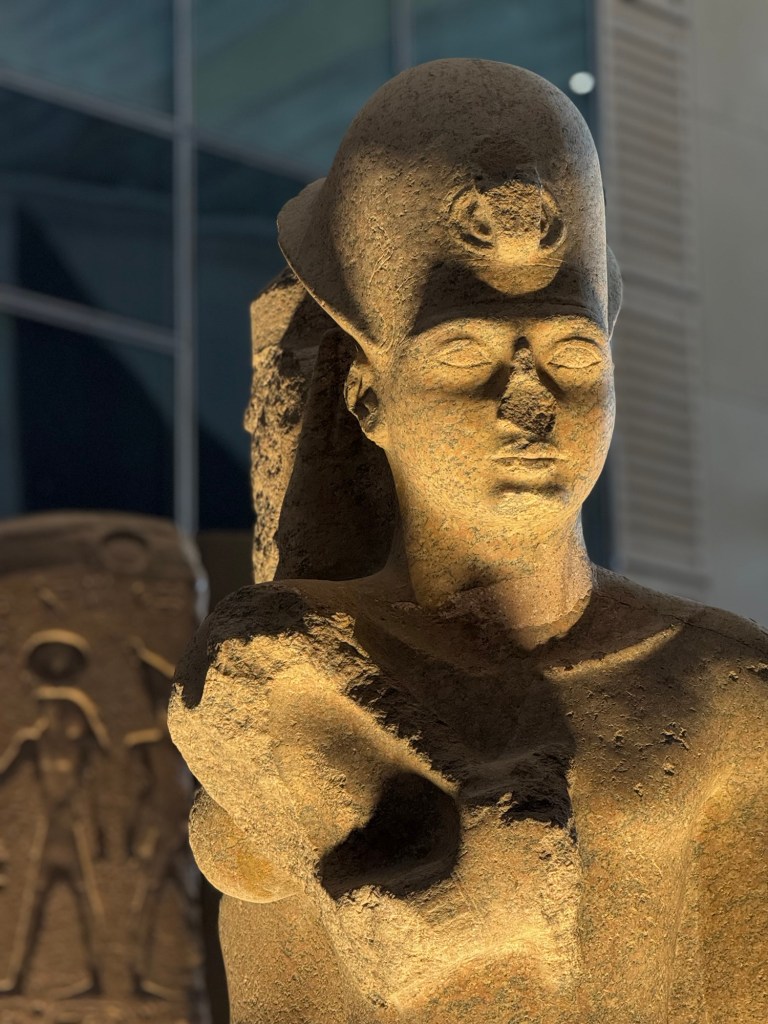
The galleries are airy and uncluttered. Artifacts sit in carefully lit spaces that let you really see them: the curve of a pottery rim, the painted feathers on a coffin lid, a bead so small you wonder how hands ever shaped it.
The galleries unfold in chronological order, beginning with the earliest pottery and tools of the Predynastic villages, then moving into the birth of pharaonic culture in the Early Dynastic Period. The Old Kingdom brings the grandeur of the pyramids and the precision of high art, while the Middle Kingdom showcases elegant literature, refined statuary, and the revival of centralized power.
The New Kingdom is the museum’s heart — the age of empire, of Hatshepsut, Tutankhamun, and Ramses II — when Egypt’s wealth and ambition reached their peak. From there, the galleries trace the Late Period, the Ptolemaic fusion of Greek and Egyptian culture, and finally the Roman era, revealing a civilization that evolved, endured, and continues to captivate us millennia later.
We spent 5.5 hours and didn’t get to the pre-dynastic or Graeco-Roman galleries. Always leave something not scene so you have to go back. In our case, it will be Sunday when we come with our Uniworld tour group.
Tutankhamun’s treasures
After racing up the grand stairwell to get into the Tutankhamun gallery before the masses of crowds arrived, we moved slowly — room to room, artifact to artifact.
There’s no need to rush history that has waited thousands of years (unless you want to beat the crowds that are drawn to Tutankhamun’s gold funeral mask!)

The Tutankhamun collection is astonishing, luminous and somehow personal. The gallery begins with his family tree, his reversion back from his dad, Akhenaten’s Aten worship, to Amun (as demonstrated in his change of name from Tutankhaten to Tutankhamun), and details of his short reign as Pharaoh.
The next section focuses on funerary rites and mummification as well as some wonderful interactive screens that show you each step of the unwrapping (and ‘unboxing’ like a Russian Doll!) as well as X-rays and theories about his cause of death.

There are so many of his treasures finally gathered in one place, displayed in a way that feels reverent rather than crowded: the delicate gold sandals, the jewellery designed for eternity, and of course the famous golden mask. It’s small in size but overwhelming in presence. A reminder: history is made by real people, with real hands and real hopes.
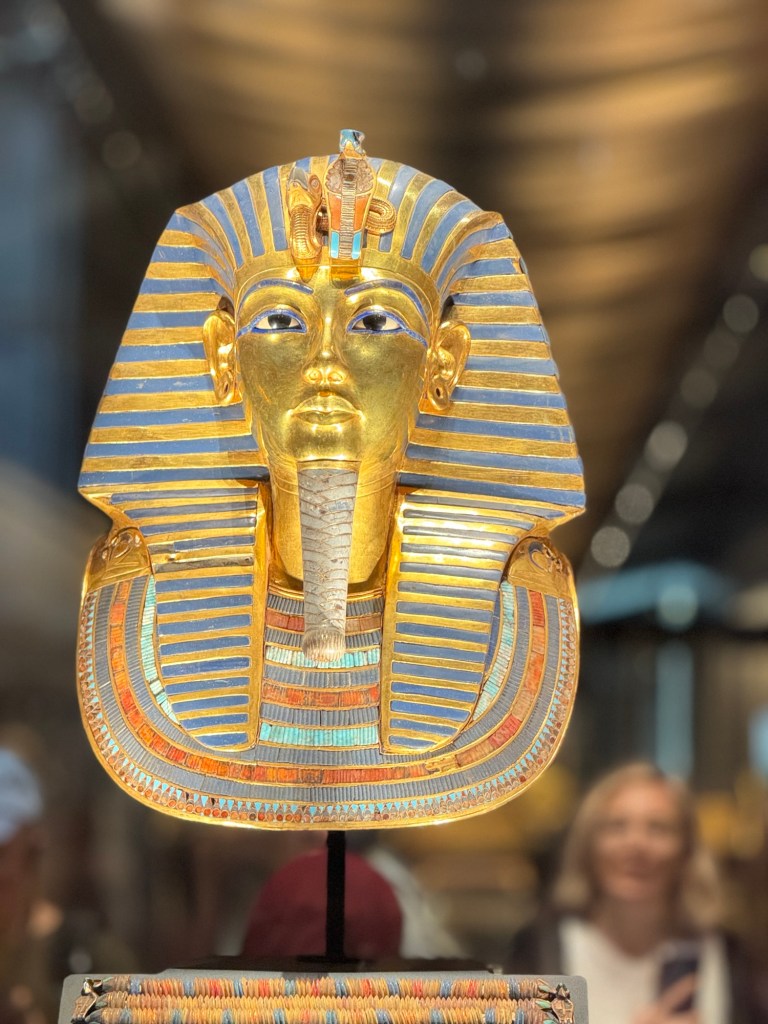
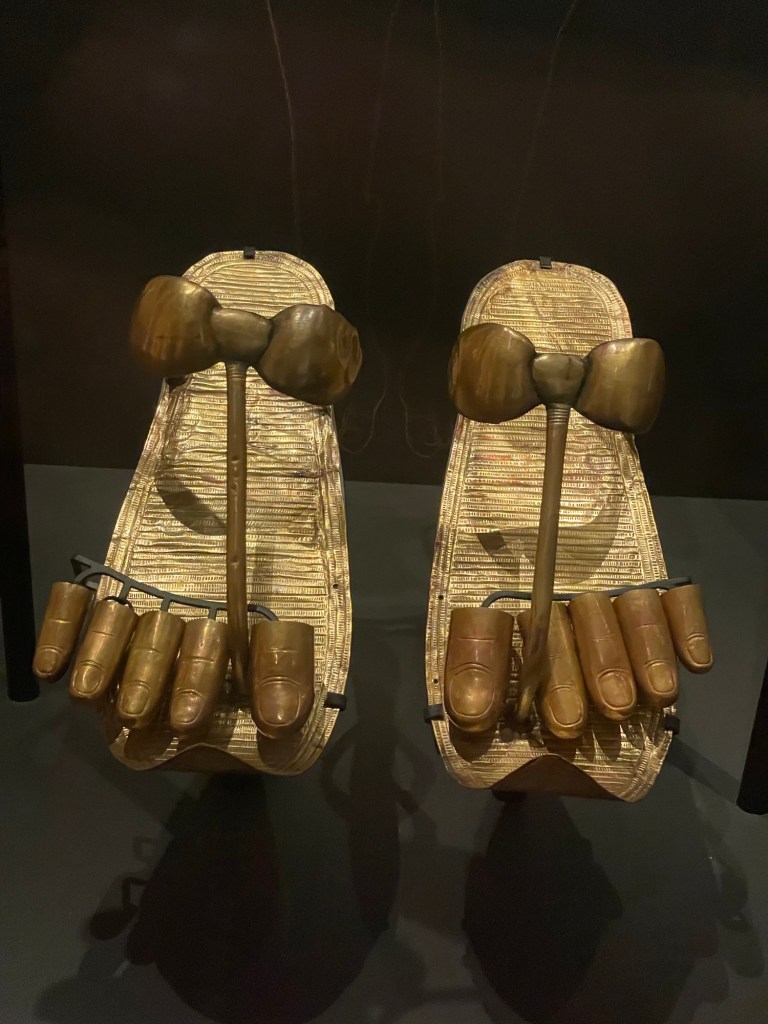


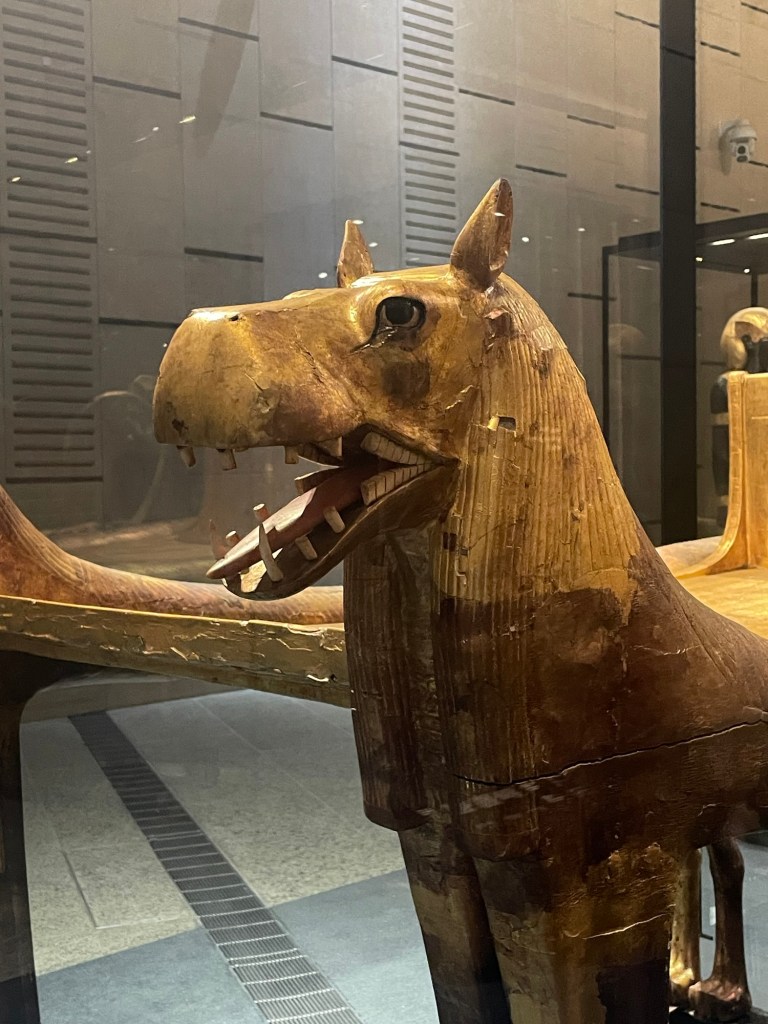
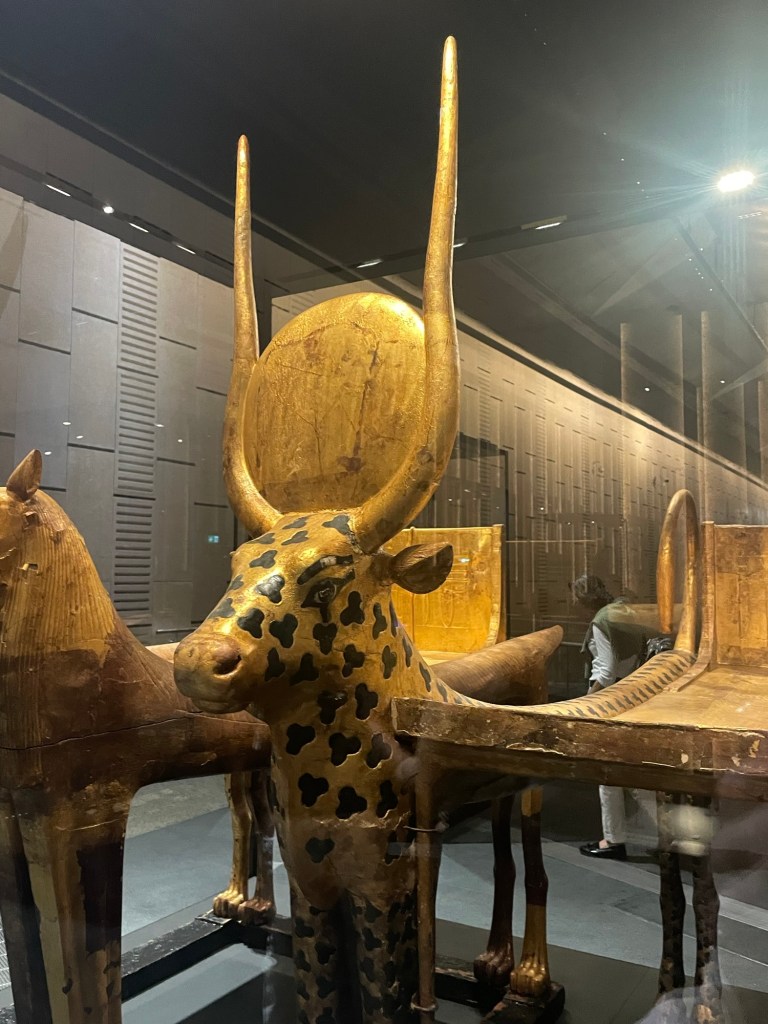


There are the sarcophagi including the stunning pure gold one (not just gilded), as well as objects for the afterlife, carved beds, chariots and of course the beautiful box containing the Canopic jars that held his vital organs.

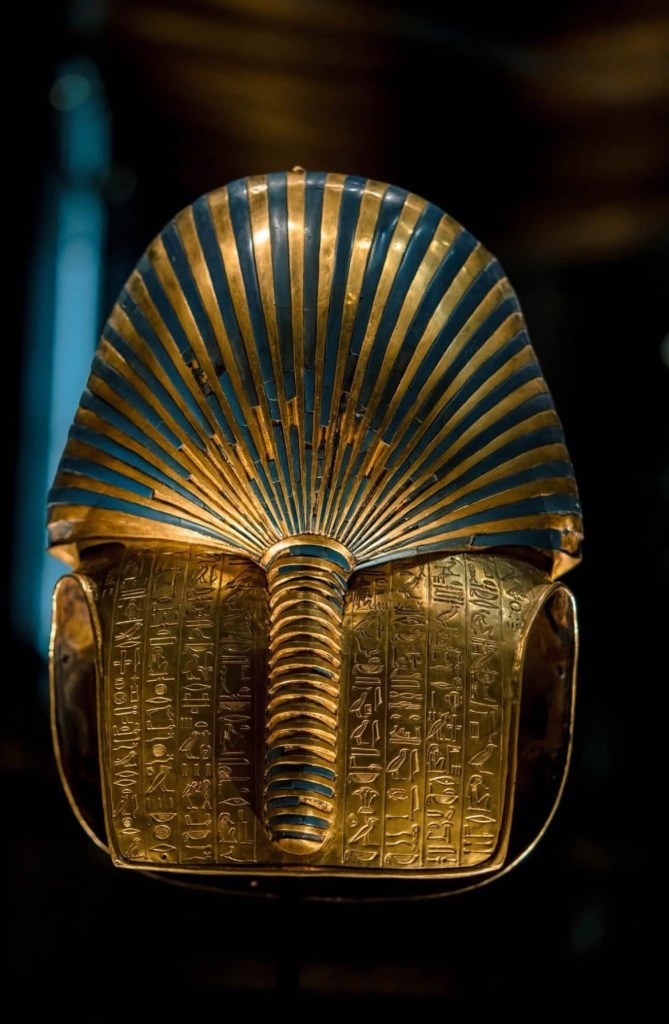


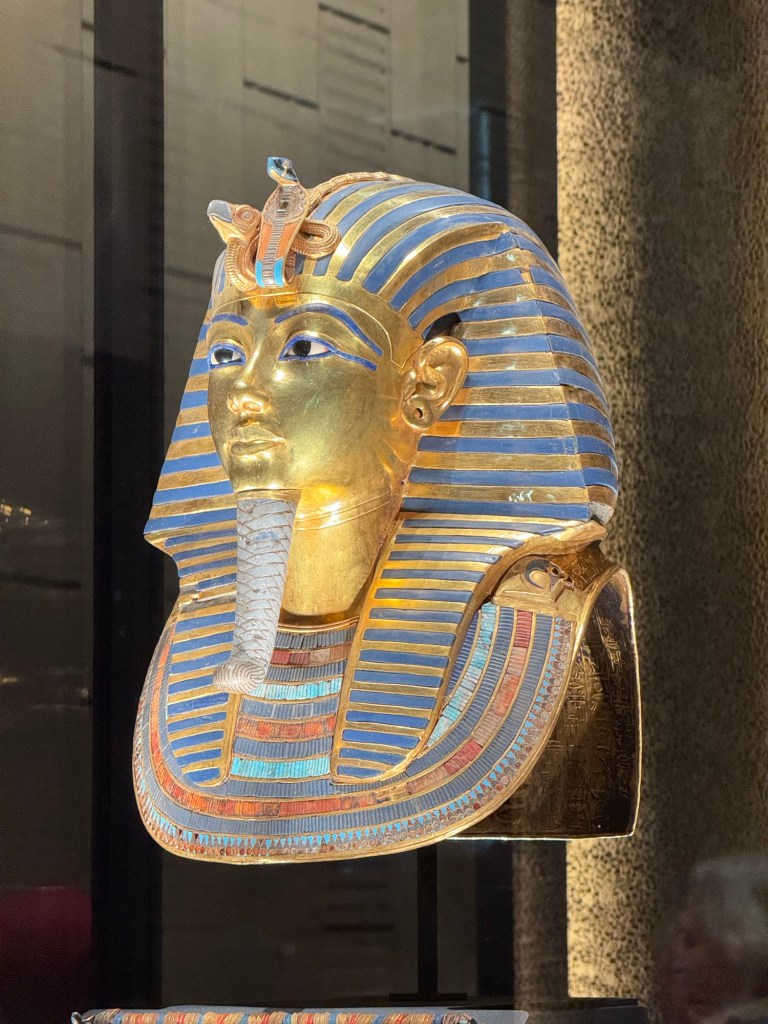
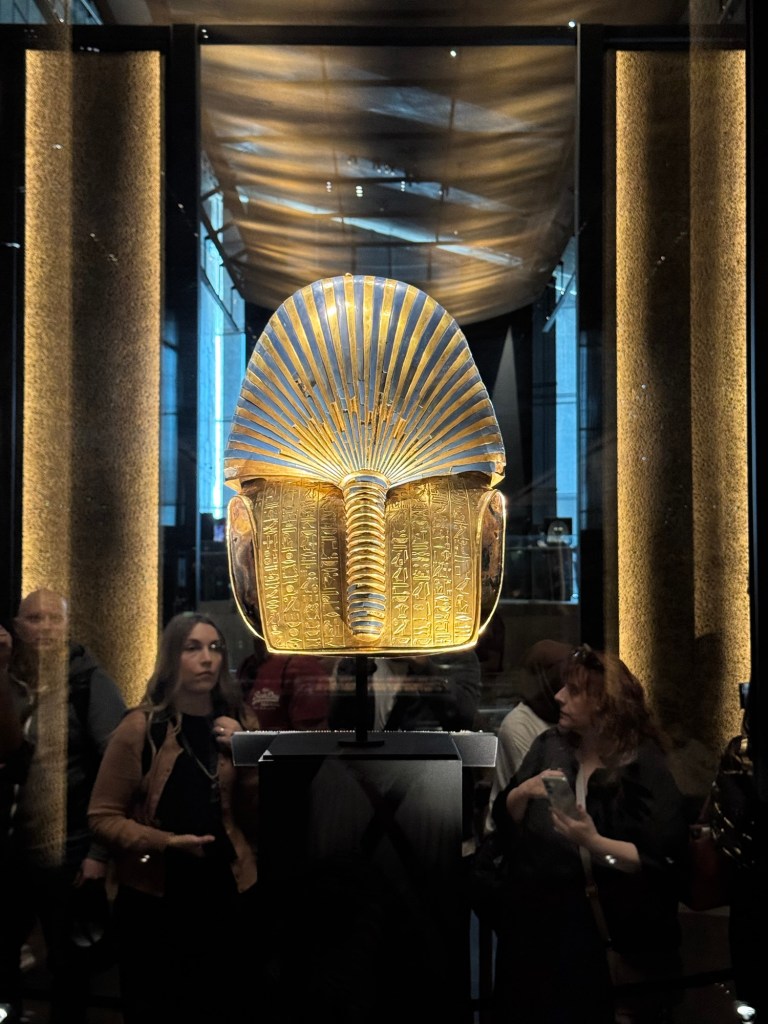
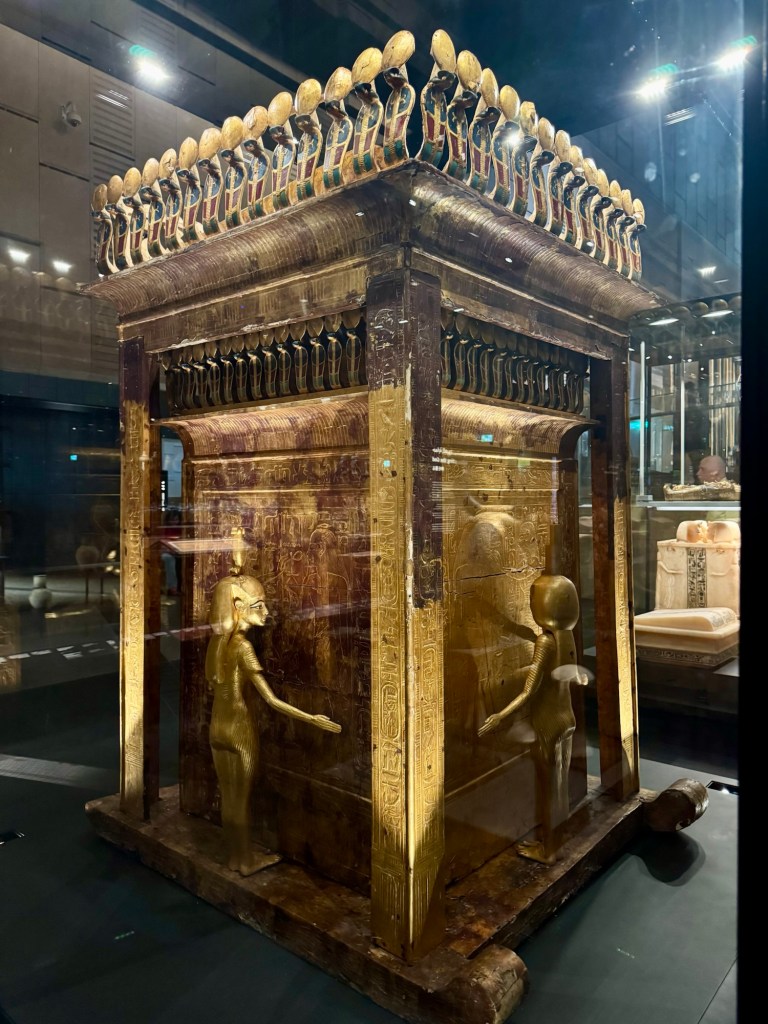

Gold, lapis, carved wood, linen. Objects crafted not for display, but meant for eternity. And here we are, reading them like letters from the past. It’s not just that these objects are beautiful — they are intentional. Made for very human, very personal reasons.
And what’s fascinating for me is that so many of these objects are familiar from hours spent gazing at pictures from that Time Life book I was obsessed with as a kid.

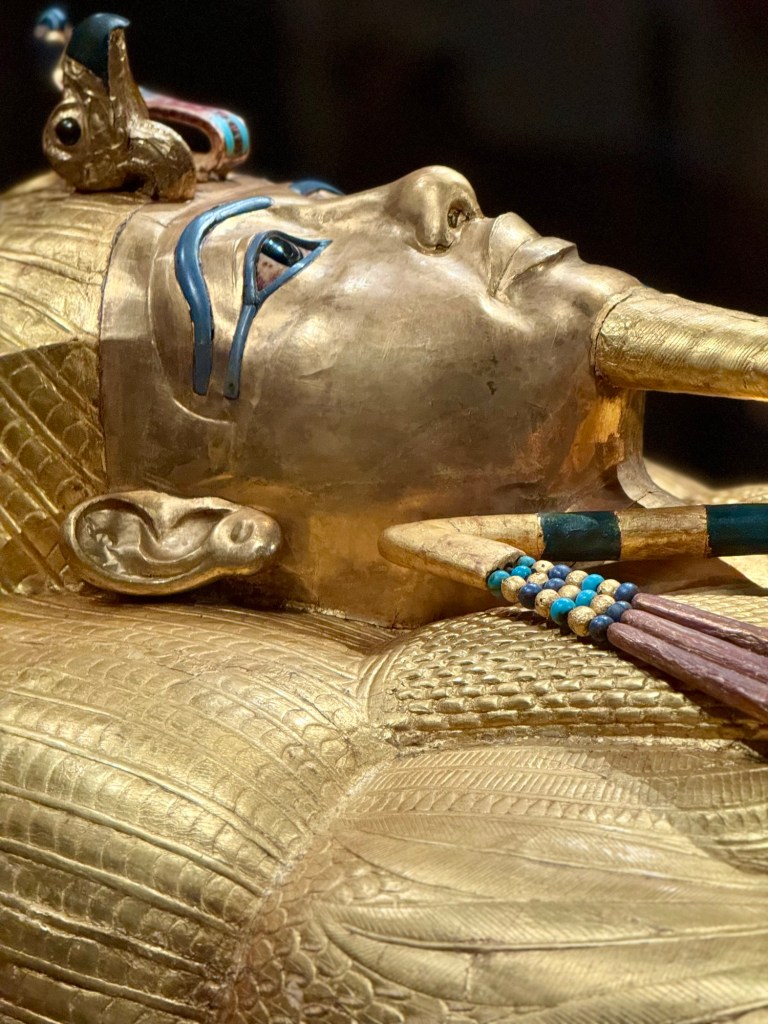
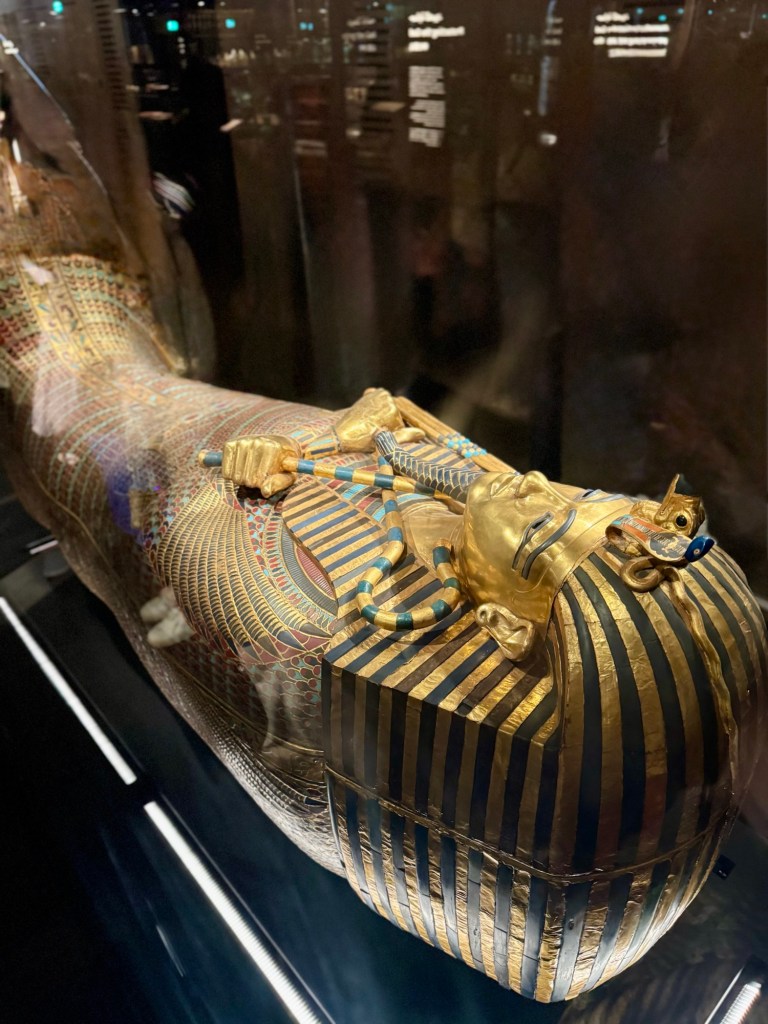


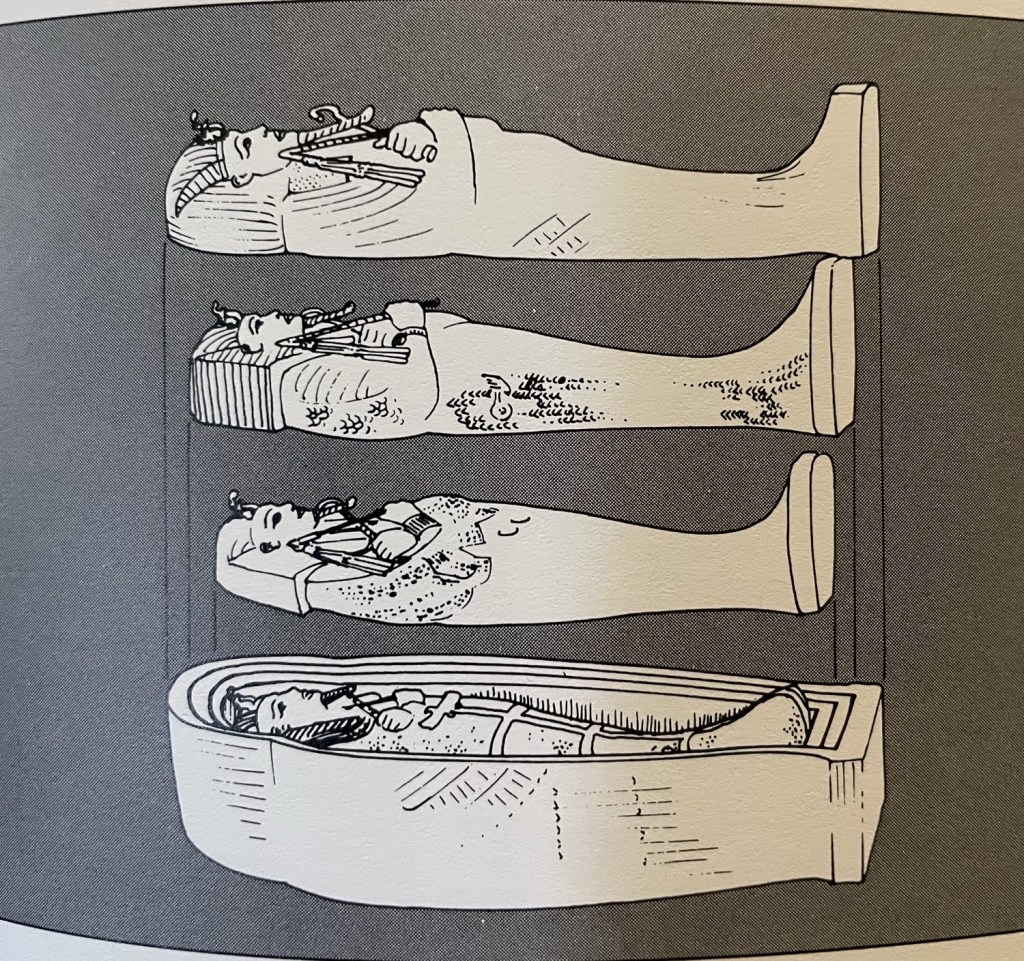


Khufu’s Funeral Boat
Another highlight of the GEM was standing in front of King Khufu’s funeral boat – an entire cedar vessel, delicate and huge, restored plank by plank like a resurrected ghost from the Old Kingdom. Each piece numbered with hieroglyphics – more like an Ikea flat pack!

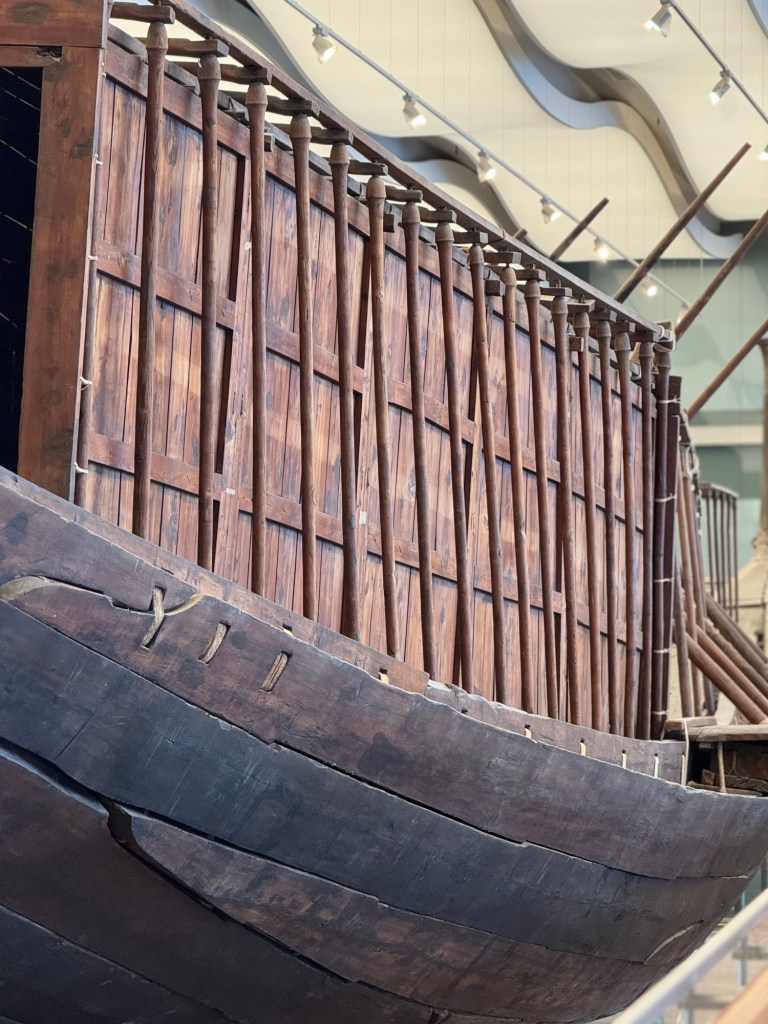


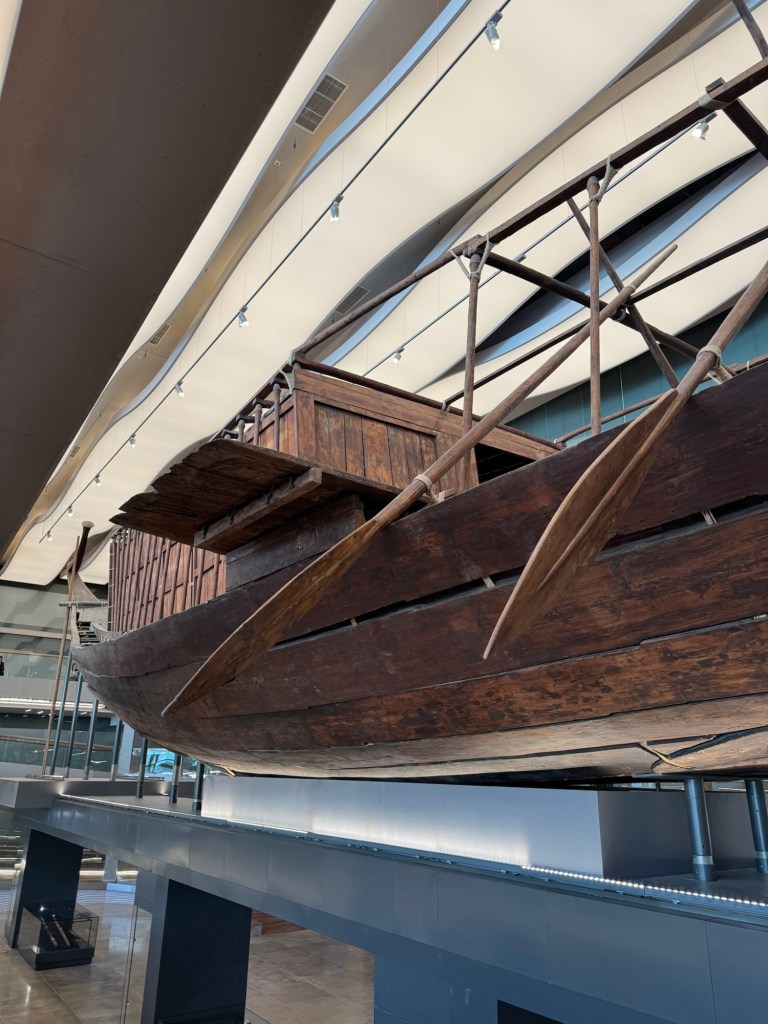
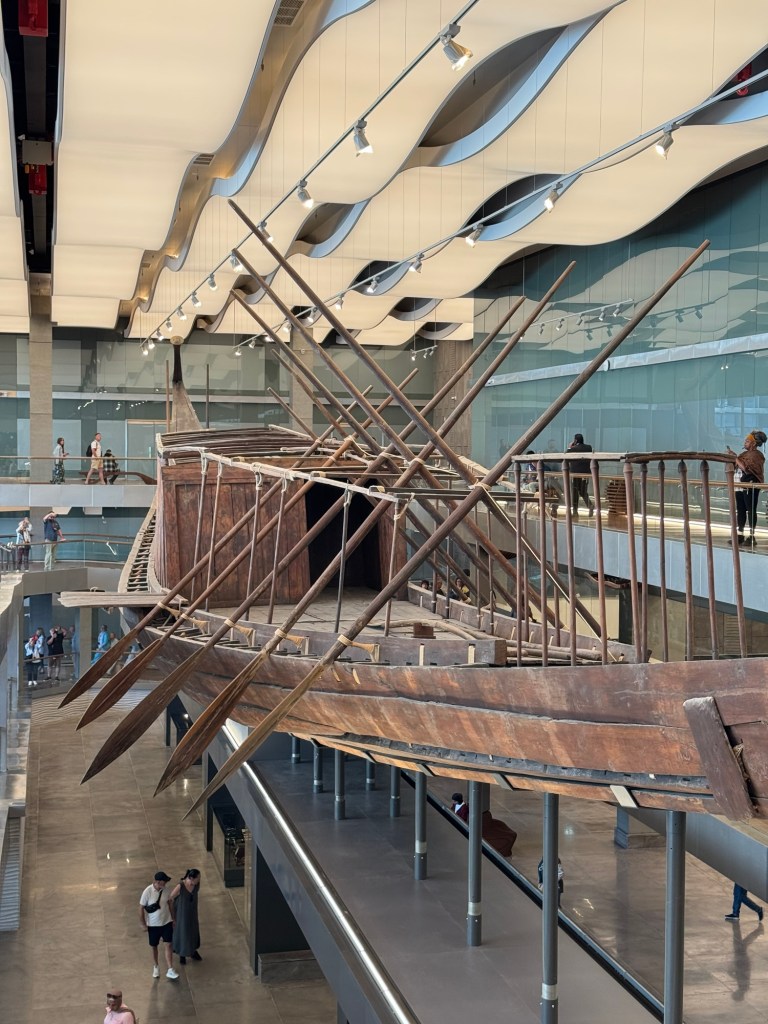
It looks less like something that survived 4,600 years and more like something that slipped through time by accident. The craftsmanship is so precise, the lines so elegant, you can almost imagine it gliding across the Nile, carrying the soul of a pharaoh toward the afterlife.
There’s something extraordinary about encountering an object built when the pyramids were new. It reminds you that ancient Egypt wasn’t always ancient.
The Official GEM Shop & Lunch at Zooba
After drifting back into the present, we wandered through the official GEM souvenir shop. It’s curated in that very Egyptian way: a mix of genuinely beautiful artisan work, surprisingly chic jewellery, and the kind of souvenirs that make you think, “Who exactly buys a pharaoh keychain the size of my forearm?”
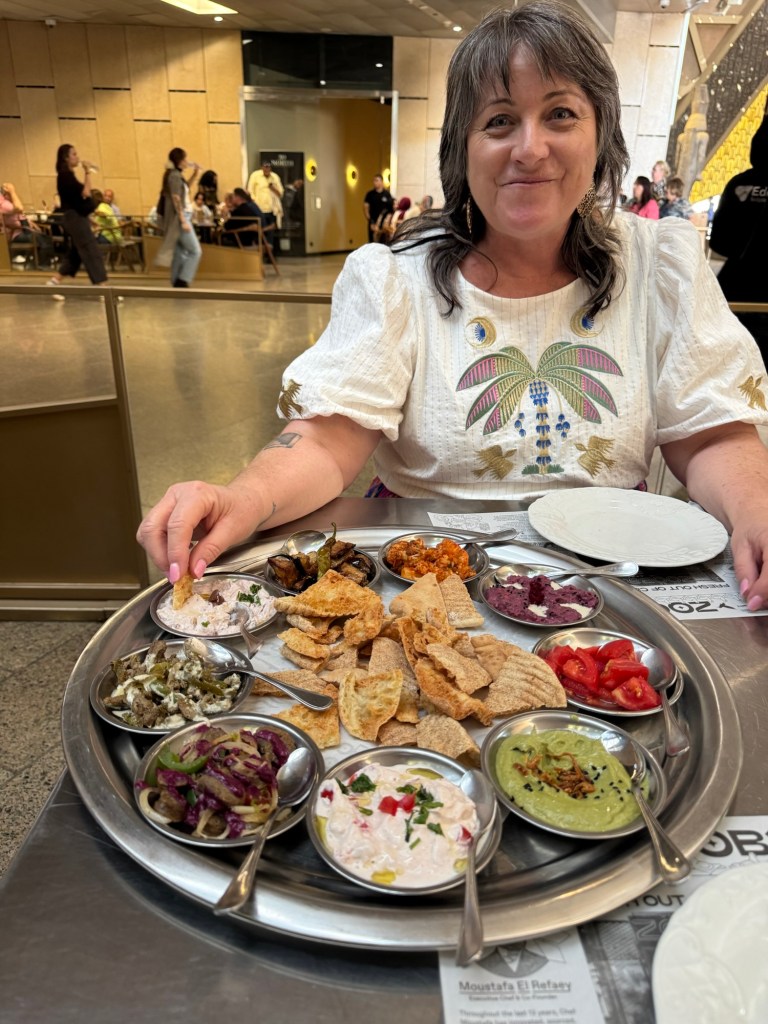
From there it was lunch at Zooba, tucked right inside the museum — Egyptian street food done café-style. Fresh baladi bread, dips bursting with herbs, and the most delicious taameya (the Egyptian name for falafel). And the mint lemonade was so refreshing.

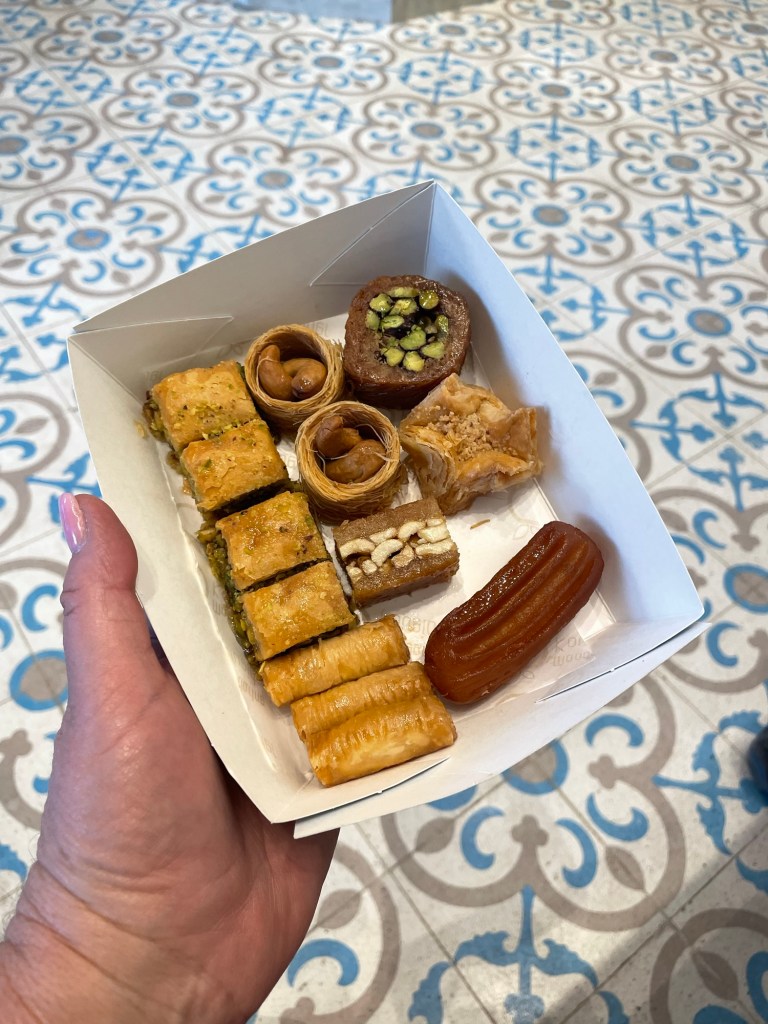
We still had room for dessert and on the recommendation of my sister (who we called from the gift shop as she was in the market for a tea towel 🤣), we finished with a plate of pastries from Mandarin Koueider, that deserved their own spotlight. The baklava was all glossy, golden layers – crisp at the edges, buttery in the middle, and soaked in just enough honey to make each bite sigh-worthy. The almond fingers were softer and more delicate, crumbly little cylinders wrapped around sweet almond paste, the pastry so thin it practically melted before you even chewed. I think we had 3 each including the free sample offered to lure us in.
My favourite might have been the bird’s nest, a tangle of crisp, thread-fine pastry cradling a cluster of cashews, sticky with syrup and just salty enough to balance the sweetness.
With our heads full of history and our tummies filled with food, we returned to our hotel, (no ride share cars have seatbelts in the back, and the journeys are harrowing, with drivers using their phones in their hands to navigate!) to let the day settle, rest my tired legs and back, and work on this blog before heading to dinner.

 coddiwomple